
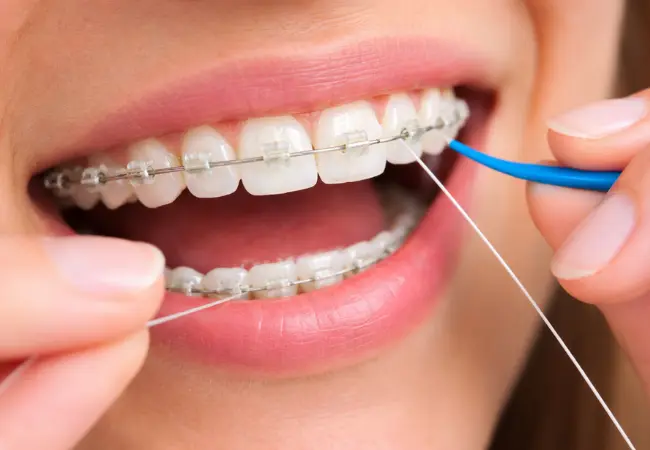
Learning how to floss with braces can feel frustrating at first. Brackets and wires block easy access between teeth, and many people assume brushing alone is enough. Unfortunately, that assumption often leads to plaque buildup, swollen gums, and white spots around braces.
Flossing with braces is not optional. It is one of the most important habits you can build during orthodontic treatment. This guide walks you through every effective flossing method, explains which tools work best, and shows you how to avoid common mistakes. By the end, you will know exactly how to floss with braces confidently and correctly.
At Stadium Dental, we regularly see patients who protect their smiles during braces simply by mastering proper flossing techniques.
Why Flossing With Braces Is So Important
Did you know that braces create extra surfaces where food and plaque collect? So, even the most thorough brushing cannot really remove debris trapped between your teeth and under orthodontic wires.
When you do not floss with braces:
- Plaque hardens into tartar more quickly
- Gums become inflamed and bleed easily
- Cavities form between teeth
- White spot lesions develop around brackets
- Bad breath becomes persistent
Flossing disrupts bacteria before they cause long-term damage. Patients who floss daily during braces usually finish treatment with healthier gums and better-looking enamel.
What Makes Flossing With Braces Challenging
Flossing becomes harder with braces because:
- Wires block direct access between teeth
- Standard floss does not slide easily under brackets
- Tight spaces increase the risk of snapping floss
These challenges do not mean flossing is impossible. They simply require the right technique and tools.
Best Tools for Flossing With Braces
Before learning techniques, choose the flossing tool that fits your lifestyle. Many patients use more than one method.
- Orthodontic Floss Threaders
A floss threader helps guide floss under the wire. It works well for traditional floss users and gives precise control.
- Waxed Dental Floss
Waxed floss slides more easily around brackets and reduces fraying.
- Super Floss
Super floss has three sections: a stiff end, spongy floss, and regular floss. It cleans under wires and around brackets more thoroughly.
- Water Flossers
Water flossers use pressurised water to flush plaque and food debris. They work best as a supplement, not a replacement for string floss.
- Interdental Brushes
Small cone-shaped brushes clean around brackets and between wires. They help but do not replace flossing between teeth.
How to Floss With Braces Using a Floss Threader
This method provides the deepest clean and works well for most people.
Step-by-Step Instructions
- Cut about 18 inches of waxed floss
- Insert the floss into the loop of the floss threader
- Guide the threader under the orthodontic wire
- Pull the floss through until you have equal length on both sides
- Gently slide the floss between two teeth
- Curve the floss into a C shape against one tooth
- Move it up and down along the gumline
- Repeat on the adjacent tooth
- Remove floss carefully and rethread for the next space
This method takes longer at first but becomes much faster with practice.
How to Floss With Braces Using Super Floss
Super floss simplifies the process by combining threading and cleaning into a single strand.
How to Use Super Floss
- Insert the stiff end under the wire
- Use the spongy section to clean around brackets
- Slide the regular floss between teeth
- Clean along the gumline
- Move to the next tooth
Super floss works well for patients who struggle with separate threaders.
How to Floss With Braces Using a Water Flosser
A water flosser helps remove loose debris, but should not replace string floss.
Best Practices
- Use warm water for comfort
- Aim the tip at a 90-degree angle to the gumline
- Trace along each bracket and wire
- Finish with traditional floss at least once per day
At Stadium Dental, we recommend water flossers as a helpful add-on, especially for patients with gum sensitivity.
How Often Should You Floss With Braces?
You should floss once per day, ideally at night. This removes plaque that accumulates throughout the day and prevents bacteria from sitting on teeth overnight.
If food frequently gets stuck, you may floss lightly after meals, but one thorough daily session is essential.
Common Flossing Mistakes to Avoid
Many people floss incorrectly without realizing it.
Avoid these mistakes:
- Snapping floss into gums
- Skipping flossing because it takes too long
- Only flossing the front teeth
- Relying only on a water flosser
- Giving up when gums bleed
Bleeding gums usually improve within 1 to 2 weeks with consistent flossing.
Tips to Make Flossing With Braces Easier
- Floss in front of a mirror
- Floss at the same time every day
- Keep floss threaders in multiple locations
- Start with the easiest teeth first
- Set reminders until it becomes a habit
Most patients adjust within two weeks.
What Happens If You Do Not Floss During Braces?
Skipping flossing can cause:
- Permanent white spots after braces removal
- Gum recession
- Cavities that delay orthodontic treatment
- Extra dental work after braces
Orthodontic treatment straightens teeth, but flossing protects them.
Professional Advice From Stadium Dental
At Stadium Dental, we teach patients how to floss with braces during routine visits. Our team adjusts recommendations based on your brace type, gum health, and dexterity. Patients who follow flossing guidance consistently experience fewer complications and better final results.
Frequently Asked Questions About How to Floss With Braces
How do you floss with braces the easiest way?
The easiest way is to use super floss or a floss threader with waxed floss. These tools allow you to clean under wires and between teeth effectively.
Can I use a water flosser instead of flossing with braces?
A water flosser helps remove debris but does not replace string floss. You should still floss between teeth daily.
Is it normal for gums to bleed when flossing with braces?
Yes. Bleeding is common at first and usually improves after one to two weeks of consistent flossing.
How long does flossing with braces take?
Flossing with braces usually takes five to ten minutes once you develop a routine.
Should kids with braces floss every day?
Yes. Daily flossing is essential for children and teens with braces to prevent cavities and gum disease.
What floss works best for braces?
Waxed floss, super floss, and orthodontic floss threaders work best for braces.
Conclusion
Learning how to floss with braces will surely protect your teeth, gums, and final orthodontic results. While flossing may feel challenging at first, the right tools and technique make it manageable and effective. Consistent flossing prevents damage that braces alone cannot fix.