
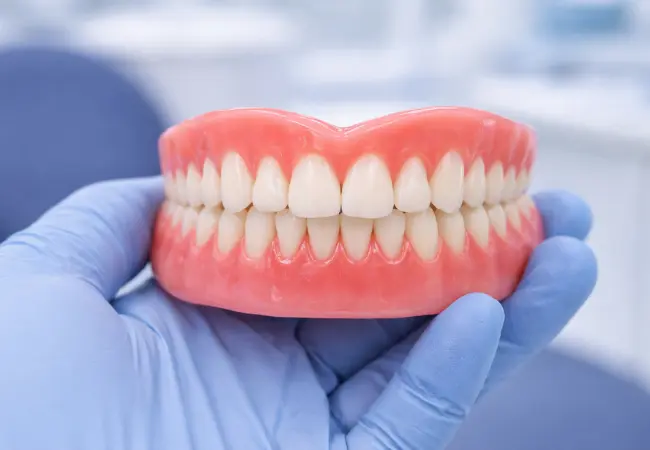
If you are getting dentures or already have them, one of the most common concerns is simple: Will dentures affect the way you speak? The honest answer is yes, they can, especially at first. But that does not mean dentures will ruin your speech or leave you sounding permanently different. In most cases, speech changes are part of the adjustment period, and many people improve as they get used to the fit, shape, and feel of the denture. Clinical reviews and research on complete dentures consistently note that speech issues can happen after denture placement, particularly with certain consonant sounds, but that many patients adapt over time.
That is the part most people need to hear clearly. Dentures can affect speech, but the effect is usually about adaptation, fit, and design, not permanent failure. So, if you want to learn more about how dentures affect speech, you may read this article.
Do dentures affect speech?
Dentures can affect speech because they change the space inside your mouth and the way your tongue, lips, teeth, and palate work together to form sounds. Research on denture phonetics explains that speech problems are frequently reported after complete denture placement, especially with consonants that depend on tongue-to-palate contact and airflow.
That makes sense when you think about how speech works. You do not speak with your vocal cords alone. You also speak with the surfaces inside your mouth. When dentures change those surfaces, your tongue has to relearn where to go and how much pressure to use.
This is why some patients notice lisping, slurring, clicking sounds, or difficulty with specific words soon after getting dentures. Those changes are real, but they are also common during the adaptation stage.
Why dentures can change the way you talk
There are a few reasons speech changes happen with dentures.
Fitting
The first is fit. If dentures feel loose, bulky, or unstable, your mouth may struggle to control airflow and tongue position the way it did before. Speech research on complete dentures notes that denture shape and palatal thickness can affect articulation because they alter the oral space and tongue contact patterns needed for certain sounds.
Muscle memory
Even if the dentures fit well, your mouth is learning a new surface. Your tongue has spent years memorizing where your natural teeth and palate are. A denture changes that map.
Confidence
A lot of speech difficulty is made worse by hesitation. If you are worried that you sound different, you may overthink each word, and that can make your speech feel less natural.
Which sounds are usually harder with dentures?
Speech changes do not affect every sound equally. The sounds people often struggle with most are consonants that depend on precise tongue placement, especially sounds like s, sh, t, d, and sometimes f and v. Research on denture speech repeatedly points to lingopalatal sounds and related consonants as common problem areas after denture insertion.
That is why some people notice a temporary lisp or feel like certain words suddenly sound less sharp or clear. It is not necessarily because the dentures are wrong. It may simply be because your mouth has not adapted yet.
Are speech problems with dentures permanent?
For many patients, speech improves as they get used to the dentures. Studies on phonetics and denture adaptation describe a meaningful adjustment period and note that some patients show notable improvement even after repeating key words and practicing speech with the new prosthesis.
That is the practical takeaway. Early speech changes are common, but they are often temporary. The key variables are whether the dentures fit properly and whether you give yourself enough time and practice to adapt.
That said, if your speech still feels clearly off after the initial adjustment period, you should not just “wait forever.” Poor fit, excess bulk, instability, or bite issues may need a professional adjustment. Research on denture refinement and patient satisfaction also notes that dissatisfaction with speech can remain when the prosthesis is not optimized well.
How long does it take to speak normally with dentures?
There is no universal timeline, and that is exactly why generic promises are useless. Some people adjust within days. Others need a few weeks. Adaptation depends on the fit of the dentures, whether they are full or partial dentures, your tongue habits, your confidence, and how much you practice speaking with them. The better expectation is not “I should sound perfect tomorrow.” The better expectation is “my speech should gradually improve as my mouth adapts, and if it does not, the fit may need to be checked.”
What can you do to adjust faster?
If you want to improve your speech with dentures, the goal is not to wait passively. It is to train your mouth.
- Start by reading out loud. Slow, repeated speech helps your tongue learn the new contours inside your mouth. Short reading sessions can be more useful than forcing long conversations when you still feel self-conscious.
- Repeat difficult words. If certain sounds feel off, isolate them and practice them. Clinical phonetic research suggests that repetition of key words can improve clarity as adaptation progresses.
- Speak slowly at first. Rushing usually makes speech sound less clear when your mouth is still learning.
- Stay hydrated. Dryness can make dentures feel more awkward and can affect how they move during speech.
- Get adjustments when needed. If the denture feels loose, unstable, or obviously bulky, practice alone may not solve the problem. Fit matters.
When should you be concerned?
You should not panic over early speech changes. But you also should not dismiss them forever. If your speech still feels clearly impaired after an initial adjustment period, if the dentures click or move while you talk, if you avoid speaking because they feel unstable, or if certain sounds remain consistently difficult despite practice, the dentures may need to be checked.
This is the part many people get wrong. They either assume something is terribly wrong on day one or they tolerate a bad fit for too long. The right approach is more disciplined: expect an adjustment period, practice, monitor improvement, and get reviewed if progress stalls.
What we tell patients at Stadium Dental
At Stadium Dental, we let patients know upfront that dentures can affect speech at first, but we also explain that this is often part of the adjustment process rather than a sign that something has gone wrong. We describe our dentures as designed for comfort and functionality and specifically note improved speech and chewing ability as part of the goal of treatment.
When you come to us for dentures, we focus on more than just replacing teeth. We look at fit, comfort, function, and how the denture will work in everyday life, including talking. If your dentures feel awkward when you speak, we want to know that. Sometimes the issue is a simple adaptation. Sometimes it points to a fit or design detail that needs attention.
Our goal is not just to give you dentures. Our goal is to help you feel more comfortable using them in real life, including when you smile, chew, and speak.
FAQ: How Dentures Affect Speech
Do dentures affect speech?
Yes. Dentures can affect speech, especially at first, because they change the shape of the mouth and the way the tongue contacts the teeth and palate.
Is it normal to lisp with new dentures?
Yes. A temporary lisp or difficulty with sounds like s and sh is common while your mouth adjusts to the denture. These are among the sound groups most often affected in denture speech studies.
How long does it take to talk normally with dentures?
It varies. Some people adjust within days, while others need a few weeks. Adaptation depends on fit, denture type, and how much you practice speaking.
Can poorly fitting dentures make speech worse?
Yes. Denture thickness, palatal shape, and instability can all reduce speech clarity.
Will speech problems with dentures go away?
Often, yes. Many patients improve as they adapt, especially with repetition and practice. But if speech does not improve, the dentures may need adjustment.
Can dentures improve speech if you were missing many teeth before?
Yes, they can. Dentures are intended to restore function, and clinical sources note that dentures can support more normal speech once the patient adapts and the prosthesis is functioning properly.
Conclusion
If you are worried about how dentures affect speech, the honest answer is that speech may change at first, but that does not mean dentures are a bad choice or that the problem will last.
Your mouth is adapting to a new shape, a new surface, and a new way of forming sounds. That takes time. In many cases, speech improves with practice, a good fit, and patience. If it does not, the denture may need to be adjusted rather than simply “tolerated.”