
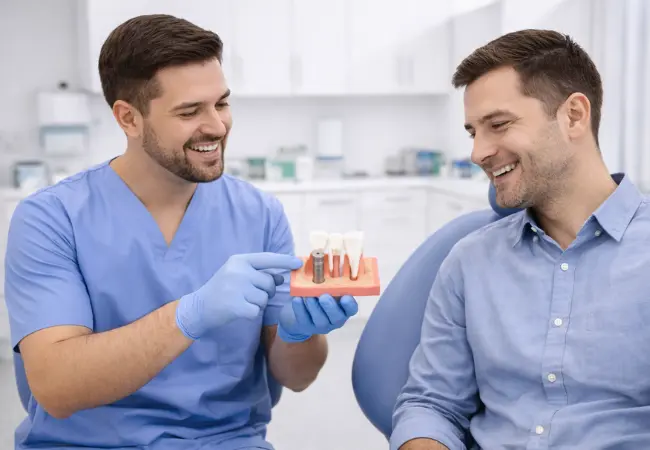
If you are missing one or more teeth, you have probably wondered which replacement option actually makes the most sense. Bridges, dentures, and implants can all restore a smile, but they do not work in the same way. If you are specifically asking about the benefits of choosing dental implants, the biggest reason they stand out is that they replace a missing tooth in a way designed to function more like a natural tooth.
That does not mean implants are right for every case. It does mean they offer advantages that are hard to ignore if you want stability, function, and long-term support. Here are the highlighted benefits, such as better chewing, improved speech, jawbone preservation, longevity, and denture stability, while others emphasize their natural appearance and long-term value.
What are dental implants?
A dental implant is a replacement tooth root, usually made of titanium or another body-compatible material, that is placed in the jawbone to support a crown, bridge, or denture. The design matters because an implant is not only replacing what shows above the gumline. It is also replacing the support underneath, which is a major reason implants differ from removable dentures or traditional bridges. Moreover, implants help prevent bone loss after a tooth is lost or removed, and they do not require neighboring teeth to be altered.
1. Dental implants look more natural
One of the clearest benefits of choosing dental implants is appearance. Implants are designed to blend in with your surrounding teeth, which is one reason they are often chosen by patients who want a replacement that does not obviously look artificial.
That matters because replacing a missing tooth is not only about function. It is also about confidence. Suppose you feel self-conscious about the gap in your smile; a treatment that looks natural can make a real difference in how comfortable you feel talking, smiling, and being photographed. This is a reasonable inference from the cosmetic and smile-restoration benefits of patient guidance.
2. Dental implants can improve chewing
When you lose a tooth, chewing can become less efficient and less comfortable. Better chewing ability is one of the main benefits of implants. Because an implant is anchored into the jaw, it typically gives you a more stable bite than options that shift or depend on removable support.
That means everyday food choices often become easier. You are less likely to baby one side of your mouth or feel like your replacement tooth cannot handle normal pressure. If your goal is to get back to eating with more confidence, this is one of the strongest practical reasons people choose implants.
3. Dental implants can help improve speech
Missing teeth and loose appliances can affect how clearly you speak. Cleveland Clinic specifically includes improved speech and enunciation among the benefits of implants. Because implants are fixed and stable, they do not move in the way some removable restorations can.
This matters more than people think. Speech problems are not only frustrating, but they can also make people feel less confident in daily conversations. If your replacement option feels secure, you spend less energy worrying about how you sound. That is one of the quieter but important benefits of choosing dental implants.
4. Dental implants help preserve jawbone
This is one of the biggest long-term advantages that dental implants help preserve existing bone and reduce the risk of future bone loss. It also helps prevent bone loss that can happen after a tooth is lost or removed.
That matters because when a tooth root is gone, the bone in that area can shrink over time. A bridge can replace the visible tooth, but it does not replace the root in the jaw. An implant does. If you are thinking beyond the short term, bone preservation is one of the strongest reasons implants often make more strategic sense than other options.
5. Dental implants do not rely on neighboring teeth
Traditional bridges often need support from the teeth beside the gap. That can mean reshaping healthy teeth to make the restoration work. You do not need to have healthy teeth removed or changed to place an implant, or replace missing teeth without involving the other teeth.
This is one of the most important structural benefits of choosing dental implants. If the teeth next to the missing space are healthy, leaving them alone is often a major advantage. You are solving the missing tooth problem without creating a new dependency on surrounding teeth.
6. Dental implants can last a very long time
Longevity is one of the main reasons implants are often seen as a premium option. Dental implants can last a lifetime with proper hygiene and regular dental visits. In addition, implants are an excellent long-term option for restoring your smile.
That does not mean every implant lasts forever without effort. It does mean the long-term upside is strong. If you are comparing treatment options and thinking beyond the upfront cost, durability belongs near the top of the list.
7. Dental implants feel more stable than removable options
Another major benefit is stability. Implants can provide stability for wobbly dentures, and the implant-supported denture guidance explains that dentures connected to implants are more stable than traditional ones.
Even for a single implant crown, the same principle matters. A stable tooth replacement generally feels more secure in everyday life. You worry less about movement, less about adhesives, and less about whether your restoration will shift while you eat or speak.
8. Dental implants do not get cavities
This does not mean you can ignore oral hygiene. It does mean the implant itself is not vulnerable to tooth decay in the same way natural enamel is. That said, the tissues around implants still need to stay healthy. Gum inflammation and implant-related disease are still possible if oral hygiene is neglected.
9. Dental implants work for more than one type of tooth loss
A lot of people think implants are only for one missing tooth. That is too narrow. Implants can support crowns, and when replacing more than one tooth, bridges can be attached to implants. That flexibility matters because it means implants are not only a single-tooth solution. They can be part of a broader restorative plan, whether you are missing one tooth, several teeth, or need a more stable denture setup.
10. Dental implants can support your confidence and quality of life
This is the benefit patients usually feel most directly. Missing teeth can change the way you eat, smile, and interact socially. Tooth loss changes the way you eat, speak, and connect with the world around you, and implants are described there as the closest thing to natural teeth.
That means the value of implants is not only clinical. It is also personal. If you want to stop thinking about the gap every time you smile or chew, that confidence benefit matters. It is one of the biggest reasons patients decide implants are worth it. This is an inference from the cosmetic, chewing, and speech benefits documented in the patient guidance.
What we discuss with patients at Stadium Dental
At Stadium Dental, we talk about implants as more than a cosmetic fix. We offer dental implants as part of a broader restorative approach, and we also provide related services that often matter in the same conversation, including crowns and bridges, extractions, gum treatments and grafting, routine cleanings, family dentistry, and sedation options for patients who feel anxious about care. The clinic’s service page and implant page both highlight that full range and note advanced solutions like implants, surgery, and gum work in one place.
When we help patients compare their options, we look at more than the space. We consider bone support, gum health, your bite, your long-term goals, your comfort level, and what kind of result you want to live with every day. We also offer free implant consultations, transparent pricing, and flexible payment options so patients can explore treatment clearly before committing.
Our goal is not to push implants just because they sound advanced. Our goal is to help you choose the option that gives you the best long-term result for your smile, your function, and your overall oral health. Stadium Dental’s own site also emphasizes state-of-the-art technology and a wide range of restorative services, which is important when implant treatment needs careful planning.
FAQ: Benefits of Choosing Dental Implants
What are the main benefits of choosing dental implants?
The main benefits include better chewing, improved speech, jawbone preservation, long-term durability, a natural appearance, and the ability to replace missing teeth without altering neighboring healthy teeth.
Are dental implants better than dentures?
They can be, especially for stability and long-term function. Implants can stabilize dentures and help prevent bone loss, which are significant advantages over removable options in many cases.
Do dental implants last longer than bridges?
In general, yes. Implants can last a lifetime with proper care, while bridges usually have a shorter average lifespan.
Do dental implants help preserve bone?
Yes. This is one of their biggest long-term benefits. Implants help preserve existing bone and reduce future bone loss.
Can dental implants improve speech?
Yes. Dental implants can improve speech and enunciation, which is one of the key benefits.
Do dental implants get cavities?
No, the implant itself does not get cavities. But you still need good hygiene to protect the gums and surrounding tissues.
Conclusion
If you are weighing your options for a missing tooth, the biggest benefits of choosing dental implants come down to function, stability, longevity, and long-term support for your oral health. They look natural, chew more naturally, help preserve bone, avoid relying on neighboring teeth, and can last for many years with proper care. That does not make implants the right answer for every person. But if you are looking for a replacement option that is designed to work more like a natural tooth, they are often one of the strongest choices available.