
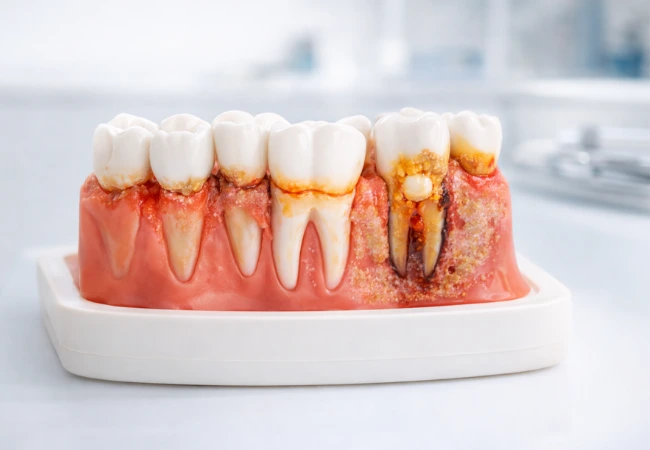
Your mouth naturally contains bacteria all the time. Not all of them are harmful. But when bacterial plaque builds up and stays on your teeth, gums, or oral tissues, it can lead to infection, inflammation, and damage over time. Bacterial buildup is strongly linked to common oral diseases like tooth decay, gingivitis, periodontitis, and dental abscesses.
The key point is this: bacteria do not need to create dramatic symptoms right away to start causing trouble. Many bacterial oral diseases begin quietly, then become painful, expensive, and harder to treat if they are ignored.
Why bacteria matter in oral health
Your mouth is not sterile, and it is not supposed to be. The problem starts when harmful bacteria collect in dental plaque and stay in contact with teeth and gums long enough to damage them.
Plaque is a sticky film that forms on teeth. If it is not removed well, the bacteria in plaque can produce acids that damage enamel and contribute to tooth decay. The same bacterial buildup can also irritate and infect the tissues that support your teeth, leading to gum disease.
That means if you want to understand bacterial oral disease, you should stop thinking only about infection in the dramatic sense. Cavities and gum disease are two of the biggest bacterial problems in the mouth, and they are extremely common.
1. Tooth decay
One of the most common oral diseases caused by bacteria is tooth decay, also called dental caries or cavities. Tooth decay happens when acid is produced at the tooth surface by bacteria associated with caries, which gradually breaks down enamel and leads to cavities.
This matters because many people separate cavities from infection in their minds. That is a mistake. Cavities are not just wear and tear. They are tied to bacterial activity in plaque.
2. Gingivitis
Another major bacterial oral disease is gingivitis. Gingivitis is the early stage of gum disease. It involves inflammation of the gums and is strongly associated with plaque buildup. It often shows up as red, swollen, or bleeding gums, especially when brushing or flossing.
The reason this matters is that gingivitis is often dismissed because it may not be very painful at first. But painless does not mean harmless.
3. Periodontitis
If gingivitis is ignored, it can progress to periodontitis, which is a more serious bacterial gum infection. Periodontitis involves infection and inflammation of the tissues and bone that support your teeth. It can lead to gum recession, pain when chewing, loose teeth, and even tooth loss in severe cases.
This is one of the most important answers to the question of what oral diseases are caused by bacteria, because gum disease is not just about irritated gums. It can damage the structures that hold your teeth in place.
4. Dental abscess
A dental abscess is another oral problem commonly caused by bacteria. A dental abscess is a pocket of infection, usually related to bacteria entering deeper tissues through decay, gum disease, or other dental damage. Tooth-related infections are commonly caused by bacteria from the mouth, and odontogenic infections are a major category of oral bacterial infection. This is where bacterial oral disease becomes much harder to ignore, because abscesses tend to bring pain, swelling, and urgent symptoms.
5. Pericoronitis
Pericoronitis is an infection that can happen around a partially erupted tooth, especially a wisdom tooth.
This can happen when bacteria collect under the gum flap around the erupting tooth and trigger inflammation or infection. It is another example of how trapped bacteria can turn into a localized oral disease when the environment allows plaque and debris to stay in place. This is an inference supported by evidence that tooth-related infections commonly arise from oral bacteria and local conditions that allow them to invade tissue.
6. Odontogenic infections that spread beyond the tooth
Some oral bacterial infections start around a tooth or the gums and then spread into the surrounding spaces. These are often referred to as odontogenic infections, and they are commonly caused by the normal bacteria found in the mouth when those bacteria invade deeper tissues. That matters because once infection spreads, the issue is no longer just a tooth problem. It can become a wider oral and facial health problem.
Are all mouth sores caused by bacteria?
No. This is where people get confused. Not every mouth problem is bacterial. Some oral conditions are viral, fungal, traumatic, autoimmune, or related to cancer or irritation. But many of the most common diseases affecting teeth and gums are heavily driven by bacteria and plaque buildup.
So the smarter question is not “is every oral disease bacterial?” The smarter question is “which common oral diseases are strongly linked to bacteria?” And the answer includes cavities, gingivitis, periodontitis, abscesses, and other odontogenic infections.
How bacterial oral diseases usually start
Most bacterial oral diseases begin with the same weak point: plaque control. If plaque is not removed well, bacteria stay on the teeth and near the gumline. Over time, that can lead to acid damage, gum inflammation, deeper infection, and more serious oral disease. Poor brushing and flossing habits allow plaque to build up and harden, which increases the risk of infection in the tissues supporting the teeth. This is why the basics matter so much. Bacterial oral disease often starts with everyday neglect, not some rare event.
How to lower your risk
If you want to reduce your risk of bacterial oral disease, the strategy is not complicated. It is disciplined. Brush properly twice a day, clean between your teeth daily, keep up with professional exams and cleanings, and do not ignore bleeding gums or areas of pain. Since bacterial plaque is central to both tooth decay and gum disease, daily plaque removal is one of the most important preventive steps.
The mistake is waiting until the infection is obvious. By then, you are usually dealing with a larger problem than the one you started with.
What we focus on at Stadium Dental
At Stadium Dental, we help patients deal with the oral problems that bacteria commonly cause, not just the symptoms that show up at the end.
We provide exams and X-rays, professional cleanings, white fillings, root canal treatment, gum-focused care, wisdom teeth treatment, extractions, and emergency dental care. We also offer crowns, bridges, implants, dentures, and other restorative services when bacterial damage has already affected the teeth or gums more seriously. Our goal is to help you catch bacterial problems early, treat them properly, and protect your mouth before the damage spreads.
FAQ: What Oral Diseases Are Caused by Bacteria?
What oral diseases are most commonly caused by bacteria?
The most common bacterial oral diseases include tooth decay, gingivitis, periodontitis, dental abscesses, and other tooth-related infections.
Is tooth decay caused by bacteria?
Yes. Tooth decay happens when acid is produced at the tooth surface by bacteria associated with caries, which leads to enamel breakdown and cavities.
Is gum disease caused by bacteria?
Yes. Gum disease is strongly linked to plaque bacteria and the inflammation and infection that those bacteria trigger in the tissues that support the teeth.
Are all mouth infections bacterial?
No. Some mouth problems are viral, fungal, traumatic, or caused by other conditions. But many common diseases affecting teeth and gums are strongly linked to bacteria.
Can bacteria in the mouth cause serious infection?
Yes. Bacteria from the mouth can cause deeper tooth-related infections and abscesses when they spread beyond the tooth or gums.
How do you prevent bacterial oral diseases?
The most important steps are proper brushing, daily cleaning between the teeth, regular dental visits, and getting early signs of decay or gum inflammation checked instead of delaying treatment.
Conclusion
If you are asking what oral diseases are caused by bacteria, the strongest answers are tooth decay, gingivitis, periodontitis, dental abscesses, and other tooth-related infections. The bigger lesson is that bacterial oral disease often starts quietly. Plaque builds up, the bacteria stay in place, and the damage grows over time. That is why prevention and early treatment matter so much. If you control plaque well and stop small problems from growing, you lower your chances of dealing with the more painful and expensive side of oral bacterial disease.