
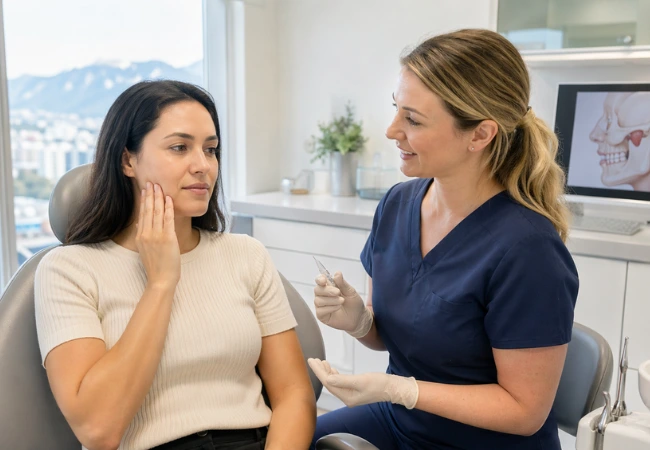
If you are searching for Botox treatments near you, there is a good chance you are tired of dealing with jaw pain, tension, clenching, headaches, or soreness that keeps coming back. TMJ discomfort can affect more than your jaw. It can make chewing harder. It can make your face feel tight. It can cause morning soreness if you grind or clench your teeth while sleeping. It can even make you feel like your jaw never fully relaxes.
If you live or work in Vancouver, Canada, you may be looking for a local option that feels convenient, professional, and easy to understand. “Botox treatment for TMJ near me” may be one option to discuss with a qualified dental provider, especially if your symptoms are connected to overactive jaw muscles, clenching, or grinding. At Stadium Dental in Downtown Vancouver, Botox is one of the services available for TMJ concerns, migraines, and cosmetic needs.
What Is TMJ?
TMJ stands for temporomandibular joint. This is the joint that connects your jawbone to your skull. You use it every time you talk, chew, yawn, laugh, or open and close your mouth. When people say they “have TMJ,” they usually mean they have a temporomandibular disorder, also called TMD. TMD can involve the jaw joint, the muscles around the jaw, or both. Common symptoms may include pain or tenderness around the jaw joint, face, temples, or ears. You may also notice clicking, popping, grinding sounds, trouble opening or closing your mouth, headaches, or neck discomfort. The Canadian Dental Association notes that TMD symptoms can include jaw joint pain, muscle tenderness, difficulty opening or closing the mouth, and noises when chewing, yawning, or opening the mouth.
Why Your Jaw May Feel Tight or Painful
Your jaw muscles can become overworked. This often happens when you clench your teeth, grind at night, chew heavily on one side, or hold stress in your face and jaw. You may not even realize you are clenching. Many people do it while sleeping, working, driving, exercising, or concentrating. Over time, this can make the jaw muscles sore, tense, and enlarged. It can also place pressure on your teeth and dental work. Some TMJ symptoms may also be linked to bite issues, arthritis, jaw injury, stress, teeth grinding, or muscle imbalance. Because there can be more than one cause, it is important to get properly assessed instead of assuming Botox is automatically the right answer.
How Botox May Help With TMJ Symptoms
Botox is commonly known for softening facial lines, but it can also be used in dentistry for certain muscle-related concerns. For TMJ symptoms, Botox is typically used to relax overactive jaw muscles that may contribute to clenching, grinding, and muscle tension. When Botox is placed into selected jaw muscles, it can temporarily reduce how strongly those muscles contract. This may help some patients experience less jaw tension, less soreness, and fewer symptoms connected to clenching. This does not mean Botox cures TMJ. It also does not fix every cause of jaw pain. If your TMJ issue is mainly caused by joint damage, bite problems, arthritis, or another underlying condition, you may need a broader treatment plan. Initial treatment often includes self-care, medication when appropriate, and splints for clenching or grinding.
Is Botox for TMJ Right for You?
Botox for TMJ may be worth discussing if your symptoms are related to muscle tension, clenching, or grinding. You may be a possible candidate if:
- You wake up with jaw soreness.
- You clench your teeth during the day.
- You grind your teeth at night.
- Your jaw muscles feel tight or tired.
- You get tension headaches connected to jaw pressure.
- You have facial soreness near the jaw or temples.
- You have tried basic self-care but still feel discomfort.
- You want a non-surgical option to discuss with a dental provider.
However, Botox may not be the first or only recommendation. Depending on your case, your dentist may discuss a night guard, a bite assessment, stress-related clenching habits, jaw exercises, or a referral if your symptoms require additional evaluation.
Where Can I Get Botox Treatments for TMJ Near Me in Vancouver?
If you are in Vancouver and searching for Botox treatments for TMJ near me, Stadium Dental may be a local option to consider. Stadium Dental is located in Downtown Vancouver and offers Botox for TMJ and aesthetics as part of its dental services. This matters because TMJ discomfort is often connected to dental concerns such as clenching, grinding, bite pressure, worn teeth, jaw tension, and headaches.
When you visit a dental clinic for TMJ concerns, the team can look at more than the sore muscle. They can also check your teeth, bite, grinding signs, jaw movement, and oral health. That gives you a clearer picture of what may be contributing to your discomfort. You do not need to wait until the pain becomes severe before asking about your options. If you are dealing with jaw tension, headaches, clenching, or grinding, we can help you understand whether Botox for TMJ is suitable for you and whether other dental services may support your care.
We also provide routine dental cleanings, white fillings, crowns and bridges, dental implants, extractions, children and adult dentistry, Invisalign, cosmetic dentistry, composite bonding, porcelain veneers, gum treatments, and other services that may support your overall oral health.
What to Expect During a Botox for TMJ Consultation
Your first step is usually a consultation. This helps determine whether your symptoms are a good match for Botox or whether another treatment option should come first.
During your visit, you may be asked about:
- Where do you feel pain or tension?
- How long have symptoms been happening?
- Whether you clench or grind your teeth.
- Whether symptoms are worse in the morning.
- Whether you have headaches, migraines, or ear discomfort.
- Whether your jaw clicks, pops, locks, or feels limited.
- Whether you already use a nightguard.
- Whether you have had dental treatment, injury, or bite changes.
The dentist may examine your jaw movement, jaw muscles, teeth, bite, and signs of wear. If Botox is recommended, the team should explain what it can help with, what it cannot fix, how long results may last, and what follow-up may look like.
How Long Does Botox for TMJ Last?
Botox is temporary. For many patients, results may last a few months, but the exact timeline can vary depending on your muscle activity, dosage, symptoms, and treatment plan.
You may need follow-up visits if Botox becomes part of your ongoing TMJ management. Some patients may also benefit from combining Botox with other strategies, such as a nightguard, stress-related clenching awareness, jaw relaxation habits, or dental treatment for worn or damaged teeth.
The key is to avoid thinking of Botox as a one-time permanent fix. TMJ care is often about management, not an instant cure.
Does Botox for TMJ Hurt?
Most patients describe Botox injections as quick and manageable. You may feel a small pinch or brief pressure during treatment. You may have mild tenderness, swelling, or bruising around the injection area afterward. Your provider should explain what to expect and what to avoid after the appointment. If you are nervous about needles, tell the dental team before treatment. A good provider should explain each step and help you feel as comfortable as possible.
Can Botox Help With Teeth Grinding?
Botox may help reduce the force of clenching or grinding by relaxing overactive jaw muscles. This can be useful for some people who place heavy pressure on their teeth. However, Botox does not automatically stop the habit itself. If you grind your teeth at night, you may still need a nightguard to help protect your teeth. If stress, sleep habits, bite issues, or other factors contribute to grinding, those should also be considered. For this reason, Botox should be viewed as one possible tool in a larger plan, not the entire plan.
Can Botox Help With TMJ Headaches or Migraines?
Some patients with jaw muscle tension also experience headaches or migraine-like symptoms. Stadium Dental notes that Botox is provided for TMJ issues, migraines, and wrinkle smoothing.
That said, headaches can have many causes. If your headaches are frequent, severe, new, or changing, you should speak with a medical professional. A dental consultation can help determine whether jaw tension, clenching, or grinding may be part of the issue.
What Else Can Help TMJ Pain?
Botox is not the only option for TMJ symptoms. Depending on your case, your dentist may suggest a combination of approaches. These may include:
- A custom nightguard to protect your teeth from grinding.
- Jaw relaxation habits.
- Avoiding hard or chewy foods during flare-ups.
- Warm compresses.
- Over-the-counter pain relief when appropriate.
- Stress management for clenching habits.
- Bite evaluation.
- Dental treatment for damaged or worn teeth.
- Monitoring jaw movement and symptoms.
HealthLink BC notes that TMD treatment often begins with self-care, pain relief strategies, and splints for clenching or grinding, while surgery is not usually done for TMD.
FAQs About Botox Treatments for TMJ Near Me
Where can I get Botox treatments for TMJ near me in Vancouver?
You can ask Stadium Dental in Downtown Vancouver about Botox treatment for TMJ concerns. The clinic offers Botox for TMJ and aesthetics, along with general, cosmetic, restorative, and family dental services.
Does Botox help TMJ pain?
Botox may help some TMJ symptoms when pain is linked to overactive jaw muscles, clenching, or grinding. It works by temporarily relaxing selected muscles. However, it is not a cure for every TMJ problem, so you should have your symptoms assessed first.
Is Botox for TMJ the same as cosmetic Botox?
The medication may be the same, but the purpose and injection areas are different. Cosmetic Botox is usually used to soften facial lines. Botox for TMJ is focused on jaw muscle activity, tension, clenching, and related discomfort.
How do I know if I need Botox for TMJ?
You may be a candidate if you have jaw tension, clenching, grinding, facial soreness, or headaches related to jaw muscle tightness. A dentist should examine your teeth, bite, jaw muscles, and symptoms before recommending Botox.
Can Botox stop teeth grinding?
Botox may reduce the strength of clenching or grinding by relaxing overactive jaw muscles. However, it may not stop the habit completely. Some patients may still need a nightguard or other dental care to protect their teeth.
Is Botox for TMJ permanent?
No. Botox is temporary. Results usually fade over time, and follow-up treatment may be needed if it becomes part of your TMJ management plan.
Should I see a dentist or doctor for TMJ pain?
You may need either, depending on your symptoms. A dentist can assess jaw movement, bite pressure, tooth wear, grinding signs, and dental causes of discomfort. If your symptoms suggest a medical issue or complex joint problem, you may also need a medical evaluation.
Conclusion
If you are looking for Botox treatments for TMJ near me in Vancouver, the best first step is not to guess. The best first step is to get assessed. Your jaw pain may be related to clenching, grinding, muscle tension, bite pressure, or another issue. Botox may help some patients by relaxing overactive jaw muscles, but it should be recommended only after your symptoms and oral health are properly reviewed. At Stadium Dental in Downtown Vancouver, we help patients understand their options for TMJ discomfort, jaw tension, grinding, headaches, and related dental concerns.