
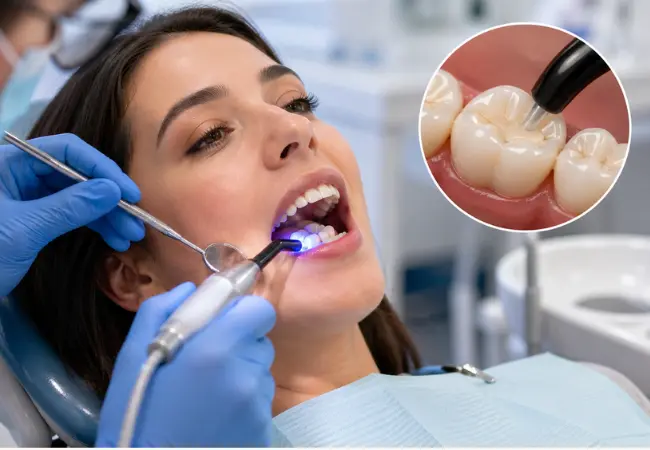
If your dentist says you need a tooth filling, it usually means part of your tooth has been damaged by decay, a small chip, or minor wear. A filling helps repair the damaged area so your tooth can work normally again.
You may feel nervous if this is your first filling. You may wonder if it will hurt, how long it will take, what material will be used, and whether the tooth will look natural afterward. The good news is that a tooth filling is one of the most common dental treatments. It is designed to stop a cavity from getting worse, restore the shape of your tooth, and help you chew comfortably again. According to the Canadian Dental Association, direct fillings are placed into the cavity after the dentist cleans out the decay, and most direct fillings can be completed in one appointment.
What Is a Tooth Filling?
A tooth filling is a dental restoration used to repair a tooth after decay or minor damage has been removed. The dentist cleans the affected area, then fills it with a dental material that restores the tooth’s shape, strength, and function. Fillings are commonly used for cavities, but they may also help repair small chips, worn areas, or minor cracks. The purpose of this procedure is simple: remove the damaged portion, seal the space, and protect the tooth from further breakdown. Remember that a filling does not grow the tooth back, but it replaces the missing or damaged tooth structure with a material that helps the tooth function again.
Why You Might Need a Tooth Filling
You may need a tooth filling if you have a cavity. A cavity is a small hole that forms in the tooth when bacteria and sugars produce acid that wears down the enamel. Cavities can affect both children and adults. You may also need a filling if you have:
- A small chip in your tooth.
- A worn area from grinding or chewing.
- A small crack that does not require a crown.
- Old filling damage.
- Sensitivity caused by exposed or weakened tooth structure.
- A small broken edge.
- Food is getting trapped in one area.
- A dark spot or visible hole in a tooth.
The mistake many people make is waiting until the tooth hurts. Pain is not always the first sign of a cavity. Some cavities are found during routine dental exams before they cause obvious discomfort. That is why regular dental checkups matter. A small cavity is usually easier to treat than a deep cavity that has reached the nerve.
Signs You May Need a Dental Filling
You may not always know you need a filling, but there are warning signs to watch for. You may need a dental exam if you notice:
- Tooth sensitivity to cold, heat, or sweets.
- Pain when biting down.
- A visible hole or dark spot on a tooth.
- Food is constantly getting stuck in one area.
- Roughness when your tongue touches the tooth.
- A chipped or broken tooth edge.
- Floss shredding between two teeth.
- A dull ache that comes and goes.
- Bad breath or a bad taste near one tooth.
Do not self-diagnose based only on symptoms. Sensitivity can come from cavities, gum recession, enamel wear, cracks, or other dental issues. You need an exam to know what is actually happening.
What Happens If You Delay a Tooth Filling?
Delaying a filling can turn a simple problem into a bigger one. When decay is small, a filling may be enough to repair the tooth. But if the cavity grows deeper, it can weaken the tooth or reach the inner nerve. At that point, you may need more complex treatment, such as a crown, root canal, or extraction. This is the part patients often underestimate. A filling is not just about fixing a hole. It is about stopping decay before it spreads further. If your dentist recommends a filling, ask how urgent it is. Some small cavities can be monitored for a short period. Others should be treated sooner to protect the tooth.
What Happens During a Tooth Filling Appointment?
A tooth filling appointment is usually straightforward. First, the dentist examines the tooth and confirms the area that needs treatment. If needed, a local anesthetic may be used to numb the area so you feel comfortable. The dentist then removes the decayed or damaged part of the tooth. After the area is cleaned, the filling material is placed. For a white filling, the material is shaped and hardened in layers. The dentist then adjusts the bite and polishes the filling so it feels smooth. Most direct fillings can be completed in one visit.
Does Getting a Tooth Filling Hurt?
A filling should not be painful when the tooth is properly numbed. You may feel pressure, vibration, or water spray, but you should not feel sharp pain. If you feel discomfort during the appointment, raise your hand and tell your dentist. You are allowed to pause. You are allowed to ask questions. You are allowed to say that you need more numbing.
If you are nervous about dental treatment, mention it before the appointment starts. Stadium Dental’s service page notes that the clinic supports nervous patients and offers sedation dentistry in Downtown Vancouver.
How Long Does a Tooth Filling Take?
A simple tooth filling may take less than an hour, but the exact time depends on the cavity size, tooth location, number of fillings, and material used.
If you need more than one filling, your dentist may treat them in one visit or split treatment across appointments. The best approach depends on your comfort, schedule, and dental needs.
What Should You Expect After a Tooth Filling?
After a filling, your mouth may feel numb for a few hours if an anesthetic was used. Avoid chewing on the numb side until feeling returns so you do not accidentally bite your cheek, tongue, or lip. Some mild sensitivity after a filling can be normal, especially to cold or pressure. This usually improves as the tooth settles. If the filling feels too high when you bite, call your dentist. A small adjustment may be needed. You should also contact your dentist if pain gets worse, sensitivity lasts longer than expected, the filling feels sharp, or the tooth hurts every time you bite down.
Tooth Filling in Vancouver: How Stadium Dental Can Help
If you need a tooth filling in Vancouver, Stadium Dental can help restore the tooth and explain your options clearly. You do not need to wait for pain before booking a dental visit. If you notice sensitivity, a dark spot, a chipped tooth, or food getting stuck, we can check the area and let you know whether a filling is needed.
At Stadium Dental in Downtown Vancouver, we provide white fillings that are designed to blend with your natural teeth. We also offer cleanings, crowns and bridges, dental implants, extractions, Invisalign, cosmetic dentistry, Botox for TMJ, and dental care for children and adults. If you are anxious about treatment, tell us. We can explain each step and discuss comfort options so the appointment feels more manageable.
Why You Should Not Ignore a Small Cavity
A small cavity is not a small issue if you ignore it. Decay does not fix itself once a hole has formed in the tooth. If the cavity keeps growing, the tooth becomes weaker and treatment becomes more involved. You may go from needing a simple filling to needing a crown, root canal, or extraction.
That is the brutal truth: delaying dental care does not usually save money. It often creates a more expensive problem. If your dentist says a filling is needed, ask questions, understand the reason, and treat it before it becomes harder to manage.
Conclusion
A tooth filling is a common and effective way to repair a cavity or minor tooth damage. It helps restore your tooth, protect it from further decay, and keep your bite comfortable. If you are dealing with sensitivity, a visible cavity, a chipped tooth, or food getting stuck, do not wait until the pain becomes severe. A simple exam can help you find out whether a filling is enough or whether another treatment is needed. If you think you may need a tooth filling, book a visit with Stadium Dental and get the tooth checked before the problem grows.