
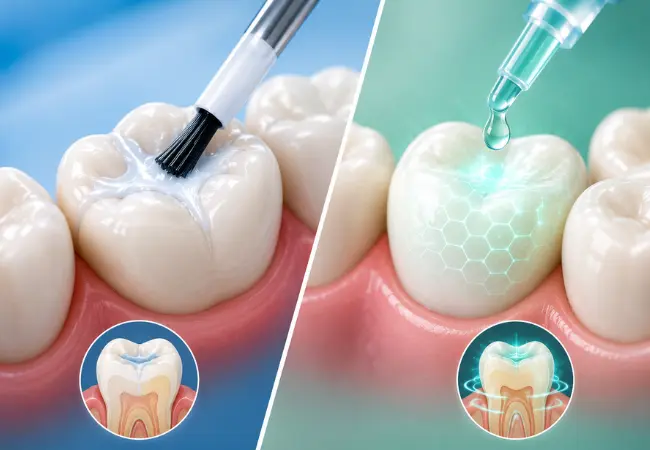
When it comes to preventing cavities, dental sealants and fluoride treatments are two of the most common preventive options used in dentistry. Since both are designed to help protect teeth, many patients assume they do the same thing, but they do not. The key difference is simple: fluoride strengthens tooth enamel across all teeth, while dental sealants physically protect specific areas by covering the deep grooves of back teeth. Both help reduce cavity risk, but they work differently and are often used together rather than as competing treatments.
If you are comparing dental sealants vs. fluoride for yourself or your child, this guide explains what each treatment does, when dentists recommend them, and which option may make the most sense.
What Are Dental Sealants?
Dental sealants are thin protective coatings applied to the chewing surfaces of molars and premolars. These back teeth often have grooves and pits where food particles and bacteria can collect. Even with good brushing habits, those narrow grooves can be difficult to clean fully. That is why sealants create a protective barrier over these grooves, making the surface smoother and helping prevent bacteria and food from settling into those spaces. Studies show that sealants can prevent up to 80% of cavities over two years in molars and continue providing protection afterward.
Sealants are commonly recommended for:
- Children with newly erupted permanent molars
- Patients with deep grooves in the back teeth
- People with higher cavity risk
- Patients who want additional preventive care
What Is Fluoride Treatment?
Fluoride is a naturally occurring mineral that helps strengthen tooth enamel and make teeth more resistant to acid attacks that cause cavities. Unlike sealants, fluoride does not cover the tooth. Instead, it works by helping repair and rebuild weakened enamel.
Professional fluoride treatment may come in several forms:
- Fluoride varnish
- Foam
- Gel
- Rinse
- Prescription-strength fluoride products
Fluoride can also be found in:
- Toothpaste
- Mouth rinses
- Some public drinking water systems
- Certain preventive dental products
How Dental Sealants Work
Molars are cavity-prone because their chewing surfaces have pits and fissures. Toothbrush bristles often struggle to reach into these areas. Sealants solve this by covering the grooves.
The process generally includes:
- Cleaning the tooth
- Drying the surface
- Applying a preparation solution
- Applying sealant material
- Hardening the material with a curing light
Once complete, the surface becomes smoother and easier to keep clean. Sealants act like a shield. They block plaque and food particles from settling into vulnerable chewing surfaces.
How Fluoride Works
Fluoride works differently. When bacteria consume sugars, they produce acids that remove minerals from enamel. This process is called demineralization. Fluoride helps reverse early mineral loss and strengthens enamel against future acid attacks. Instead of acting like a shield, fluoride strengthens the tooth itself. Think of sealants as protective armor and fluoride as reinforcement from within.
Which Is Better for Cavity Prevention?
This question creates confusion because it assumes you should choose one. In reality, dentists often recommend both. Sealants protect the chewing surfaces of back teeth. While fluoride strengthens enamel throughout the mouth. Together, they provide broader protection.
For example:
- A child may receive fluoride varnish at routine visits and sealants once permanent molars erupt.
- An adult with cavity risk may receive fluoride while also using preventive care for vulnerable molars.
These treatments address different cavity risks.
Dental Sealants vs. Fluoride for Kids
Children often benefit from both treatments. Children’s molars have deep grooves that can trap food and bacteria. They are also still learning brushing habits. Did you know that children without sealants are almost three times more likely to develop cavities in molars compared with children who have sealants? Fluoride helps protect the entire mouth while sealants target high-risk chewing surfaces.
A dentist may recommend:
- Fluoride varnish during routine visits
- Sealants after permanent molars erupt
- Regular exams and cleanings
Dental Sealants vs. Fluoride for Adults
Adults may also benefit from preventive treatment.
Sealants may help adults who:
- Have deep grooves in molars
- Have no existing fillings on the chewing surfaces
- Have cavity risk factors
Fluoride may help adults who:
- Have a dry mouth
- Have gum recession
- Have cavity history
- Wear braces or appliances
- Develop root cavities
Which Lasts Longer?
Sealants can last for years, but should be checked during dental visits. On the other hand, fluoride treatment often requires periodic reapplication because its protective effect gradually decreases over time. Neither option permanently prevents cavities. Regular exams remain important.
Who Should Consider Both?
A dentist may recommend both sealants and fluoride if you or your child has a cavity history, molars have deep grooves, there are early enamel changes, oral hygiene needs improvement, orthodontic treatment increases cavity risk, dry mouth is present, and the diet includes frequent sugary snacks. Risk factors matter more than age alone.
Dental Sealants and Fluoride Treatments at Stadium Dental in Downtown Vancouver
At Stadium Dental in Downtown Vancouver, preventive care focuses on helping patients avoid cavities before they become larger problems. For children and adults, preventive dentistry may include exams, professional cleanings, fluoride treatments, and recommendations for sealants when appropriate.
Here at Stadium Dental, our children’s dentistry is designed to help younger patients build healthier oral habits in a comfortable environment. If you are unsure whether fluoride treatment, sealants, or both make sense, our dental team can assess cavity risk, examine the teeth, and explain the most appropriate preventive options for your situation.
FAQs About Dental Sealants vs. Fluoride
What is the difference between dental sealants and fluoride?
Dental sealants create a protective coating over chewing surfaces, while fluoride strengthens enamel and helps protect all teeth against decay.
Are sealants better than fluoride?
Neither is universally better. They work differently and often complement each other.
Can children get both fluoride and sealants?
Yes. Dentists frequently recommend both because they protect teeth in different ways.
Can adults benefit from sealants?
Yes. Adults with deep grooves and cavity risk may benefit from sealants.
Does fluoride prevent cavities?
Fluoride helps strengthen enamel and lower cavity risk by supporting remineralization.
Do sealants last forever?
No. Sealants can last several years, but should be monitored during routine dental visits.
Conclusion
Dental sealants and fluoride both help prevent cavities, but they work differently. Sealants physically protect deep grooves on back teeth. Fluoride strengthens enamel and helps all teeth resist acid damage. One treatment does not replace the other. In many situations, dentists recommend both because they protect in different ways.
At Stadium Dental in Downtown Vancouver, preventive dentistry focuses on helping patients and families reduce cavity risk through early care and personalized recommendations.