
Getting a dental filling is one of the most common treatments for repairing cavities and restoring teeth. But many patients have questions after treatment. Can you eat right away? Is sensitivity normal? How long should a filling last? What should you avoid? Understanding how to take care of a dental filling is important because aftercare affects comfort, healing, and long-term results. A filling repairs a damaged tooth, but the tooth still needs proper care afterward. This guide explains what to expect after a filling, how to protect your tooth, what habits to avoid, and when to contact your dentist.
Why Dental Filling Aftercare Matters
A filling restores a tooth after decay or damage, but it does not make the tooth indestructible. The treated tooth still experiences pressure when chewing and the surrounding enamel still needs protection. Plaque and bacteria can still build up around the edges of fillings if oral hygiene is neglected.
Good aftercare can help:
- Reduce sensitivity
- Prevent damage to the filling
- Lower the risk of new cavities
- Protect the surrounding tooth structure
- Extend the life of the restoration
- Support long-term oral health
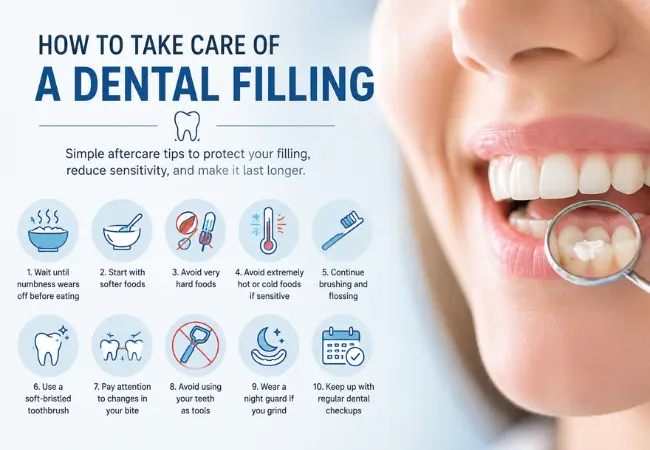
10 Tips on How to Take Care of a Dental Filling
1. Wait Until Numbness Wears Off Before Eating
If your dentist used local anesthetic during your filling procedure, your lips, tongue, cheeks, or parts of your mouth may remain numb for a few hours afterward. Although you may feel ready to eat, eating too soon can increase the risk of accidentally biting your cheek, tongue, or lips without realizing it. You may also burn yourself on hot foods or drinks because numb tissues cannot properly sense temperature. This is especially important for children, who may not recognize when they are injuring themselves. Waiting until the numbness completely wears off can help prevent unnecessary discomfort and soft tissue injuries.
2. Start With Softer Foods
After getting a dental filling, your tooth may feel slightly sensitive or different while your mouth adjusts. You have to start with softer foods for the first several hours which can help reduce unnecessary pressure on the treated area. Foods such as yogurt, soup, rice, eggs, smoothies, oatmeal, soft fruits, or mashed potatoes are often easier to eat comfortably. This becomes even more helpful if you have multiple fillings completed during the same appointment or if the treated cavity was larger. While you do not necessarily need a strict post-treatment diet, giving your tooth time to adjust before returning to hard or chewy foods can help improve comfort.
3. Avoid Very Hard Foods Right Away
Hard foods can place strong pressure on newly restored teeth. Chewing ice, biting hard candies, cracking nuts, or eating popcorn kernels shortly after treatment may create unnecessary stress on the filling and surrounding tooth structure. While modern dental filling materials are durable, the tooth itself may still be adjusting after treatment. Large fillings or teeth that have extensive decay removed can sometimes be more vulnerable initially. Avoiding very hard foods during the first day or so can help reduce discomfort and minimize unnecessary pressure on the treated area.
4. Avoid Extremely Hot or Cold Foods if You Experience Sensitivity
It is common for some patients to notice temporary sensitivity after getting a filling. You may feel sensitivity when drinking ice water, eating ice cream, drinking coffee, or consuming very hot soups. This sensitivity often happens because the tooth has undergone treatment and may need time to settle. Temperature sensitivity usually improves gradually, but reducing exposure to very hot or very cold foods for a short period may help you feel more comfortable during the adjustment phase. If sensitivity becomes severe or lasts longer than expected, contact your dentist for an evaluation.
5. Continue Brushing and Flossing Normally
Some patients mistakenly believe they should avoid brushing or flossing around a newly placed filling because they are afraid of damaging it. In reality, maintaining proper oral hygiene is one of the most important ways to protect your restoration. Plaque and bacteria can still accumulate around the edges of a filling. If these areas are neglected, new decay may develop around the restoration over time. Continue brushing twice daily with fluoride toothpaste and flossing every day. Consistent oral hygiene helps keep both the filling and the surrounding tooth healthy.
6. Use a Soft-Bristled Toothbrush and Gentle Technique
Brushing harder does not necessarily mean brushing better. Using a hard toothbrush or applying excessive pressure can contribute to gum recession, enamel wear, and irritation over time. A soft-bristled toothbrush paired with gentle brushing motions helps clean teeth effectively without creating unnecessary wear on the filling or surrounding tissues. Small circular motions and proper technique are usually more beneficial than aggressive scrubbing. Maintaining gentle brushing habits can help preserve both your restorations and your natural teeth.
7. Pay Attention to Changes in Your Bite
After a filling is placed, your bite should eventually feel natural and comfortable. However, some patients notice that one tooth feels like it touches first or that chewing creates unusual pressure. This can happen if the filling is slightly too high. Even a small difference can place excess force on the tooth and create discomfort. Signs may include pain while chewing, pressure when biting down, or the feeling that your teeth are not fitting together correctly. Do not ignore these symptoms. A quick adjustment from your dentist can often resolve the problem and improve comfort significantly.
8. Avoid Using Your Teeth as Tools
Many people use their teeth for things they were never designed to do. Opening packages, tearing plastic, chewing on pens, biting fingernails, or holding objects between your teeth may seem harmless, but these habits place unnecessary stress on both natural teeth and restorations. Fillings are designed to handle chewing forces, not repetitive strain from non-food activities. Over time, these habits can contribute to chipped fillings, cracked teeth, and avoidable dental problems. Treat your teeth like teeth, not tools.
9. Wear a Night Guard if You Grind Your Teeth
If you grind or clench your teeth during sleep, your fillings may experience significant pressure night after night. Teeth grinding, also called bruxism, can contribute to filling wear, fractures, tooth sensitivity, and damage to surrounding teeth. Many patients do not realize they grind because it happens while they sleep. Symptoms may include jaw soreness, morning headaches, worn teeth, or tight facial muscles. If you suspect grinding, talk to your dentist. A custom night guard may help protect both your fillings and your natural teeth from long-term damage.
10. Keep Up With Regular Dental Checkups
Even if your filling feels perfectly fine, regular dental visits remain important. Fillings can gradually wear down, develop small cracks, or become affected by new decay around their edges. During routine exams, your dentist can monitor the condition of your restorations and detect problems before they become larger concerns. Small issues identified early are often easier and less expensive to address. Routine cleanings and exams are not only about maintaining fillings. They also help protect your overall oral health and support the long-term success of your dental treatment.
Signs Your Filling May Need Attention
Contact your dentist if you notice:
- Sharp pain while chewing
- Persistent sensitivity
- A rough edge
- Visible crack
- Food is getting trapped repeatedly
- Part of the filling is breaking off
- Tooth pain that worsens
- A loose feeling
Dental Fillings at Stadium Dental in Downtown Vancouver
Here at Stadium Dental in Downtown Vancouver, dental fillings are used to restore teeth affected by cavities while helping maintain comfort, appearance, and function. Our clinic provides tooth-colored filling options that blend naturally with surrounding teeth and focuses on helping you understand treatment and aftercare recommendations.
Whether you need a new filling, have questions about sensitivity, or think an older filling may need attention, our team can assess your tooth and provide guidance based on your specific needs. Remember that protecting a filling does not stop after the appointment. Long-term care and routine exams remain important.
FAQs About Dental Filling Aftercare
How long should I wait to eat after a filling?
If your mouth is numb, wait until the numbness wears off to avoid biting your tongue or cheek. Composite fillings are generally ready immediately, though your dentist may recommend caution depending on the treatment.
Is tooth sensitivity normal after a filling?
Yes. Mild sensitivity to temperature or pressure can happen temporarily after treatment. If symptoms worsen or continue, contact your dentist.
Can I brush my teeth after getting a filling?
Yes. Continue brushing and flossing normally, using a gentle technique and fluoride toothpaste.
What foods should I avoid after a filling?
Avoid very hard foods, sticky foods, and extremely hot or cold foods if sensitivity is present.
Why does my bite feel uneven after a filling?
A filling may occasionally sit slightly high. If your bite feels uneven or painful, contact your dentist for an adjustment.
Can dental fillings break?
Yes. Fillings can chip, crack, or wear over time, especially under heavy pressure or grinding habits.
Conclusion
Learning how to take care of a dental filling is important for comfort and long-term oral health. From simple habits such as brushing, flossing, avoiding unnecessary pressure, monitoring sensitivity, to attending regular dental visits can help protect both your filling and the surrounding tooth.
At Stadium Dental in Downtown Vancouver, our team helps patients understand not only treatment options but also how to care for restorations after treatment so they can maintain healthier smiles long term.