
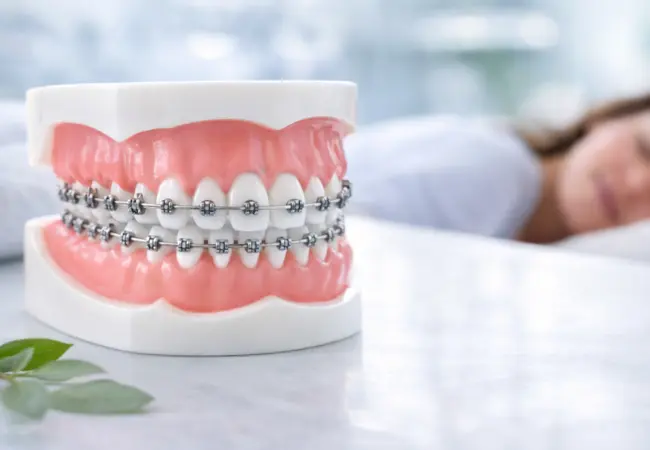
You might not think “braces” and “teeth grinding” belong in the same conversation. One sounds like a straight-teeth solution, and the other feels like a stress or sleep problem. But if your jaw feels tight in the morning or you are noticing worn edges on your teeth, the way your bite fits together can matter more than you expect. When your teeth hit unevenly, your jaw muscles can compensate, and that extra effort can show up as clenching or grinding, especially at night. That is why it makes sense to ask: can braces help with teeth grinding, or are you looking at a different kind of treatment altogether? In this guide, you will learn when braces can reduce grinding by improving bite balance, when grinding is coming from outside your bite, and what steps actually protect your teeth while you get the right long-term solution.
Braces can help with teeth grinding when:
- Your teeth meet unevenly (bite imbalance), and your jaw keeps “searching” for a comfortable position
- Specific teeth hit first and overload your jaw muscles
- Crowding or alignment issues create abnormal wear patterns
Braces may not fix grinding when:
- Your grinding is mainly stress-driven or sleep-related
- You clench hard even during the day
- You have strong jaw muscle overactivity or TMJ symptoms that need separate management
What braces can realistically do for grinders
1) Braces can improve the bite mechanics that may contribute to grinding
Braces are designed to move teeth into healthier alignment and correct bite problems. If your bruxism is partly driven by malocclusion (a bite that does not fit together well), braces can reduce those interferences and distribute bite forces more evenly. That can lower the “mechanical reason” your jaw is working overtime at night.
2) Braces do not automatically remove the habit of bruxism
Many people grind because the nervous system is activated during sleep or because stress patterns trigger clenching. In those cases, even a perfect bite may not stop grinding entirely. This is why bruxism treatment often includes protection (like a guard) plus trigger management.
3) Braces can sometimes make grinding feel worse early on
When your bite is changing, your teeth may contact differently for a while. That adjustment period can temporarily increase clenching or create new sore spots as your jaw adapts. The long-term goal is improved alignment, but short-term discomfort is possible.
A simple “Which category are you in?” test
Category A: Bite-driven grinding (braces are more likely to help)
You may be in this category if you notice:
- Your teeth touch unevenly, or your bite feels “off”
- You have wear marks mostly on certain teeth
- You feel jaw fatigue that seems linked to how you bite down
Category B: Stress or sleep-driven grinding (braces may help, but not alone)
You may be in this category if:
- Grinding worsens during stressful seasons
- You wake up tired, snore, or have restless sleep
- You clench during the day while working or driving
Category C: Heavy clenching with jaw joint symptoms (needs a combined plan)
You may be in this category if you have:
- Jaw clicking, locking, limited opening
- Frequent morning headaches
- Tooth cracks or rapid wear
Can you wear a night guard with braces?
Yes. Mouth guards can be worn with braces, and custom-fit guards are typically the safest option because they are made to accommodate brackets and wires. A proper fit helps protect both your teeth and the orthodontic hardware.
(Important practical point: many store-bought guards fit poorly, can feel bulky, and may not protect braces effectively.)
What to do if you grind your teeth, and you are considering braces
Step 1: Get a bruxism-focused exam before starting orthodontics
You want your dentist to check tooth wear, cracks, sensitivity, bite contacts, and jaw muscle tenderness. This helps confirm whether braces are likely to reduce the trigger or if your grinding is primarily stress/sleep related.
Step 2: Ask how your grinding will be managed during treatment
If you are a strong grinder, you may need a protection strategy while your bite is changing, especially early on.
Step 3: Plan for protection after braces too
Even if braces reduce grinding, many people still clench during stressful seasons. Long-term protection can prevent enamel wear and cracks from returning.
How Stadium Dental can help with braces and teeth grinding
If you want a plan that addresses both alignment and grinding risk, Stadium Dental offers orthodontic options and bruxism-related support that can be relevant to grinders:
- Traditional braces for alignment and bite correction
- Bruxism protection support (night guard guidance) and education on grinding-related wear
- TMJ and jaw tension support, including Botox for TMJ and grinding-related muscle overactivity when appropriate
- Snore guard appliances when sleep breathing issues are part of the bigger picture
If your main concern is waking up sore, wearing down teeth, or breaking dental work, the best next step is a consult that evaluates bite + wear + jaw symptoms together, not in isolation.
FAQs: Can braces help with teeth grinding?
Can braces stop teeth grinding completely?
Sometimes, especially when the grinding is strongly linked to a bite problem. But bruxism often has multiple drivers, so braces may reduce grinding rather than eliminate it entirely.
Can braces make teeth grinding worse?
They can temporarily increase clenching or discomfort early in treatment as your bite changes and your jaw adapts. This is usually a short-term phase, not the result.
Do you need a night guard if you have braces?
Not always, but if you are a heavy grinder or already have tooth wear, your dentist may recommend protection. You can wear a mouth guard with braces, and custom-fit guards tend to work best.
If braces fix my bite, will my jaw pain go away?
It might improve if the pain is bite-related, but jaw pain can also be muscular or stress-driven. Many people do best with a combined plan (bite correction plus muscle and sleep support).
Is Invisalign better than braces for grinders?
It depends on severity and treatment goals. Some grinders do well with aligners, while others may be better suited to fixed braces. The deciding factors are your bite, wear pattern, and how forcefully you clench.
Conclusion
So, can braces help with teeth grinding? Yes, they can, especially when your bruxism is being fueled by an uneven bite or misalignment that overloads certain teeth and jaw muscles. But braces are not a universal cure because grinding is often tied to stress, sleep quality, and muscle activity that can continue even after teeth are straight. The smartest approach is to get assessed first, confirm what is driving your grinding, and build a plan that covers alignment + protection + jaw comfort. If you want a clear answer for your case, Stadium Dental can evaluate your bite, check for tooth wear, and guide you toward braces and supportive options that protect your smile long-term.