
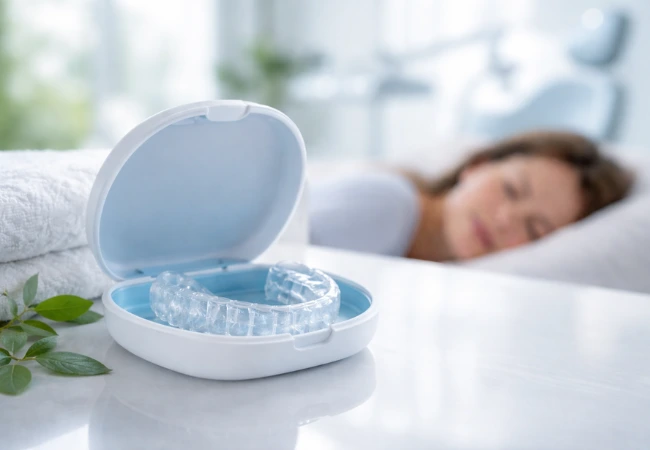
If you are searching “Can Invisalign fix teeth grinding?”, you are probably dealing with at least one of these: waking up with jaw tightness, tension headaches, tooth sensitivity, or noticing your teeth look flatter or more worn than they used to. Teeth grinding (bruxism) can feel confusing because it often happens while you sleep. You cannot simply “try harder” to stop it, which is why choosing the right solution matters.
The most accurate answer is this: Invisalign can help with teeth grinding in certain cases, but it is not a guaranteed cure for everyone. Invisalign is designed to straighten teeth and improve your bite. If your grinding is partly driven by how your teeth fit together, Invisalign may reduce one of the reasons your jaw keeps clenching. But if your grinding is mainly caused by stress, sleep disruption, or strong jaw muscle activity, you may still grind even with straighter teeth. This article breaks down when Invisalign helps, when it doesn’t, and what your best next step is.
What teeth grinding really is (in simple terms)
Teeth grinding can mean two things:
- Grinding: your teeth slide against each other, often creating wear and sometimes a grinding sound.
- Clenching: your teeth press together hard, often silently, but it can still cause serious jaw pain and headaches.
You might not know you do it until you notice symptoms. Common signs include morning jaw soreness, tight cheeks or temples, tooth sensitivity, chipped edges, or a partner hearing you grind at night. Over time, grinding can also stress your jaw joints and contribute to TMJ discomfort.
Can Invisalign fix teeth grinding?
Invisalign may help if your bite is part of the problem
Your bite is the way your upper and lower teeth come together. If your teeth meet unevenly, your jaw may keep trying to “settle” into a comfortable position, especially at night. That constant searching and muscle activity can increase clenching or grinding. When Invisalign improves alignment and bite balance, it can reduce the uneven contacts that may be triggering your jaw muscles to overwork.
In that situation, Invisalign is not just cosmetic. It can be functional, because your bite becomes more stable and your jaw may not feel like it needs to brace as much.
Invisalign may also act as a temporary protective layer
Aligners cover your teeth, so enamel is not rubbing directly against enamel. If your grinding is mild, you may notice less tooth wear during treatment because your aligners take some of that contact instead. Think of it as protection while your bite is being corrected.
Invisalign is not a guaranteed “bruxism cure”
If your grinding is primarily driven by stress, anxiety, poor sleep, snoring, or strong jaw muscle contractions, Invisalign is not designed to switch that off. You might still clench even with perfect alignment. In heavy grinders, aligners can also show wear, roughness, or even cracks sooner than expected because they were not designed to be a long-term bruxism appliance.
So yes, Invisalign can help with teeth grinding in the right case, but it depends on what’s driving your bruxism.
Invisalign vs. night guard: what is the difference?
This is where many people get stuck, so let’s make it simple.
Invisalign
- Main purpose: straighten teeth, improve bite
- Worn: most of the day and night (typically 20 to 22 hours/day)
- Bruxism benefit: may reduce bite-related triggers and provide a barrier
Custom night guard
- Main purpose: protect teeth from grinding forces
- Worn: at night only
- Bruxism benefit: designed specifically to handle clenching pressure and reduce damage to enamel, fillings, and crowns
If you need both, your dentist should plan the timing carefully. Invisalign is a treatment for alignment. A night guard is protective gear for bruxism.
Signs Invisalign might help your teeth grinding
You are more likely to see improvement if:
- You have an uneven bite, crowding, or misalignment that creates premature contacts
- Your grinding symptoms started or worsened alongside bite changes
- Your tooth wear pattern suggests your teeth are colliding in specific spots
- You have mild to moderate grinding without frequent fractures or severe jaw pain
In these situations, Invisalign can reduce mechanical stress by improving how your teeth meet.
Signs you may need more than Invisalign
You likely need a dedicated bruxism plan (with or without Invisalign) if:
- You wake up with strong jaw pain or headaches several times a week
- You have visible cracks, chips, or rapid tooth wear
- You feel jaw clicking, locking, or limited opening
- You suspect stress or sleep disruption is the main trigger
- You are an aggressive clencher (your jaw muscles feel tired even during the day)
Invisalign can still be possible for some heavy grinders, but you should approach it strategically so you do not damage aligners or miss the real root cause.
What you should do if you grind your teeth and want Invisalign
1) Start with a bite and bruxism evaluation
Before you commit, you want an exam focused on bite contacts, jaw joints, muscle tenderness, and wear patterns. This helps confirm whether Invisalign is likely to reduce your grinding triggers or whether your grinding is mostly stress or sleep-related.
2) Ask how your aligners will hold up with your level of grinding
If you grind hard, your dentist can monitor your trays more closely and adjust the plan if needed. The goal is to keep your aligners fitting properly while also protecting your teeth.
3) Treat the “why,” not just the teeth
Even if your bite is improved, your nervous system can still drive clenching. You will usually get better results when you also improve sleep consistency, reduce evening caffeine and alcohol, and use a short jaw-relax routine before bed. When your body is less activated, your jaw tends to brace less.
4) Plan long-term protection after Invisalign
If you have a history of grinding, you may still need protection during stressful seasons. After Invisalign, a custom night guard can help protect your newly aligned bite and prevent long-term enamel wear. This is especially important if you already show signs of tooth wear.
How Stadium Dental can help (Invisalign + teeth grinding support)
If your goal is straighter teeth and less grinding damage, you want a plan that addresses both alignment and protection. Here at Stadium Dental, we can support you with:
- Invisalign consultations to evaluate whether bite correction could help your grinding
- Bruxism and tooth wear assessment to identify early damage and risk factors
- Custom night guards when protection is needed during or after treatment
- TMJ and jaw discomfort support, so jaw pain is not ignored while straightening teeth
If you have been asking “Can Invisalign fix teeth grinding?”, the most practical next step is an exam where your bite, wear pattern, and jaw muscle tension are evaluated together. That is how you avoid guessing and get a plan that actually fits your situation.
FAQ: Can Invisalign fix teeth grinding?
Can Invisalign stop teeth grinding completely?
It can help in cases where grinding is connected to bite imbalance or misalignment. But if your grinding is stress-driven or sleep-related, Invisalign may not stop it entirely.
Do Invisalign aligners work like a night guard?
They can act as a barrier because they cover your teeth, but they are not specifically designed to absorb heavy clenching forces the way a custom night guard is.
Will teeth grinding damage Invisalign aligners?
If you grind heavily, it can wear down aligners faster or cause rough edges and cracks. Mild grinders usually do fine, but heavy grinders need closer monitoring.
Can you get Invisalign if you grind your teeth at night?
Often yes, but you should get assessed first. Your dentist will consider severity, existing wear, jaw symptoms, and whether you may need protection after treatment.
What is better for bruxism: Invisalign or a night guard?
They serve different goals. Invisalign corrects alignment and bite. A night guard protects teeth from grinding forces. Many people benefit from bite improvement plus long-term protection.
Should you treat grinding before starting Invisalign?
If your grinding is severe and you already have cracks or intense jaw pain, you may need to stabilize symptoms first. Your dentist can guide the safest sequence.
Conclusion
So, can Invisalign fix teeth grinding? It can help in the right situation, especially when your grinding is connected to misalignment or an uneven bite that keeps your jaw working overtime. Invisalign may also provide some short-term protection because the aligners create a barrier between your teeth. But if your bruxism is mainly driven by stress, sleep disruption, or strong jaw muscle activity, Invisalign alone may not stop it, and you may still need a custom night guard or a broader bruxism management plan.
The best move is to stop guessing and get your bite, tooth wear, and jaw symptoms assessed together. At Stadium Dental, you can book an Invisalign consultation plus a bruxism-focused evaluation to confirm whether Invisalign is likely to help your grinding, and to build a plan that protects your teeth long-term.