
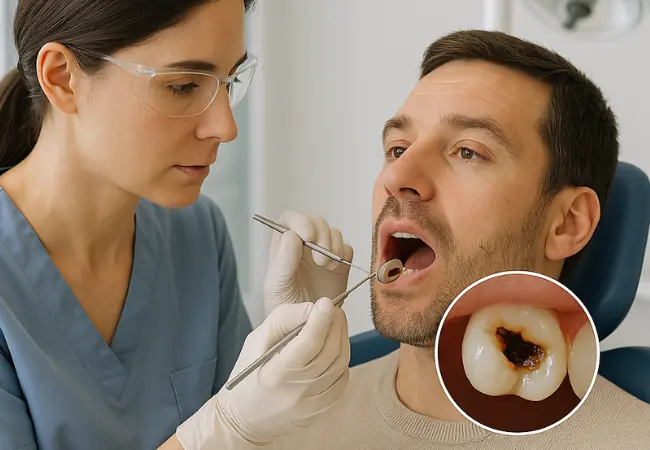
Did you know that cavities are among the most common dental problems worldwide? Yet many of us delay care because early tooth decay often causes little to no pain. For that reason, we believe that understanding cavity treatment, what it is, when it’s needed, and how it works can help prevent minor decay from becoming a serious dental issue. In this article, we explain cavity treatment using a clear problem–solution approach, combining clinical accuracy with real-world experience and practical advice from our expert CDCP-accredited dentists.
What Causes Cavities?
Cavities form when tooth enamel is damaged by acids produced by bacteria in the mouth. These bacteria feed on sugars and starches left on the teeth after we eat.
Common causes of cavities include:
- Frequent consumption of sugary or acidic foods and drinks
- Inconsistent brushing and flossing
- Plaque buildup that is not professionally removed
- Dry mouth, which reduces natural enamel protection
- Delayed or irregular dental checkups
A common mistake we often see is assuming cavities only occur when pain is present. In reality, decay frequently progresses silently until it reaches deeper tooth layers.
Real-Life Example: How Cavities Progress
We often see situations where someone notices mild sensitivity to cold drinks but ignores it because the discomfort fades quickly. Over time, the enamel continues to break down, allowing bacteria to reach the dentin layer beneath.
Months later, the tooth begins to ache when chewing. What could have been resolved with a small filling now requires more advanced cavity treatment, such as a root canal and crown. This progression is one of the most frequent patterns we encounter in dental practice.
Cavity Treatment Options (The Solutions)
Cavity treatment depends on how far the decay has progressed. When we diagnose cavities early, treatment is typically simpler and less invasive.
-
Fluoride Treatment (Early Decay)
If decay is limited to the enamel, professional fluoride treatments can help remineralize the tooth and stop further damage. This option is only effective before a hole forms.
-
Dental Fillings
Fillings are the most common cavity treatment we provide. We remove the decayed material and restore the tooth with a durable filling material, such as composite resin, to prevent bacteria from re-entering the tooth.
-
Inlays and Onlays
When decay is too extensive for a standard filling but not severe enough for a crown, we may recommend inlays or onlays. These restorations provide added strength while preserving more natural tooth structure.
-
Root Canal Treatment
If decay reaches the tooth’s pulp (nerve), infection occurs. Root canal treatment allows us to remove infected tissue, disinfect the tooth, and seal it to prevent reinfection.
-
Dental Crowns
We use crowns when a tooth has been significantly weakened by decay or after a root canal. Crowns restore strength, function, and long-term stability.
- Risk and limitation note:
We always remind patients that no dental restoration lasts forever. Good oral hygiene and regular dental visits are essential to extend the lifespan of any cavity treatment.
How to Prevent Cavities
We believe preventing cavities is more effective and less costly than treating them. Here are the practical prevention measures that you must take to prevent cavities:
- Brushing twice daily with fluoride toothpaste
- Flossing once per day to remove plaque between teeth
- Reducing frequent snacking on sugary foods
- Drinking water regularly to support saliva production
- Visiting a dentist every six months for exams and cleanings
- Using dental sealants when recommended
Conclusion
Cavities often begin as minor enamel damage but can progress into serious dental problems if left untreated. By understanding the causes, recognizing early signs, and choosing the right cavity treatment, we can protect both oral health and overall well-being. Early action remains the most reliable way to avoid complex dental procedures.
If you notice tooth sensitivity, discoloration, or discomfort, we encourage you to schedule a dental examination. If you are in Vancouver, Stadium Dental is here to help you, because we believe that learning more about cavity treatment and addressing issues early can help preserve your natural teeth and prevent long-term complications.
Frequently Asked Questions (FAQs)
What is cavity treatment?
Cavity treatment is the process of removing tooth decay and restoring the damaged tooth using methods such as fluoride therapy, fillings, root canals, or crowns to prevent further damage and infection.
How do I know if I need cavity treatment?
You may need cavity treatment if you experience tooth sensitivity, pain when chewing, visible holes, or dark spots on your teeth, although many cavities show no symptoms and are only detected during dental exams.
Can cavities heal on their own without treatment?
Cavities cannot heal on their own once a hole forms in the tooth. Early enamel damage may be slowed or reversed with fluoride, but established decay requires professional cavity treatment.
Is cavity treatment painful?
Most cavity treatments are not painful because we use local anesthesia. Mild sensitivity after treatment is common but usually temporary.
How long does cavity treatment take?
Simple fillings typically take 20 to 45 minutes, while more advanced treatments such as root canals or crowns may require one or more appointments.
What happens if a cavity is left untreated?
When cavities are left untreated, they can worsen over time, leading to infection, severe pain, tooth damage, and possible tooth loss, often requiring more complex treatment.