
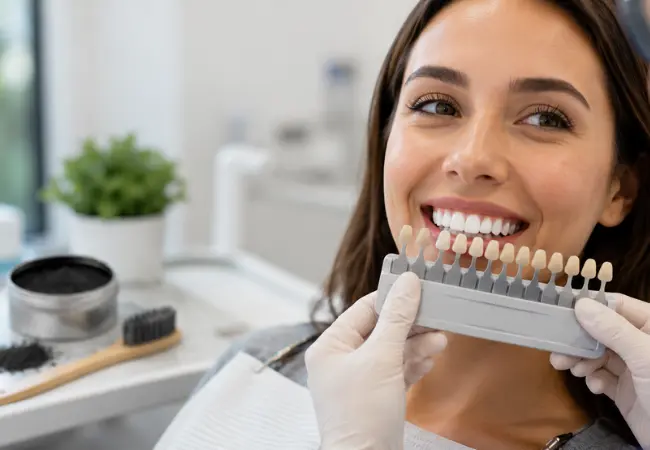
If you’ve spent any time on social media or walked through the oral care aisle recently, you’ve probably seen products promoting charcoal teeth whitening. From charcoal toothpaste to charcoal powders and whitening kits, activated charcoal has become one of the most talked-about trends in cosmetic dentistry. Many of these products promise a brighter smile using natural ingredients, leading people to wonder whether charcoal is a safe and effective alternative to professional whitening treatments. The big question is simple: “Does charcoal teeth whitening actually work?” The answer is a little more complicated than most advertisements suggest.
What Is Charcoal Teeth Whitening?
Charcoal teeth whitening typically uses activated charcoal, a fine black powder created by heating natural materials such as coconut shells, wood, or bamboo at very high temperatures. Activated charcoal has a porous surface that allows it to bind to certain substances. Because of this property, some manufacturers claim that charcoal can help remove stains, bacteria, and impurities from the surface of teeth.
Today, charcoal can be found in several dental products, including charcoal toothpaste, charcoal powders, whitening strips, and mouth rinses. Its popularity is largely driven by its reputation as a natural whitening solution.
How Does Charcoal Teeth Whitening Work?
The idea behind charcoal whitening is relatively simple. When you brush with activated charcoal, its slightly abrasive texture may help remove some surface stains that have accumulated on your teeth over time. These stains are often caused by foods and beverages such as coffee, tea, red wine, and soda. Because charcoal can help polish away some external discoloration, teeth may appear cleaner or slightly brighter immediately after use. However, it is important to understand that charcoal does not actually bleach teeth or change their natural shade. It primarily affects stains on the outer surface of the enamel.
Does Charcoal Teeth Whitening Actually Work?
Charcoal may provide some improvement for mild surface staining, but the results are often less dramatic than many people expect. If your teeth are discolored due to aging, genetics, medications, trauma, or deep internal stains, charcoal products are unlikely to produce significant whitening. Many people mistake stain removal for true whitening. While removing surface stains can make teeth look cleaner, it does not necessarily make them whiter than their natural color. This is one reason why many patients try charcoal products and feel disappointed with the results.
Is Charcoal Teeth Whitening Safe?
While occasional use of charcoal products may not immediately damage your teeth, many dental professionals have concerns about long-term use. The main concern is abrasion. Most charcoal products rely on friction to remove stains. Over time, excessive abrasion may wear away enamel, which is the protective outer layer of your teeth. Unlike skin or other tissues, enamel cannot regenerate once it is lost.
As enamel becomes thinner, you may experience:
- Increased tooth sensitivity
- Greater risk of cavities
- More visible yellow dentin beneath the enamel
- Increased susceptibility to staining
Ironically, excessive charcoal use could potentially make teeth appear darker over time by exposing more of the yellow dentin underneath.
Potential Risks of Charcoal Teeth Whitening
Although charcoal products are widely marketed as natural, natural does not automatically mean risk-free. Potential concerns associated with charcoal whitening include enamel wear, gum irritation, increased sensitivity, and ineffective whitening results. Some charcoal particles may also become trapped around dental restorations such as crowns, veneers, or fillings. Because charcoal products are not all formulated the same way, their abrasiveness can vary significantly between brands.
Who Should Avoid Charcoal Teeth Whitening?
Charcoal whitening may not be the best choice if you have sensitive teeth, gum recession, enamel erosion, veneers, crowns, fillings on visible teeth, or a history of dental sensitivity. If you already have weakened enamel, abrasive whitening products may increase your risk of discomfort and further damage. Before starting any whitening treatment, it is a good idea to discuss your options with your dentist.
Charcoal Teeth Whitening vs. Professional Teeth Whitening
If you’re trying to decide between charcoal teeth whitening and professional whitening treatment, it’s important to understand that they work in very different ways.
Charcoal products are designed to remove some surface stains that build up from foods, drinks, and smoking. Because activated charcoal is mildly abrasive, it can help polish away discoloration sitting on the outer layer of your teeth. However, charcoal does not actually change the natural color of your teeth or remove deeper stains that exist beneath the enamel surface.
Professional teeth whitening treatments work differently. Whitening agents penetrate the enamel and target stains that charcoal products cannot reach. This allows professional treatments to brighten the overall shade of your teeth and produce more noticeable results.
Another important consideration is safety. While occasional use of charcoal products may not cause immediate harm, excessive use can gradually wear down enamel because of its abrasive texture. Once enamel is lost, it cannot grow back. Professional whitening treatments are designed to whiten teeth while minimizing unnecessary enamel wear when performed under professional supervision. Results are another major difference. Charcoal whitening may provide a temporary improvement in surface staining, but the results are often subtle. Professional whitening treatments generally provide brighter, longer-lasting results and can be customized based on your goals, tooth sensitivity, and oral health needs. If your goal is to achieve a significantly whiter smile, professional whitening is usually the more predictable and effective option.
Professional Teeth Whitening at Stadium Dental in Vancouver
Many patients ask whether charcoal teeth whitening is worth trying before considering professional treatment. While charcoal products may help remove some surface stains, they often cannot deliver the dramatic improvements that many people are hoping to achieve. At Stadium Dental in Vancouver, professional teeth whitening treatments are designed to safely brighten your smile while protecting your enamel. Before recommending treatment, our dental team evaluates factors such as existing restorations, tooth sensitivity, stain type, and overall oral health to determine the most appropriate whitening approach.
Some stains respond well to whitening treatments, while others may require alternative cosmetic solutions. By understanding the cause of your tooth discoloration, we can recommend realistic treatment options and help you achieve the best possible results. The goal is not simply to make teeth look whiter. It is to improve your smile safely, comfortably, and with results that look natural.
FAQs
Does charcoal teeth whitening actually work?
Charcoal may help remove some surface stains, but it does not significantly whiten teeth or change their natural shade.
Is charcoal toothpaste safe for everyday use?
Some dentists have concerns about daily use because certain charcoal products may be abrasive and contribute to enamel wear over time.
Can charcoal damage tooth enamel?
Excessive use of abrasive charcoal products may contribute to enamel erosion and increased sensitivity.
Why are my teeth still yellow after using charcoal?
Charcoal mainly removes surface stains. Yellowing caused by aging, genetics, or internal discoloration may require professional whitening treatment.
Is charcoal whitening better than professional whitening?
Professional whitening generally provides more noticeable, longer-lasting, and predictable results.
Can charcoal whiten crowns or veneers?
No. Charcoal cannot change the color of crowns, veneers, fillings, or other dental restorations.
What is the safest way to whiten teeth?
Professional whitening performed under the guidance of a dental professional is often considered one of the safest and most effective whitening options.
Conclusion
Charcoal teeth whitening has gained popularity as a natural way to improve the appearance of stained teeth, but it is not a miracle solution. While charcoal may help remove some surface stains, it does not change the natural color of your teeth or effectively address deeper discoloration. Its abrasive nature also raises concerns about long-term enamel wear when used excessively. If you are looking for noticeable, long-lasting whitening results, professional teeth whitening remains one of the safest and most effective options available. Before trying any whitening product, it is always worth discussing your goals with your dentist to determine the best solution for your smile.