
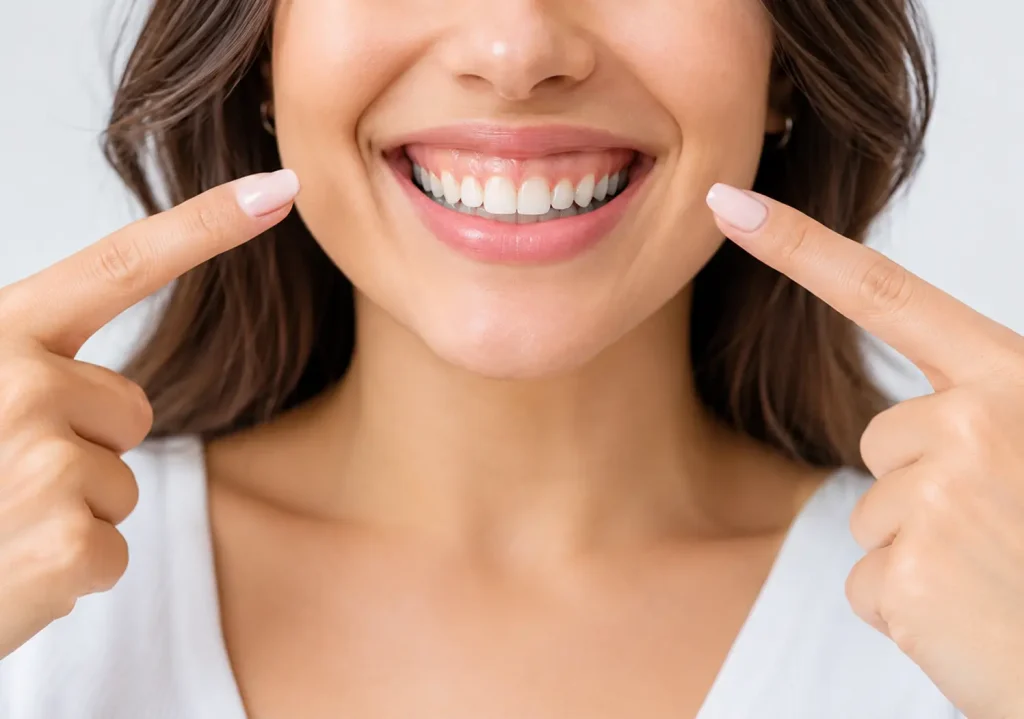
Do your gums show more than you would like when you smile? If your upper lip reveals a noticeable amount of gum tissue above your teeth, you may have what is commonly called a gummy smile.
A gummy smile is usually a cosmetic concern rather than a dental problem that needs to be corrected. However, if you feel self-conscious about your smile, several treatment options may help create a more balanced appearance. The right gummy smile treatment depends on what is causing the extra gum display. In some cases, reshaping the gumline may be enough. In others, treatment may involve Botox, orthodontics, or a more complex procedure to address the position of the teeth or jaw.
At Stadium Dental in Downtown Vancouver, we can help you explore options for improving your smile and understand which treatments may be appropriate for your needs.
What Is a Gummy Smile?
A gummy smile occurs when a noticeable amount of gum tissue is visible above the upper teeth when you smile. There is no single measurement that determines whether a smile looks too gummy, because smile appearance varies naturally from person to person. Some people have healthy teeth and gums but naturally show more gum tissue when smiling. Others may have teeth that appear short because the gums cover more of their visible surface. The amount of gum you show is only one part of the picture. Your tooth proportions, upper lip movement, gumline, and jaw position all influence how your smile looks.
The goal of gummy smile treatment is not necessarily to eliminate all visible gum tissue. It is to address the underlying cause, when appropriate, and create a result that suits your facial features and dental health.
What Causes a Gummy Smile?
Before choosing a treatment, your dentist needs to identify why your gums are so visible. Different causes require different approaches, and a procedure that works for one person may not be suitable for another.
1. Excess gum tissue covering the teeth
Sometimes the teeth have erupted normally, but the gum tissue covers more of their crowns than expected. This can make the teeth look shorter or more rounded than they actually are. Depending on the position of the gums and the underlying bone, gum contouring or crown lengthening may help expose more of the natural tooth.
2. An upper lip that lifts too high
Your upper lip naturally moves upward when you smile. If the muscles responsible for lifting it are particularly active, the lip may rise higher than average and expose more gum tissue. In selected cases, Botox injections may temporarily reduce the upward movement of the upper lip. This approach does not remove gum tissue or change the teeth themselves.
3. Differences in tooth eruption
During childhood and adolescence, teeth gradually emerge through the gums. If the gum tissue does not move to its expected position after the teeth erupt, the visible crowns may appear shorter. A dentist needs to assess the relationship between the teeth, gums, and underlying bone before recommending treatment. Removing gum tissue without considering these structures may produce an unsuitable result.
4. The position or size of the upper jaw
The shape and vertical position of the upper jaw can influence how much gum tissue appears when you smile. If the gummy appearance is primarily related to jaw structure, gum reshaping alone may not address the underlying cause. Depending on the severity, treatment may involve orthodontic assessment or, in selected cases, corrective jaw surgery.
5. Naturally short teeth or differences in tooth proportions
Some people have naturally smaller teeth, while others have teeth that look short because of wear, gum coverage, or their proportions relative to the gums and lips. A dentist can determine whether the appearance is caused by the teeth themselves, the gumline, or a combination of factors. Restorative options may be considered when tooth shape or size contributes to the concern, but they do not correct every cause of excessive gum display.
What Are the Best Gummy Smile Treatment Options?
There is no single treatment that works for everyone. Your dentist will recommend an approach based on the cause of the gummy appearance, your oral health, your goals, and the risks and benefits of each option.
1. Gum contouring
Gum contouring, also called gum reshaping, changes the outline of the gum tissue around the teeth. It may be appropriate when excess gum tissue makes otherwise healthy teeth appear short.
During the procedure, a dental professional removes or reshapes selected gum tissue to create a more even gumline. Depending on the case, the procedure may be performed using a scalpel or dental laser.
Gum contouring may be suitable if:
- Your gums cover more of the visible tooth surface than necessary.
- Your gumline is uneven.
- Your teeth appear short because of excess gum coverage.
- Your oral health and gum anatomy are suitable for the procedure.
However, not every gummy smile can be corrected by removing gum tissue alone. If the underlying bone sits too close to the natural tooth crown, crown lengthening that also reshapes the bone may be needed.
Your dentist must assess the gum tissue, bone levels, and tooth structure before determining whether gum contouring is appropriate.
2. Crown lengthening
Crown lengthening is a procedure that exposes more of the natural tooth by reshaping the surrounding gum tissue and, when necessary, the underlying bone. Although it can be used for restorative reasons, crown lengthening may also improve a gummy smile when excessive gum coverage makes the teeth look shorter than they are. The procedure generally involves numbing the area and carefully adjusting the gum tissue. If the bone level needs to be changed to create a healthy and stable gumline, additional reshaping may be required. After the procedure, the gums need time to heal and settle before the final appearance can be assessed.
Crown lengthening may be worth discussing if your teeth look short because of excess gum coverage or if your gumline is uneven. It is not the right choice for every gummy smile, especially when the main cause is upper lip movement or jaw position.
3. Botox for a gummy smile
If your upper lip rises too high when you smile, Botox may be an option in selected cases. Botox temporarily reduces the activity of targeted muscles. When administered appropriately to the muscles responsible for lifting the upper lip, it may limit how high the lip rises and reduce visible gum tissue. This option may appeal to people who want a nonsurgical approach and whose gummy smile is primarily caused by upper lip movement.
There are important limitations to consider:
- Results are temporary, so repeat treatment may be needed.
- Botox does not remove excess gum tissue or reposition the teeth.
- It will not correct a gummy smile caused primarily by jaw structure.
- Incorrect placement or dosing can affect lip movement and smile symmetry.
Botox should be administered by a qualified professional with appropriate training who can assess your anatomy, explain the risks, and determine whether treatment is suitable.
Stadium Dental offers Botox treatments in Downtown Vancouver, but whether Botox is appropriate for a gummy smile must be determined during an individual assessment.
4. Orthodontic treatment
If the position of your teeth contributes to excessive gum display, orthodontic treatment may help in selected cases.
Braces or clear aligners can correct certain alignment and bite problems. However, ordinary orthodontic treatment does not automatically reduce visible gum tissue. The result depends on the underlying problem and the movements required. Some cases may need more specialized orthodontic techniques to reposition the teeth vertically. These approaches require careful planning and may not be appropriate for every patient.
If you are considering clear aligners, learn more about Invisalign treatment at Stadium Dental. An assessment can help determine whether orthodontic treatment is relevant to your smile concerns.
5. Corrective jaw surgery
When a gummy smile is primarily caused by the position or vertical development of the upper jaw, surgery may be considered for suitable patients. Corrective jaw surgery changes the position of the jaw to address certain structural or bite problems. It is a more involved treatment than gum contouring or Botox and requires specialist assessment and planning. Surgery is not necessary for most people who are concerned about a gummy smile. It is generally considered when the underlying skeletal issue is significant and less invasive options would not adequately address it. Your dental team can explain whether a specialist orthodontic or surgical assessment may be appropriate.
6. Cosmetic dental treatments
Sometimes the appearance of a gummy smile is influenced by the shape, size, or proportions of the teeth as well as the gumline. In these cases, a dentist may discuss restorative options such as composite bonding or veneers as part of a broader smile makeover. These treatments can change the appearance of selected teeth, but they do not reduce excess gum tissue or correct the position of the jaw.
The goal is to choose a conservative treatment plan that addresses the actual concern without removing healthy tooth structure unnecessarily. Explore the Stadium Dental Smile Gallery to see examples of different cosmetic dental approaches.
Which Gummy Smile Treatment Is Right for You?
The most suitable treatment depends on what is causing your gums to show when you smile. A dental examination can help distinguish between excess gum tissue, upper lip movement, tooth position, and jaw-related causes.
Here is a general comparison of the options:
- Gum contouring: May help when excess gum tissue covers more of the teeth than desired.
- Crown lengthening: May be appropriate when gum tissue and, in some cases, underlying bone need to be reshaped.
- Botox: May temporarily reduce excessive upper lip movement in selected cases.
- Orthodontics: May help when tooth position or bite alignment contributes to the gummy appearance.
- Jaw surgery: May be considered for certain significant skeletal causes.
- Cosmetic restorations: May improve tooth proportions when tooth shape or size contributes to the overall appearance.
These options are not interchangeable. For example, removing gum tissue will not correct a gummy smile caused primarily by jaw position. Similarly, Botox will not expose more of a tooth that is covered by excess gum tissue. Better consult with a dentist, they can help you understand which approach addresses your specific concern and whether a combination of treatments is worth considering.
How Much Does Gummy Smile Treatment Cost in Vancouver?
The cost of gummy smile treatment varies according to the cause, the procedure, and the amount of treatment required.
A Botox treatment, a gum contouring procedure, orthodontic care, and corrective jaw surgery involve different clinical steps and costs. The fee may also depend on whether you need one treatment or a combination of procedures. Before committing to treatment, ask for a written estimate that explains what is included, whether follow-up appointments are required, and whether additional procedures may affect the total cost. Because gummy smile treatment is often sought for cosmetic reasons, insurance coverage may be limited or unavailable. Coverage depends on your plan and the reason for treatment, so check with your insurer before proceeding.
At Stadium Dental in Downtown Vancouver, a consultation can help you understand the options that may be appropriate for your needs and the costs associated with your proposed treatment.
Explore Gummy Smile Treatment at Stadium Dental
If you feel self-conscious about the amount of gum tissue you show when smiling, you have options worth exploring. The right gummy smile treatment depends on whether the concern comes from excess gum tissue, upper lip movement, tooth position, or jaw structure.
At Stadium Dental in Downtown Vancouver, we offer cosmetic dentistry, orthodontic treatment, and Botox services. Our team can help you discuss your smile goals and understand which options may be suitable. Some cases may require assessment or treatment by a specialist.
Book a consultation with Stadium Dental to discuss your concerns and explore a treatment plan tailored to your smile. Visit our website or contact our team to get started.
Frequently Asked Questions
What is the most effective gummy smile treatment?
The most effective treatment depends on the cause. Gum contouring may help when excess gum tissue covers the teeth, while Botox may help when an overactive upper lip is responsible. Tooth position or jaw structure may require orthodontic or specialist treatment.
Can a gummy smile be fixed without surgery?
Sometimes. Botox may temporarily reduce excessive upper lip movement, while orthodontic treatment may help in selected cases involving tooth position. However, gum contouring and crown lengthening are procedures, and some structural causes may require surgery. The best option depends on the diagnosis.
Does Botox permanently fix a gummy smile?
No. Botox temporarily reduces the activity of targeted muscles, so the effect gradually wears off. Repeat treatment may be needed to maintain the result. It also does not address gummy smiles caused primarily by excess gum tissue or jaw structure.
Is gum contouring the same as crown lengthening?
Not exactly. Gum contouring generally reshapes the gum tissue to improve its outline. Crown lengthening exposes more of the tooth by adjusting gum tissue and, when needed, the underlying bone. Your dentist can explain which procedure is appropriate for your gum anatomy.
How long does gum contouring take to heal?
Initial recovery may take several days to a couple of weeks, but the gumline can continue to settle afterward. Healing depends on the extent of the procedure and whether bone reshaping is required. Follow your dentist’s instructions and attend recommended follow-up visits.
Is gummy smile treatment only cosmetic?
Often, treatment is chosen to improve appearance and confidence. However, the underlying cause may involve tooth position, jaw structure, or gum anatomy that also needs clinical evaluation. Your dentist can help distinguish a cosmetic concern from an issue requiring treatment for oral health reasons.
Can adults get gummy smile treatment?
Yes. Adults may be suitable candidates for gum contouring, crown lengthening, Botox, orthodontics, or other approaches, depending on the cause. Your oral health, gum anatomy, tooth position, and treatment goals will influence the recommendation.
Conclusion
A gummy smile can have several causes, which is why there is no single treatment that works for everyone. Gum contouring, crown lengthening, Botox, orthodontics, and corrective jaw surgery each address different concerns. If you want to change how much gum tissue shows when you smile, start with an assessment to identify the cause and understand your options. Stadium Dental in Downtown Vancouver can help you explore suitable cosmetic and dental treatments.