
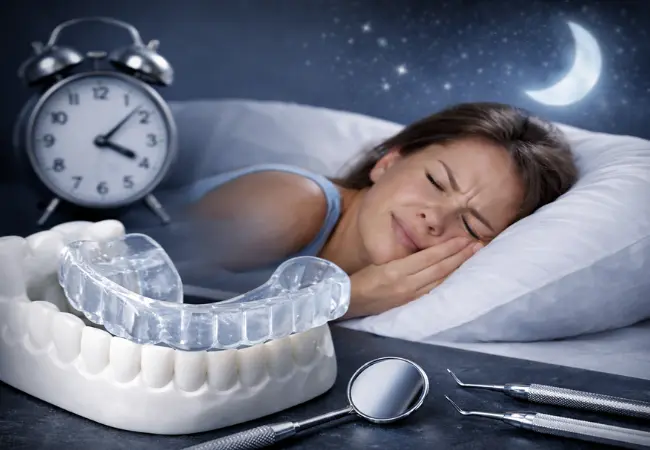
If you keep searching how to stop teeth grinding at night, you are not alone. Nighttime grinding and clenching (often called sleep bruxism) can leave you with jaw soreness, morning headaches, sensitive teeth, and worn enamel. The tricky part is that it usually happens while you are asleep, so you cannot simply “decide” to stop. What you can do is protect your teeth, reduce the triggers that make grinding worse, and get targeted dental support when needed.
Why you might be grinding your teeth at night
Teeth grinding at night is often linked to a mix of factors, including stress, disrupted sleep, jaw muscle tension, and lifestyle triggers like caffeine or alcohol too close to bedtime. Sometimes your bite or jaw joint function can contribute too. Because it is rarely just one cause, the best results come from combining a few small changes plus the right dental protection.
10 steps to stop teeth grinding at night (explained clearly)
1) Make sure what you are experiencing is actually grinding or clenching
Before you try to stop teeth grinding at night, you need a quick reality check: grinding makes noise and wears teeth down, while clenching is silent but can still cause major jaw pain. You may notice symptoms like morning tightness in your cheeks or temples, headaches that start when you wake up, tooth sensitivity, chips on the edges of your teeth, or even a feeling that your bite is “off” in the morning. If you are unsure, a dentist can often spot signs of bruxism just by examining wear patterns on your teeth and asking the right questions.
2) Use a custom night guard to protect your teeth immediately
If you want the most reliable first move for how to stop teeth grinding at night, you start by preventing damage. A custom night guard creates a protective barrier between your upper and lower teeth so grinding forces do not directly wear down enamel or crack fillings. It also helps distribute pressure more evenly, which can reduce jaw strain for many people. Store-bought guards can help in mild cases, but they are often bulky, uncomfortable, and may fit poorly, which can actually increase clenching for some people. A dentist-made guard is shaped to your bite, so you are far more likely to wear it consistently, which is what makes it effective.
3) Train your jaw to “rest open” with a simple pre-bed routine
Many people clench because their jaw muscles are stuck in a habit of tension. A short nightly routine helps teach your body a new default position: relaxed and slightly open. The goal is not to force your jaw down, but to reduce muscle activation before you fall asleep. Try placing your tongue gently behind your upper front teeth, letting your teeth stay slightly apart, and taking slow nasal breaths. When you do this consistently, you are sending your nervous system a signal that it is safe to loosen the jaw, and that can lower the intensity of nighttime clenching and grinding over time.
4) Use heat to loosen tight jaw muscles before sleep
Heat is one of the simplest tools to reduce muscle tightness in the jaw and face. If you wake up sore, it often means the muscles worked too hard overnight. Applying a warm compress to the sides of your jaw for several minutes in the evening can reduce that “ready to clench” feeling. This works best when paired with relaxation breathing, because heat relaxes the muscles while breathing relaxes the nervous system. Think of it like softening a tight knot before bed so your jaw does not start the night already tense.
5) Cut down caffeine later in the day, especially in the afternoon and evening
Caffeine can keep your body in a more alert state, even if you feel like you can fall asleep. That matters because teeth grinding often increases when your sleep is lighter or more disrupted. If you are focused on how to stop teeth grinding at night, treat caffeine like a lever you can control. Start by reducing coffee, energy drinks, or strong tea after lunchtime. If you still want something warm in the evening, switch to a non-caffeinated drink. Over a couple of weeks, many people notice less nighttime tension and fewer “tight jaw” mornings.
6) Reduce alcohol close to bedtime because it can disrupt your sleep cycle
Alcohol may make you feel sleepy at first, but it can disrupt sleep later in the night. When your sleep quality dips, your body is more likely to clench or grind during brief arousals and lighter sleep stages. If you drink, try keeping it earlier in the evening and avoid using alcohol as a sleep aid. You do not need to be perfect for this to help. Even small shifts, like finishing drinks a few hours before bed, can improve sleep steadiness and reduce the conditions that make grinding more likely.
7) Improve your sleep setup so your body is not “on alert” all night
Your environment affects how deeply you sleep, and sleep depth matters for grinding. A room that is too warm, too bright, or too noisy can keep your brain in a semi-alert state. That is exactly the kind of sleep where clenching happens more often. Aim for a cool, dark bedroom and a consistent bedtime routine. Also, try to keep your phone out of your bed. Scrolling tends to increase stress and stimulation, which can activate the same tension patterns that show up as jaw clenching later on.
8) Watch for snoring, mouth breathing, or possible airflow issues
This is a step many people overlook. If you snore, wake up tired, or breathe through your mouth at night, your jaw may be reacting to disrupted airflow. Some people clench as their body tries to stabilize the airway or respond to sleep disruptions. You do not need to self-diagnose anything, but you should treat snoring and poor sleep as a signal to get assessed. In some cases, dental appliances designed to support airflow can reduce both snoring and nighttime clenching, especially when grinding is linked to sleep disturbance.
9) Stop overworking your jaw during the day (gum, hard snacks, nail biting)
Your jaw muscles are like any other muscles. If you keep them “working” all day, they are more likely to stay tight at night. Chewing gum, crunching ice, biting nails, or constantly chewing hard snacks can overload the jaw joint and the muscles around it. If your goal is how to stop teeth grinding at night, you want your jaw to have fewer reasons to stay tense. Replacing gum with water, choosing softer snacks, and breaking nail-biting habits can reduce baseline tension in a surprisingly noticeable way.
10) Catch daytime clenching so it does not carry into your sleep
Many nighttime grinders also clench during the day without noticing. The pattern often happens during focused work, driving, or stress. You can interrupt it by using simple “check-in” triggers. For example, every time you open your laptop, check your phone, or read an email, do a quick scan: relax your shoulders, unclench your jaw, and let your teeth separate. This retrains your nervous system and reduces total clenching hours across a day, which can lower how intensely you grind at night.
How Stadium Dental can help with teeth grinding at night
If you are ready to do more than trial-and-error, a dental visit can help you move faster and protect your teeth from long-term wear. At Stadium Dental, services that connect directly to teeth grinding at night include:
- Custom night guards made to fit your bite comfortably, helping protect enamel and dental work from grinding forces
- Jaw and bite evaluation (TMJ-focused assessment) to check for muscle strain, bite imbalance, or joint irritation
- Tooth wear and sensitivity checks to catch early damage before it turns into cracks or costly restorations
- Snore guard options if you’re grinding may be tied to snoring or nighttime airflow disruption
If you have been asking how to stop teeth grinding at night, a custom guard plus an exam is often the most practical next step because you protect your teeth while also identifying what is driving the habit.
FAQ: How to stop teeth grinding at night
What is the fastest way to stop teeth grinding at night?
The fastest way to reduce harm is to wear a properly fitted night guard, because it protects your teeth right away. At the same time, you get the best long-term results when you also improve sleep quality and reduce stress triggers that fuel clenching.
Can stress really cause teeth grinding at night?
Yes. Stress increases muscle tension and keeps your nervous system more activated, which makes clenching more likely during sleep. Stress reduction is not a “nice to have” here, it is often part of the actual solution.
Will a night guard stop teeth grinding completely?
A night guard does not always stop the habit entirely, but it can significantly reduce damage and strain. Many people also find that their jaw feels better in the morning because the guard helps distribute pressure more evenly.
Why do you grind your teeth more when you are sleeping poorly?
When sleep is fragmented, your body has more micro-awakenings and lighter sleep stages. Those brief arousals are common times for clenching and grinding to kick in.
When should you see a dentist for teeth grinding?
You should book an exam if you have frequent morning headaches, jaw pain, tooth sensitivity, worn or chipped teeth, or if someone hears you grinding at night. Early intervention can prevent cracks and long-term enamel loss.
Conclusion
Learning how to stop teeth grinding at night usually takes a mix of protection and habit changes, not just one quick fix. When you combine a custom night guard with better sleep routines, stress reduction, and simple jaw-relaxation steps, you will give your teeth and jaw the best chance to recover while lowering the intensity of grinding over time. If you are still waking up with jaw pain, headaches, or sensitive teeth, do not wait for the damage to build up. Stadium Dental can assess the cause of your bruxism, check for signs of wear, and create a custom night guard or snore guard option that fits your bite comfortably.