
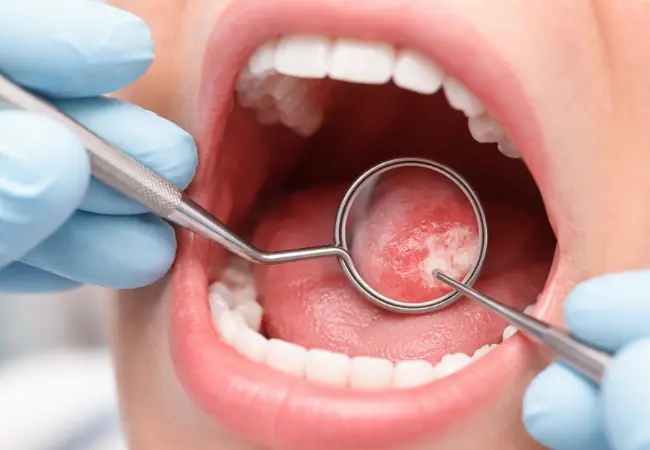
You may want to know what oral cancer is, what it looks like, how serious it is, and whether a sore or patch in your mouth is something you should worry about.
That concern is reasonable. Oral cancer is a serious condition, but the most important thing to know is that early attention matters. It can affect different parts of your mouth, and it does not always start with severe pain. If you notice a change in your mouth that does not heal or go away, it should not be ignored. A persistent mouth sore, lump, or patch that lasts more than two weeks should be evaluated.
What is oral cancer?
Oral cancer is cancer that starts in the mouth. It is part of the broader group of head and neck cancers. Most oral cancers are squamous cell cancers, which means they begin in the thin, flat cells that cover the surfaces inside your mouth, tongue, and lips. As the disease grows, it can spread into deeper tissue.
That definition matters because oral cancer is not limited to one exact spot. It can begin in your lips, gums, cheeks, tongue, floor of the mouth, or roof of the mouth. In other words, it is not just about one visible sore on one part of the mouth. It can show up in different ways and in different places.
Where oral cancer can develop
A lot of people think oral cancer only happens on the tongue. That is too narrow. Abnormal changes can develop on the lips, the inner cheeks, the gums, the floor of the mouth under the tongue, the hard palate, and the tongue itself. This is part of why self-checking can be difficult. You may not notice a change right away, especially if it is in an area you do not see often.
This is also why routine oral exams matter. Some changes are easier to detect during a professional examination than in a quick look in the mirror.
What oral cancer may look or feel like
Oral cancer can appear as a sore that does not heal, a red patch, a white patch, thickened tissue, a lump, unusual bleeding, loose teeth, numbness, pain when swallowing, trouble moving the tongue, swelling in the neck, or ear pain. A sore on the lip that does not heal can also be a warning sign in lip-related cases.
That does not mean every mouth sore is cancer. Most are not. But it does mean that persistence matters. If a sore, patch, or lump stays there and is not healing, waiting indefinitely is not a smart plan. The practical rule is simple: if it has been there for more than two weeks, get it checked.
Common symptoms you should not dismiss
Some symptoms are easy to brush off because they seem minor at first. That is where people often go wrong. You should take notice if you have a mouth sore that does not heal, pain in the mouth, trouble swallowing, loose teeth without an obvious cause, numbness, a feeling that something is stuck in your throat, or a visible patch that does not go away. If your dentures suddenly fit differently, if you develop swelling in the jaw or neck, or if your mouth feels persistently unusual, that also deserves attention.
The point is not to panic over every symptom. The point is to stop assuming that a symptom is harmless just because it is not dramatic yet.
What causes oral cancer?
Oral cancer develops when cells in the mouth begin changing in an abnormal way and start growing out of control. On the patient side, the more useful question is usually what raises your risk.
The biggest risk factors are tobacco use, heavy alcohol use, and HPV infection. Tobacco remains one of the strongest drivers, and heavy alcohol use adds further risk. Some forms of cancer involving the lips are also linked to sun exposure. Age can play a role as well.
This is where you should be careful with your own assumptions. Not having one major risk factor does not make you immune. Risk factors help explain probability, not certainty.
Are you at higher risk?
You may be at higher risk if you smoke, vape, use chewing tobacco, drink heavily, have HPV, or have significant long-term sun exposure on your lips. Older adults are also more likely to develop oral cancer than younger people.
But do not misuse this information. Some people see a risk list and decide they are safe because they do not smoke. That is weak logic. Symptoms still matter. A persistent abnormal area in your mouth should be examined whether or not you match the classic risk profile.
Why early detection matters
Early detection matters because oral cancer can spread, and suspicious changes are easier to evaluate and act on when they are found sooner. Oral cancer exams are meant to identify possible cancer or precancerous changes early, when there is a better chance of effective treatment.
That does not mean screening is a guarantee. It means delay is usually the worse option. If you notice something and keep postponing an evaluation, you are not being calm. You are gambling.
What happens during an oral cancer screening?
An oral cancer screening is generally quick and painless. During the exam, a dentist or doctor looks at your mouth for signs of abnormal tissue and may also feel the tissues of your face, neck, lips, and throat area for lumps or other changes. Many dental visits already include a basic oral exam that can help identify warning signs.
If something suspicious is found, the next step may be closer monitoring, additional testing, or a biopsy. A diagnosis is not made from a quick internet search or a symptom checklist. It requires an actual clinical evaluation, and in some cases tissue testing.
How oral cancer is diagnosed and treated
If a suspicious area is found, diagnosis may involve a physical exam, biopsy, and imaging depending on what is seen and how far the condition may have progressed. A biopsy is the key step in confirming whether abnormal cells are cancerous.
Treatment depends on the type, location, and extent of the cancer. Common treatments include surgery, radiation therapy, and chemotherapy. Some cases may involve additional therapies depending on the stage and specific features of the disease.
How you can reduce your risk
You cannot eliminate every risk, but you can reduce some of the biggest ones.
Avoiding tobacco is one of the most important steps. Cutting back on heavy alcohol use also matters. Protecting your lips from long-term sun exposure is another practical move. Routine oral exams can also help because they give you more chances to catch a problem early instead of after it grows. This is where prevention and awareness work together. You reduce avoidable risks where you can, and you stay alert to changes you cannot explain.
What people often get wrong about oral cancer
Most people make one of two bad mistakes. The first mistake is panic. They assume every mouth sore means cancer. That is not true. The second mistake is neglect. They assume a sore, patch, or numb area is nothing because it does not hurt much or because it has only changed slowly. That is not smart either.
A better approach is simple. Do not diagnose yourself, but do not ignore persistence. Watch for changes. Respect the two-week rule. If something does not resolve, have it examined.
FAQ About Oral Cancer
What are the early signs of oral cancer?
Early signs can include a sore that does not heal, a red or white patch, a lump, loose teeth, numbness, swelling, ear pain, or pain with swallowing.
How long should you wait before getting a mouth sore checked?
If a sore, patch, lump, or unusual mouth change lasts more than two weeks, you should get it evaluated.
Can oral cancer happen if you do not smoke?
Yes. Tobacco is a major risk factor, but heavy alcohol use, HPV, age, and sun exposure can also increase risk.
Does oral cancer screening hurt?
No. Oral cancer screening is generally described as a quick, painless exam.
Can a dentist check for oral cancer?
Yes. Dentists commonly examine the mouth and surrounding tissues during routine visits and may screen for signs of oral cancer or precancerous changes.
How is oral cancer treated?
Treatment may include surgery, radiation therapy, chemotherapy, or a combination depending on the case.
Conclusion
If you are looking into oral cancer, the most important takeaway is this: persistent changes in your mouth deserve attention. You do not need to panic over every sore or patch. But you also should not ignore a symptom that does not heal, go away, or make sense after a couple of weeks. Oral cancer can affect different parts of your mouth, and the earlier a suspicious change is evaluated, the better.
That is the right mindset. Stay calm. Pay attention. Act early when something lingers.