
Finishing Invisalign feels like the finish line, and in a lot of ways, it is. But there’s one more step that genuinely determines whether your results last for years or slowly slip away, wearing your retainer after Invisalign consistently. It’s easy to underestimate how much this one habit matters, especially once your teeth finally look exactly how you wanted them to. Here’s what you actually need to know to protect the results you worked for.
Why You Still Need a Retainer After Invisalign
Your teeth aren’t locked into their new position the moment your last aligner comes out. The ligaments and bone around your teeth need time to fully adapt and stabilize in their new alignment, and until that happens, your teeth have a natural tendency to drift back toward their original position. This is sometimes called “orthodontic relapse,” and it’s extremely common if a retainer isn’t worn as recommended.
It’s also worth knowing that teeth can keep shifting slightly throughout life, not just right after treatment, due to normal aging, changes in your jaw, and everyday forces like chewing and talking. That’s part of why long-term retainer wear, even just a few nights a week, eventually tends to be recommended rather than treated as a short-term formality.
Teeth Shifting After Invisalign: What Actually Causes It
If you’ve noticed even slight movement after finishing Invisalign, a few things are usually behind it:
- Inconsistent retainer wear, especially in the first few months, when teeth are most prone to shifting back
- A retainer that no longer fits properly, often because it was left off long enough that teeth started moving again
- Natural aging changes, since jaw and facial structure continue to change gradually throughout adulthood
- Teeth grinding or clenching, which can put uneven pressure on your teeth over time
- Gum health issues, since gum disease can weaken the structures holding your teeth in place
Some shifting can happen even with good retainer habits, since a small amount of movement over the years is a normal part of aging. The goal of consistent retainer wear isn’t preventing all movement forever, it’s protecting the significant investment you just made in straightening your teeth.
Types of Retainers: Which One Is Right for You?
Not all retainers work the same way, and your dentist will typically recommend the option that fits your lifestyle, budget, and how your teeth responded to treatment.
Clear Retainers
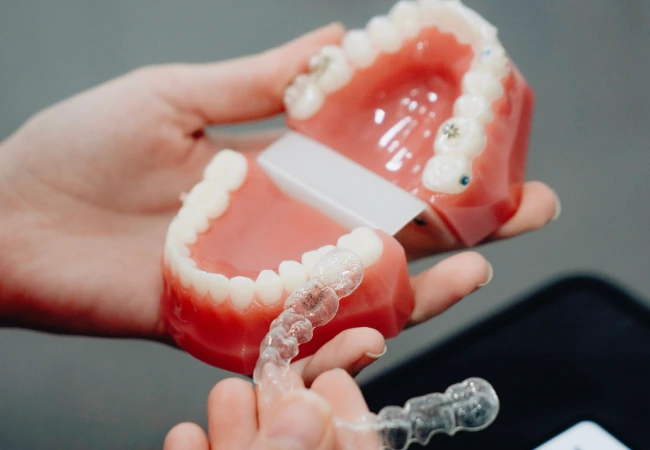
Clear retainers look similar to your Invisalign aligners and are custom-fit to your teeth. They’re worn full-time at first, then typically reduced to nights only after the first few months. They’re discreet and comfortable, but need to be handled carefully, since the thin plastic can warp with heat and scratch if cleaned with toothpaste.
Hawley Retainers
A Hawley retainer combines acrylic (which sits against the roof of your mouth or under your tongue) with a metal wire across the front of your teeth. It’s more durable than a clear retainer and holds up well if you tend to grind your teeth, though it’s more visible when worn.
Fixed (Permanent) Retainers
A fixed retainer is a thin wire bonded to the back of your front teeth, usually the lower ones, so there’s nothing to remember to put in or take out. It offers strong peace of mind against shifting, but requires more careful flossing underneath the wire, and if it breaks, you’ll need a dental visit to have it repaired.
Many patients end up using a combination, for example, a fixed retainer on the lower teeth for constant, low-maintenance protection, paired with a removable clear retainer on top.
How Long Do You Need to Wear a Retainer?
This is one of the most common questions after finishing Invisalign, and the honest answer is: longer than most people expect. Here’s a general timeline, though your dentist will tailor this to your specific case.
- First few months: full-time wear, generally 20 to 22 hours a day, removing only to eat, drink, and clean your teeth
- Next several months to a year: typically reduced to nights only, based on how well your teeth have stabilized
- Long term: most dentists recommend continuing to wear a retainer several nights a week indefinitely, since teeth can gradually shift over the years even long after orthodontic treatment ends
Skipping this long-term step is one of the most common reasons people who had straight teeth years ago end up with noticeable crowding again later. Following your dentist’s specific recommendation, rather than guessing when it’s “safe” to stop, is what actually protects your results over time.
What to Do If You Lose or Break Your Retainer
Life happens, retainers get left in napkins, lost while traveling, or accidentally cracked. Here’s what to do if it happens to you.
- Don’t wait it out. The longer you go without a retainer, the more your teeth can shift, sometimes to the point where your old retainer no longer fits at all.
- Call your dentist right away rather than waiting for your next scheduled checkup, since even a few weeks without one can allow noticeable movement.
- Avoid trying to “fix” a broken retainer yourself. Damaged wires or cracked plastic can shift unpredictably and cause more harm than wearing nothing at all in some cases.
- Ask about replacement options. Depending on how much time has passed, your dentist may be able to simply provide a new retainer from your existing scan or impression, or may need to reassess your teeth first if noticeable shifting has occurred.
Getting a lost or broken retainer replaced quickly is almost always simpler and less expensive than letting your teeth shift and needing more involved treatment to correct it later.
Caring for Your Retainer
A little daily care goes a long way in making your retainer last and keeping your mouth healthy:
- Rinse it with cool or lukewarm water, never hot, since heat can warp clear plastic and some acrylic retainers
- Clean it gently with a soft toothbrush, avoiding toothpaste, which is abrasive and can scratch or dull clear plastic
- Store it in its case when it’s not in your mouth, rather than a napkin or pocket, which is how most retainers actually get lost
- Keep it away from pets, since retainers are a surprisingly common chew toy target
- Brush and floss your own teeth before putting a removable retainer back in, so food particles aren’t trapped against your teeth overnight
Retainer Care at Stadium Dental in Vancouver
Whether you completed Invisalign with us or elsewhere, Stadium Dental can help make sure your results actually last, not just for the first year, but long-term.
Here’s what makes retainer care easier at Stadium Dental:
- Guidance tailored to your specific case, including how long to wear your retainer full-time and when it’s appropriate to reduce to nights only
- Fast replacement support if your retainer is lost, broken, or no longer fitting properly, so you’re not left without protection for weeks
- Fixed and removable retainer options, so you can choose what actually fits your lifestyle
- Ongoing Invisalign and orthodontic support, in case any adjustment or touch-up treatment is ever needed
- A multilingual team, including Mandarin, Cantonese, Punjabi, Russian, and Ukrainian, so you can ask questions comfortably in the language you’re most confident in
- A convenient downtown location at 178 Keefer Place, right next to the Stadium-Chinatown SkyTrain station, with free parking available
You put real time and effort into straightening your smile. Protecting that with the right retainer habits is a small, manageable step that makes all of it worth it long-term.
Need a retainer check or replacement? Book a consultation online or call us at 604-559-0299.
Frequently Asked Questions About Retainers After Invisalign
Do I really need to wear a retainer forever after Invisalign?
Most dentists recommend continued retainer wear, even if reduced to a few nights a week, indefinitely. Teeth can gradually shift over the years due to aging and everyday forces, and long-term retainer wear helps protect your results.
What are the different types of retainers?
Teeth can gradually shift over the years due to aging and everyday forces, and long-term retainer wear helps protect your results
The main types are clear retainers (similar to Invisalign aligners), Hawley retainers (acrylic and wire), and fixed retainers (a wire bonded behind your teeth). Your dentist can recommend the best fit based on your teeth and lifestyle.
How long do you need to wear a retainer after Invisalign?
Typically full-time for the first few months, then reduced to nights only for the following months to a year, and then several nights a week long-term, based on your dentist’s specific recommendation.
What should I do if I lose my retainer?
Contact your dentist right away rather than waiting for your next appointment. The longer you go without a retainer, the more your teeth can shift, sometimes requiring more involved treatment to correct.
Can teeth shift even if I wear my retainer consistently?
Some minor shifting is a normal part of aging, even with good retainer habits. Consistent wear significantly reduces the amount and speed of that shifting compared to not wearing a retainer at all.
Is a fixed retainer better than a removable one?
Neither is universally better, they suit different needs. Fixed retainers offer constant protection without remembering to wear them, while removable retainers are easier to clean thoroughly and allow more flexibility, though they require more discipline to actually wear as directed.
Conclusion
Finishing Invisalign is a real milestone, but your retainer is what actually protects the results long term. Understanding which type fits your lifestyle, sticking to the recommended wear schedule, and acting quickly if something is lost or broken are the simple habits that stand between a smile that lasts and one that slowly shifts back. If it’s been a while since your last retainer check, or you’re not sure if yours still fits properly, it’s worth getting it looked at sooner rather than later.