
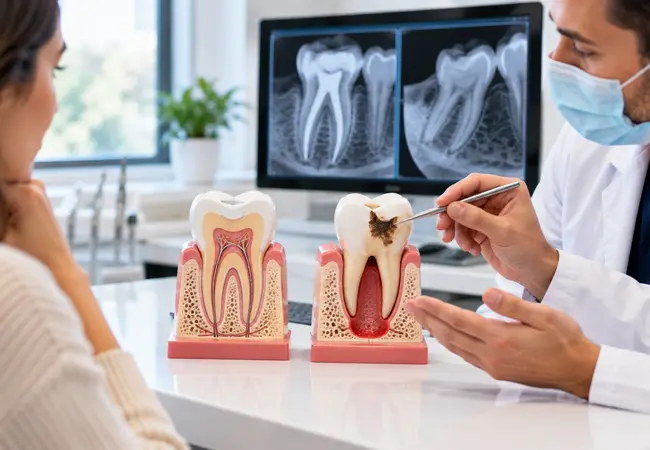
Your dentist has just told you that the tooth causing all that pain is infected. You now have two options: save it with a root canal, or remove it. Pulling the tooth might sound faster, cheaper, and simpler. But is it really?
Choosing between a root canal vs. extraction is one of the biggest dental decisions you can make, because it affects your bite, your comfort, and your budget for years to come. This guide walks you through how each option works, what each one really costs over time, when extraction actually is the better choice, and which questions to ask your dentist before you decide.
The Quick Answer
In most cases, saving your natural tooth with a root canal is the better long-term choice when the tooth can realistically be restored. A root canal removes the infection while keeping your tooth, bite, and surrounding bone intact. Extraction is usually the better choice when the tooth is too damaged to repair, has a cracked root, has lost too much bone support, or has already failed previous treatment. Your dentist is the only one who can tell you which situation applies to your tooth. Understanding the trade-offs, though, helps you decide with confidence.
What Happens in Each Procedure?
Root Canal Treatment
During a root canal, your dentist numbs the area, makes a small opening in the tooth, removes the infected or inflamed pulp, cleans and disinfects the canals, and then seals them. Most back teeth then need a dental crown to protect them from cracking. The result is that you keep your own tooth, root and all.
If you’re still not sure whether your symptoms point to a root canal at all, start with our guide to the signs you need a root canal.
Tooth Extraction
During an extraction, your dentist numbs the area and removes the entire tooth from its socket. The infection leaves with the tooth. However, you’re left with a gap. In most cases, that gap should eventually be filled with an implant, a bridge, or a partial denture to restore normal chewing and keep your other teeth from shifting.
Why Saving Your Tooth Is Usually the Better Choice
Nothing Replaces Your Natural Tooth Perfectly
Modern implants and bridges are excellent, but your natural tooth is still the best fit for your mouth. It sits in living bone with a natural cushioning ligament that gives you a feel for how hard you’re biting. When you keep your tooth, you keep that natural function.
Your Bite Stays Stable
When a tooth is removed and the gap is left empty, the teeth on either side can tilt into the space. The tooth above or below it may also drift toward the gap. Over time, this can change your bite and create new spots where food gets trapped and cavities form.
Your Jawbone Stays Healthy
Your tooth roots stimulate the jawbone every time you chew. Without a root in place, the bone in that area can gradually shrink. This bone loss can make future implant placement more complicated and may even require a bone graft.
It Often Costs Less in the Long Run
This is the part that surprises many people. An extraction usually costs less on the day of treatment. But once you add the cost of replacing the tooth, the total often ends up higher than a root canal and crown. Our guide on how much dental implants cost in Canada explains what goes into implant pricing if you’d like to compare.
When Extraction Is Actually the Better Choice
A root canal isn’t always possible or wise. Your dentist may recommend extraction when:
- The root is cracked or split. A vertical crack running down the root usually can’t be repaired, and the tooth is unlikely to survive even after a root canal.
- There isn’t enough healthy tooth left to restore. If decay or a fracture has destroyed too much of the tooth, there may be nothing solid left to support a crown.
- Advanced gum disease has destroyed the supporting bone. A tooth without enough bone around it may stay loose even after the infection is treated. You can learn more in our article on periodontal disease.
- A previous root canal has failed. Retreatment is sometimes possible, but in some cases extraction becomes the more predictable option.
- The tooth has no important role in your bite. A problem wisdom tooth, for example, is often better removed than saved.
- Orthodontic treatment requires space. Occasionally a tooth is removed as part of a larger treatment plan.
If extraction is recommended, it’s worth understanding what to expect. Our guide to the risks of tooth extraction covers the common complications and how to avoid them.
Recovery: What to Expect With Each Option
After a root canal, you may feel tenderness or mild soreness for a few days, especially when biting. Most people return to normal activities the same day or the next day. You’ll need to avoid chewing hard foods on that tooth until your permanent crown is in place.
After an extraction, the socket needs time to heal. You’ll need to follow aftercare instructions carefully, such as avoiding straws, smoking, and vigorous rinsing for the first few days, to lower your risk of dry socket. The gum usually heals within a couple of weeks, while the bone underneath takes longer to fill in.
What If You Choose Extraction? Plan the Replacement Early
If you and your dentist decide extraction is right, plan the next step before the tooth comes out. Your main replacement options are:
- Dental implants, which replace the root and the tooth and look and feel the most like a natural tooth.
- A dental bridge, which uses the neighbouring teeth to support a replacement tooth.
- A partial denture, a removable and more budget-friendly option.
Each has its own pros, cons, and costs. Our guide to the best tooth replacement options after extraction breaks them down so you can compare.
What If a Root Canal Fails?
Most root canals are successful, especially when the tooth is properly restored with a crown afterward. If a treated tooth becomes painful or infected again, you still have options:
- Retreatment, where the canals are reopened, cleaned again, and resealed
- Endodontic surgery, a specialized procedure to treat the tip of the root
- Extraction and replacement, if saving the tooth is no longer realistic
Questions to Ask Your Dentist Before You Decide
To make the best choice for your situation, ask:
- How much healthy tooth structure is left, and can it support a crown?
- What are the realistic chances that a root canal will succeed on this tooth?
- What would the total cost of each option be, including a crown or a replacement tooth?
- What happens if I extract the tooth and don’t replace it right away?
- How much of each option does my insurance or the CDCP cover?
A good dentist will walk you through these answers clearly and never pressure you into one option.
Root Canal or Extraction? Get an Honest Recommendation at Stadium Dental
When you’re in pain, it’s hard to think clearly about long-term decisions. At Stadium Dental, we take the time to explain your options so you can choose what’s right for your tooth, your comfort, and your budget, without pressure.
Here’s how we help you make the right call:
- A clear diagnosis first. Digital X-rays and complimentary 3D digital scanning show exactly how much of your tooth can be saved, so your recommendation is based on what’s really there.
- Gentle, pain-free root canal treatment. When your tooth can be saved, our root canal treatment focuses on relieving your pain while keeping your natural tooth.
- Complete care if extraction is the better option. We can guide you through extraction and replacement, whether that means an implant, a bridge, or a denture, all under one roof.
- Crowns in-house. If your tooth needs a crown after a root canal, you won’t need to go to another clinic.
- Comfort for anxious patients. We offer conscious oral sedation so you can feel calm during either procedure. You can learn more in our guide to sedation dentistry in Vancouver.
- Transparent pricing. We follow the BC Dental Fee Guide, give you an estimate for each option before treatment, and bill most insurance providers directly.
- CDCP patients welcome. We accept the Canadian Dental Care Plan and can help you understand your coverage.
- A multilingual team. Our team speaks languages including Mandarin, Cantonese, Punjabi, Russian, and Ukrainian, so you can explain your symptoms in the language you’re most comfortable with.
- Easy to reach. We’re at 178 Keefer Place, right beside the Stadium-Chinatown SkyTrain station, with free parking available and Saturday hours.
Not sure whether your tooth can be saved? Book your consultation online, call us at 604-559-0299, or contact our team with any questions.
Frequently Asked Questions About Root Canal vs. Extraction
Is it better to get a root canal or pull the tooth?
If your tooth can be restored, a root canal is usually better because it keeps your natural tooth, protects your bite, and preserves your jawbone. Extraction is often the better choice when the tooth is cracked below the gum line, too damaged to restore, or has lost too much bone support.
Is extraction cheaper than a root canal?
On the day of treatment, yes. But if you replace the extracted tooth with an implant or bridge, which is usually recommended, the total cost is often higher than a root canal and crown.
Which is more painful, a root canal or an extraction?
Both are done under local anesthetic, so you shouldn’t feel sharp pain during either procedure. Afterward, a root canal usually causes mild soreness for a few days, while an extraction site can be sore for longer as the socket heals.
Can I just leave the gap after an extraction?
You can, but it’s usually not recommended for teeth you use to chew or smile. Over time, nearby teeth can shift into the gap, your bite can change, and the jawbone in that area can shrink.
Can I get a dental implant right after an extraction?
Sometimes. In certain cases, an implant can be placed on the same day as the extraction. Other times, the site needs to heal first or needs a bone graft. Your dentist will recommend the best timing based on your bone and gum health.
How long does a tooth last after a root canal?
With a proper crown and good oral hygiene, a tooth treated with a root canal can last many years, often a lifetime. Regular checkups help catch any problems early.
Can a tooth be too damaged for a root canal?
Yes. If the root is cracked, too little tooth structure remains, or the supporting bone is severely damaged, a root canal may not be successful. In those cases, extraction and replacement is usually the more reliable option.
Does CDCP cover root canals and extractions?
The Canadian Dental Care Plan includes coverage for many essential services, including certain root canal treatments and extractions, depending on your eligibility and plan rules. See our guide on what CDCP covers or ask our team to check your coverage.
The Bottom Line
When you’re weighing a root canal vs. extraction, the best choice depends on how much of your tooth can be saved, your long-term oral health, and your budget. In most cases, keeping your natural tooth is worth it. When it isn’t, a well-planned extraction and replacement can restore your smile just as well.
The first step is an honest diagnosis. Schedule your visit with Stadium Dental and let our Downtown Vancouver team help you decide with confidence.