
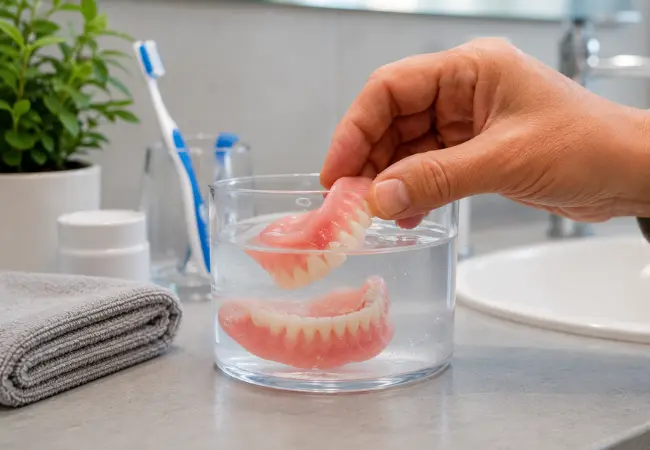
If you wear dentures, you’ve probably heard that you should soak them overnight. But is this really necessary, or is it simply a recommendation that has become common over time? The short answer is yes. In most cases, you should soak your dentures overnight. Proper soaking helps maintain their shape, keeps them clean, and supports your overall oral health. However, the type of denture you wear and the cleaning products you use can affect how you should care for them. Understanding why overnight soaking matters can help you extend the life of your dentures and keep your mouth healthy.
Why Do Dentures Need to Stay Moist?
Unlike natural teeth, dentures are made from materials that can lose their shape if they become too dry. Most dentures are designed to remain moist when they are not being worn. If dentures dry out completely, they may warp, crack, or become uncomfortable to wear. Even minor changes in shape can affect how your dentures fit against your gums. When you soak your dentures overnight, you help preserve their structure and maintain a comfortable fit.
Should You Soak Dentures Overnight Every Night?
For most denture wearers, soaking dentures overnight should be part of their daily routine. Removing your dentures before bed allows your gums and oral tissues to rest. At the same time, soaking helps keep the dentures hydrated and clean.
Sleeping with dentures in your mouth every night may increase the risk of gum irritation, plaque buildup, and oral infections. Many dentists recommend removing them before sleeping whenever possible. If you are unsure whether your specific dentures should be removed overnight, consult your dentist for personalized guidance.
Benefits of Soaking Dentures Overnight
One of the biggest benefits of soaking dentures overnight is maintaining their shape. Dentures that remain moist are less likely to warp or become damaged. That is why, soaking helps loosen food particles, plaque, and bacteria that may remain on the denture surface after brushing. This makes daily cleaning more effective and helps reduce odors.
Regular overnight soaking may also improve comfort by preventing material changes that could affect the fit of your dentures. Additionally, removing dentures while sleeping allows your gum tissue to recover from the pressure placed on it throughout the day.
What Happens If You Don’t Soak Dentures Overnight?
Skipping overnight soaking occasionally may not immediately damage your dentures, but repeatedly allowing them to dry out can create problems over time.
You may experience:
- Dentures are becoming warped or misshapen
- Poor fit and increased movement
- Gum irritation and sore spots
- Increased plaque accumulation
- Unpleasant odors
- Reduced denture lifespan
The longer dentures remain dry, the greater the potential risk of material distortion.
What Should You Soak Dentures In?
Many patients assume plain tap water is always the best option. While water is commonly used, some dentures benefit from specialized denture cleaning solutions.
Your dentist may recommend:
- Clean water
- Denture soaking tablets
- Antibacterial denture cleansers
- Professional denture cleaning products
Always follow the manufacturer’s instructions and avoid using products not designed for dentures. Moreover, hot water should generally be avoided because excessive heat may cause warping.
Can You Soak Dentures in Water Overnight?
Yes. Most dentures can safely be soaked in water overnight. Water helps prevent the denture material from drying out and maintains its shape. However, depending on your oral health needs and denture type, your dentist may recommend a denture cleanser in addition to water. But the most important factor is ensuring your dentures remain moist while not being worn.
Can You Sleep With Dentures In?
Some people choose to sleep with their dentures in place, especially if they are concerned about appearance or convenience. However, dentists generally recommend removing dentures before bed whenever possible. Sleeping without dentures allows your gums to rest and may reduce the risk of irritation and infection. Continuous denture wear may also contribute to inflammation and poor oral tissue health over time.
How to Properly Clean Dentures Before Soaking
Before placing your dentures in a soaking solution, you should clean them thoroughly. You may start by rinsing away food debris. Then gently brush the denture surfaces using a soft denture brush and a cleaner specifically designed for dentures. Regular toothpaste may be too abrasive for some denture materials and could cause scratches. Once cleaned, place the dentures in the recommended soaking solution overnight.
Common Mistakes People Make With Denture Care
Many denture wearers unintentionally shorten the lifespan of their dentures through improper care. Common mistakes include using hot water, skipping overnight soaking, using abrasive cleaning products, sleeping with dentures every night, and failing to clean the dentures before soaking them. Another common mistake is neglecting regular dental visits. Even if you no longer have natural teeth, routine dental examinations remain important for monitoring your oral health and denture fit.
Should I Soak Dentures Overnight at Stadium Dental in Vancouver?
At Stadium Dental in Vancouver, patient education is an important part of denture care. During denture consultations and routine dental visits, our team provides personalized recommendations for cleaning, storing, and maintaining dentures based on your specific appliance and oral health needs.
Patients often assume that all dentures require identical care, but different materials and designs may have different maintenance requirements. Here at Stadium Dental, we help patients understand how to properly clean dentures, what soaking solutions are appropriate, how often dentures should be removed, and when adjustments may be needed. Proper denture care is not only about keeping dentures clean. It also helps preserve comfort, extend the lifespan of the appliance, and support the health of your gums and oral tissues.
Tips for Keeping Your Dentures in Good Condition
Taking care of your dentures every day can help them last longer and remain comfortable. Maintain a consistent cleaning routine, soak them overnight as recommended, handle them carefully to avoid dropping them, and schedule regular dental visits to monitor fit and function. Small daily habits can make a significant difference in the long-term performance of your dentures.
FAQs
Should I soak dentures every night?
Yes. Most dentists recommend soaking dentures overnight to keep them moist and maintain their shape.
Can dentures dry out overnight?
Yes. Dentures that dry out repeatedly may warp, crack, or become uncomfortable to wear.
What is the best solution for soaking dentures?
Water and denture-cleaning solutions are commonly recommended. The best option depends on your denture type and your dentist’s advice.
Can I sleep with my dentures in?
While some people do, most dentists recommend removing dentures before bed to allow your gums to rest.
How long should dentures soak overnight?
Most dentures can soak throughout the night. Follow your dentist’s instructions and any manufacturer guidelines.
Can I use hot water to soak dentures?
No. Hot water may warp denture materials and affect the fit of your appliance.
What happens if I forget to soak my dentures one night?
Occasionally, forgetting may not cause immediate damage, but repeated drying can affect denture fit and longevity.
Conclusion
So, should you soak dentures overnight? For most denture wearers, the answer is yes. Overnight soaking helps maintain denture shape, supports cleanliness, reduces bacteria buildup, and promotes better oral health. It also allows your gums to rest while helping your dentures stay in good condition. If you wear dentures and are unsure about the best cleaning or soaking routine, speaking with your dentist can help ensure you are caring for your appliance properly and protecting your oral health for years to come.