
Losing a tooth can be overwhelming. Whether you’ve had a tooth extracted because of severe decay, infection, trauma, or gum disease, one of the first questions you may ask yourself is, “What should I do next?”
While it may be tempting to leave the space empty, replacing a missing tooth is often important for your long-term oral health. Missing teeth can affect the way you chew, speak, and smile. Over time, they can also cause neighboring teeth to shift out of position and contribute to jawbone loss. The good news is that you have several tooth replacement options after extraction. Learning the advantages and limitations of each option can help you make the best decision for your smile, budget, and lifestyle.
Do You Need to Replace a Tooth After an Extraction?
Not every extracted tooth requires replacement, but in many situations, replacing a missing tooth is highly recommended. When a tooth is removed, the surrounding jawbone no longer receives stimulation from the tooth root. As a result, the bone may gradually shrink over time. Adjacent teeth may also begin to drift into the empty space, potentially affecting your bite and alignment. Moreover, missing teeth can also make it more difficult to chew certain foods and may impact your confidence when speaking or smiling. The sooner you discuss replacement options with your dentist, the more choices you may have available.
Why Replacing Missing Teeth Matters
Replacing a missing tooth is about more than appearance. It can help you maintain proper chewing function, preserve your facial structure, support clear speech, and prevent neighboring teeth from shifting. Certain replacement options may also help slow or minimize bone loss in the jaw. Choosing not to replace a missing tooth may lead to additional dental concerns that require more extensive treatment later on.
The 5 Best Tooth Replacement Options After Extraction
1. Dental Implants
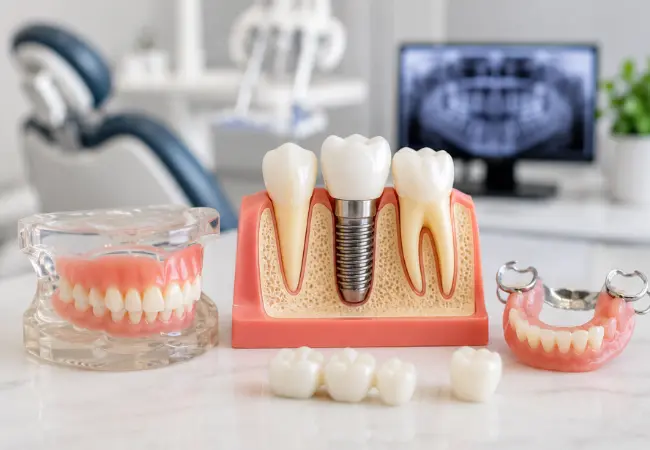
Dental implants are often considered the gold standard for replacing missing teeth. A dental implant consists of a titanium post that is surgically placed into the jawbone to function like an artificial tooth root. Once the implant integrates with the bone, a custom dental crown is attached to restore the appearance and function of the missing tooth. One of the biggest advantages of dental implants is that they closely mimic natural teeth. Because the implant stimulates the jawbone, it may help reduce bone loss following extraction. Dental implants are durable, stable, and do not rely on neighboring teeth for support. They are often recommended for patients with healthy gums and sufficient bone density. However, implant treatment typically requires several months to complete and may involve a higher initial investment compared to other options.
2. Dental Bridges
Dental bridges replace one or more missing teeth by anchoring an artificial tooth to the neighboring teeth. A traditional bridge uses crowns placed over the teeth adjacent to the extraction site to support the replacement tooth in between. Bridges can restore chewing ability and improve the appearance of your smile relatively quickly. They may be a good option if you are not a candidate for dental implants. One limitation is that healthy neighboring teeth often need to be reshaped to accommodate the crowns. Unlike implants, bridges do not stimulate the jawbone beneath the missing tooth.
3. Partial Dentures
Partial dentures are removable appliances designed to replace several missing teeth while preserving your remaining natural teeth. These appliances typically include replacement teeth attached to a gum-colored base that may use clasps for support. Partial dentures are often more affordable than implants and bridges, making them a practical option for many patients. They can improve function and appearance, although they may require an adjustment period as you become accustomed to wearing them. Because they are removable, partial dentures require daily cleaning and maintenance.
4. Full Dentures
If you have lost all of your teeth in one arch, full dentures may provide a complete tooth replacement solution. Full dentures rest on the gums and are custom-made to fit your mouth. Modern dentures have improved significantly in appearance and comfort compared to older versions. They can restore facial support, improve speech, and help you eat a wider variety of foods. However, because they do not replace tooth roots, bone loss may continue over time, potentially affecting fit. Periodic adjustments or replacements may be necessary.
5. Implant-Supported Dentures
Implant-supported dentures combine the benefits of traditional dentures and dental implants. Instead of resting solely on the gums, the denture attaches to strategically placed dental implants within the jawbone. This added stability can improve chewing efficiency, reduce slipping, and increase confidence during speaking and eating. Implant-supported dentures may also help preserve bone and provide a more secure fit than conventional dentures. For many patients seeking a full-arch solution, this option offers an excellent balance of comfort and function.
How Do You Choose the Right Tooth Replacement Option?
The best tooth replacement option depends on several factors. Your oral health, bone density, number of missing teeth, budget, lifestyle, and personal preferences all play important roles in determining the right solution. For example, if you are looking for the closest alternative to a natural tooth, dental implants may be ideal. If you prefer a more affordable solution, partial dentures or bridges may better fit your needs. Discussing your goals and concerns with your dentist can help you make a confident decision.
What Happens If You Delay Tooth Replacement?
Some people postpone replacing a missing tooth because they are not experiencing immediate problems. Unfortunately, delaying treatment can sometimes limit future options. Bone loss may progress, neighboring teeth may shift, and bite changes can occur over time. These changes may make future treatment more complex or require additional procedures. Addressing tooth replacement sooner rather than later can help preserve your oral health and expand your available treatment choices.
Tooth Replacement Options After Extraction at Stadium Dental in Vancouver
At Stadium Dental in Vancouver, treatment recommendations are tailored to your specific needs rather than using a one-size-fits-all approach. After a tooth extraction, our dental team evaluates factors such as the location of the missing tooth, the condition of your gums and jawbone, your overall oral health, and your long-term goals before discussing replacement options.
Whether you are considering a dental implant, bridge, partial denture, full denture, or implant-supported denture, you will receive personalized guidance to help you understand the benefits and limitations of each option. The focus is not simply on replacing a missing tooth. It is on restoring function, protecting your oral health, preserving your confidence, and helping you choose a solution that fits your lifestyle and budget.
FAQs
What is the best tooth replacement option after extraction?
Dental implants are often considered the closest replacement to natural teeth because they restore both the tooth and its root.
How soon can I replace a tooth after extraction?
The timeline depends on your healing process and the treatment selected. Some options can begin soon after extraction, while others require healing time.
Are dental implants better than bridges?
Dental implants preserve bone and do not affect neighboring teeth, while bridges may offer a quicker and sometimes more affordable solution.
Can I leave the space empty after a tooth extraction?
In some cases, yes. However, leaving a missing tooth untreated can lead to shifting teeth, bite changes, and bone loss.
What is the most affordable tooth replacement option?
Partial dentures are often among the most budget-friendly solutions for replacing missing teeth.
Do dentures look natural?
Modern dentures are designed to closely resemble natural teeth and gums, improving both appearance and function.
How long do dental implants last?
With proper care and regular dental visits, dental implants can last for many years and may even last a lifetime.
Conclusion
Losing a tooth does not mean you have to live with an incomplete smile. From dental implants and bridges to partial dentures and implant-supported dentures, there are several effective tooth replacement options after extraction. Each option offers unique advantages depending on your oral health needs, budget, and lifestyle.
The key is to explore your options early and work with your dentist to develop a treatment plan that supports your long-term health and confidence. Replacing a missing tooth can help restore your ability to eat comfortably, speak clearly, and smile without hesitation.