
If you are missing one or more teeth, you may be looking for a solution that feels secure, looks natural, and helps you chew more comfortably. That is where dental bridges come in.
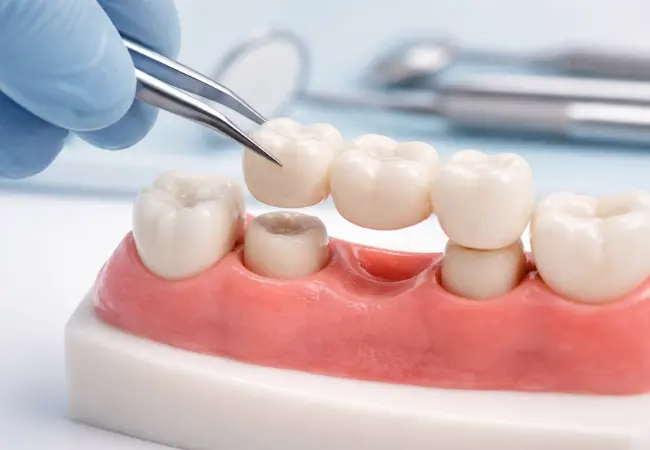
A dental bridge is a fixed tooth replacement used to fill the gap left by one or more missing teeth. A bridge is described as a fixed partial denture that replaces missing teeth by bridging the space where teeth used to be. It is attached to surrounding teeth for support and is usually made from porcelain, alloys, gold, or a combination of materials. If you are trying to understand types of dental bridges and how they work, this guide will walk you through.
What is a dental bridge?
A dental bridge is a restoration that replaces one or more missing teeth in a row. It includes one or more artificial teeth, called pontics, and is supported either by your natural teeth, dental implants, or a bonded wing structure, depending on the type of bridge used. There are four common types: traditional, cantilever, Maryland, and implant-supported bridges.
The main reason you would consider a bridge is simple. A gap from a missing tooth can affect how you chew, how your smile looks, and how stable your bite feels. Bridges are meant to restore function and appearance with a fixed solution that stays in place.
Why do people choose dental bridges
If you are missing a tooth, you are not only thinking about looks. You may also be thinking about chewing, confidence, speech, and whether nearby teeth will be affected over time.
A bridge can help in several ways. It fills the visible gap, helps spread biting forces more normally, and gives you a fixed option that is not removed for cleaning like a denture. This information also notes that a bridge is a fixed replacement for a missing tooth or teeth.
That said, a bridge is not automatically the best answer for every case. It is only one option among several, and whether it makes sense depends on where the missing tooth is, how many teeth are missing, and whether the supporting teeth are healthy enough.
Types of Dental Bridges
This is the part most people are actually searching for: what are the types of dental bridges?
Traditional dental bridge
A traditional bridge is the most common type. It usually consists of an artificial tooth held in place by dental crowns on the teeth on either side of the gap. Patient resources describe this as the standard design most people think of when they hear the term dental bridge
This type often works well when you have healthy teeth on both sides of the missing space that can support crowns. It is usually a practical choice when replacing one tooth or a short span of missing teeth.
Cantilever dental bridge
A cantilever bridge is supported on only one side instead of both. This includes cantilever bridges among the standard bridge types.
This design is used less often because the support is more limited, which can put extra pressure on the anchoring tooth. It may still be considered in specific cases, but it is not usually the first option when stronger support is available.
Maryland dental bridge
A Maryland bridge is sometimes called a resin-bonded bridge or adhesive bridge. Instead of full crowns on both supporting teeth, it uses a framework or wings bonded to the backs of nearby teeth. This type of dental bridge is also known as “resin-retained”.
This type can be more conservative because it may require less removal of tooth structure. It is often used in selected cases, especially when the goal is to preserve as much of the adjacent teeth as possible.
Implant-supported bridge
An implant-supported bridge uses dental implants instead of natural teeth for support. This can be especially useful when you are missing multiple teeth in a row. Implant-supported bridges are one of the main bridge types, and when replacing more than one tooth, custom-made bridges can be attached to implants. Stadium Dental’s own implant content also describes implant-supported bridges as an option for multiple missing teeth.
This option is often more stable than a traditional bridge and does not depend on neighboring natural teeth as anchors. It can be a strong choice when implant treatment is appropriate, and you want a more independent long-term solution.
Which type of dental bridge is best for you?
There is no universal “best” bridge for everyone. If you have strong teeth on both sides of the gap, a traditional bridge may make sense. If you want a more conservative solution in a suitable case, a Maryland bridge may be considered. If you are missing multiple teeth and want more stability without relying on natural teeth as anchors, an implant-supported bridge may be a better option.
The correct answer depends on the condition of the nearby teeth, the number of missing teeth, the position of the gap, your bite, your gum health, and your budget. That is where people often get lazy. They search for “best dental bridge” as if one format wins every time. It does not. The right choice is case-specific.
How long do dental bridges last?
Dental bridges can last for years with proper care, but their lifespan depends on the design, materials, bite forces, and how well you maintain them. Research says bridges can last about five to 15 years on average.
That range tells you something important. A bridge is not a one-time decision you can neglect afterward. Home care, regular dental visits, and keeping the supporting teeth healthy all matter.
How do you care for a dental bridge?
You still need daily home care. A bridge is fixed in place, but plaque and food can still collect around it and near the supporting teeth or gums. That means brushing well, cleaning around and under the bridge as instructed, and keeping up with exams and professional cleanings. The bridge itself may be artificial, but the tissues and teeth supporting it are still vulnerable to decay and gum disease.
Dental bridge treatment at Stadium Dental
At Stadium Dental, we help patients replace missing teeth with treatment options that fit their needs, comfort, and long-term oral health goals. Dental bridges are one of the solutions we offer, along with crowns, implants, dentures, and other restorative services.
When you come to us for a dental bridge consultation, we look beyond the gap itself. We evaluate the teeth beside the missing space, your bite, your overall oral health, and whether a traditional bridge or an implant-supported option makes more sense for your situation. Our goal is to help you choose a tooth replacement option that feels functional, natural, and practical for everyday life.
We also use modern dental technology to support treatment planning and provide a smoother patient experience. With services like digital imaging, direct billing, and a full range of restorative care in one place, we make it easier for you to explore the right solution for replacing missing teeth.
FAQ about dental bridges
What are the main types of dental bridges?
The main types are traditional, cantilever, Maryland, and implant-supported bridges.
What is the most common type of dental bridge?
Traditional bridges are generally the most common and typically use crowns on the teeth on both sides of the gap to support the replacement tooth.
Are dental bridges permanent?
They are fixed in place and are not meant to be removed by you at home, but they do not last forever. Their lifespan depends on maintenance, design, and the health of the supporting teeth.
Is a dental bridge better than an implant?
Not always. A bridge may cost less and take less time, but an implant often lasts longer and does not rely on neighboring teeth for support. The better option depends on your case.
How many teeth can a bridge replace?
A bridge can replace one missing tooth or a row of missing teeth, depending on the design and support available.
How do you clean under a dental bridge?
You need to clean around and under the bridge carefully, using the tools and methods recommended by your dentist. Good plaque control is important because the supporting teeth and gums can still develop problems.
Conclusion
If you are researching dental bridges or types of dental bridges, the main thing to understand is that a bridge is not one single product. It is a category of fixed tooth replacement with different designs for different situations.
Traditional bridges, cantilever bridges, Maryland bridges, and implant-supported bridges all solve the same core problem in different ways. The right choice depends on your missing tooth pattern, the condition of the surrounding teeth, and whether you value lower upfront cost, more conservative tooth preparation, or longer-term independence.