
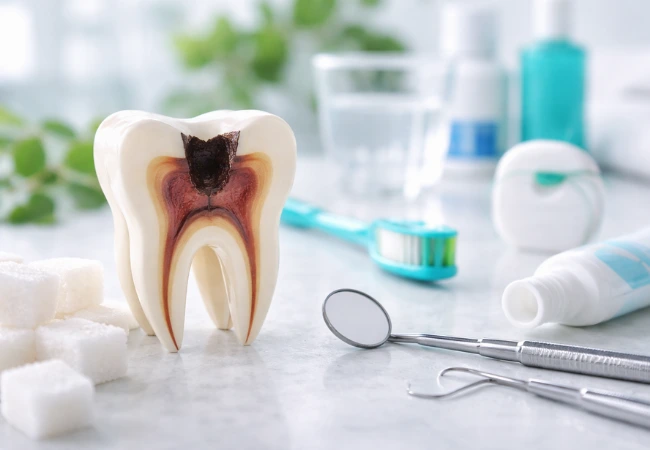
If you keep wondering, “Why do I get cavities?”, you are not alone. Cavities, also known as tooth decay, are extremely common, and they can show up even when you brush daily. The truth is that cavities are not caused by one “bad habit.” They happen when bacteria, sugar, time, and tooth vulnerability line up in the wrong way. This guide will explain to you the most common causes of cavities in a simple way, plus what you can do to prevent them and when it is time to see a dentist.
What is a cavity?
A cavity forms when plaque bacteria on your teeth feed on carbohydrates (especially sugar and refined starches). After they eat, they produce acids that weaken the enamel. If that acid attack happens often enough and long enough, the enamel breaks down, and a cavity starts.
Think of it like this: every day, your teeth go through a cycle of acid damage and repair. Cavities happen when damage wins more often than repair.
10 common reasons you keep getting cavities
1) You snack or sip sugary drinks more often than you realize
It is not only the amount of sugar that matters. It is how frequently your teeth are exposed to it. If you snack all day, sip sweet coffee, drink soda, or even nurse sports drinks, your teeth stay in acid mode longer. That gives enamel less time to recover.
2) You brush, but plaque is still staying on your teeth
Brushing daily is great, but technique matters. Plaque loves hiding near the gumline, behind the back teeth, and around crowded areas. If plaque stays, bacteria keep producing acids. A quick brush that misses key zones can still lead to cavities.
3) You are not flossing (or not flossing effectively)
Many cavities start between teeth, where a toothbrush cannot reach. If you skip flossing, plaque sits there for days, then weeks, then months. Cavities between teeth can sneak up because you might not feel anything until the decay is deeper.
4) You have dry mouth, especially at night
Saliva is your natural defense system. It helps wash away food, neutralize acids, and support enamel repair. If you breathe through your mouth, take certain medications, sleep with your mouth open, or have low saliva, your risk goes up fast. Dry mouth is one of the biggest reasons people get cavities “out of nowhere.”
5) Your enamel is weaker than average
Some people naturally have enamel that is more vulnerable due to genetics, early enamel development, or past acid exposure. That does not mean you are doomed. It means you may need stronger prevention, such as fluoride support and more targeted hygiene.
6) You have deep grooves or hard-to-clean tooth anatomy
Back teeth often have deep pits and fissures where food and bacteria get trapped. Even good brushers can miss these grooves. That is why some people get cavities mostly on molars.
7) You have old fillings or dental work with worn edges
Fillings do not last forever. Over time, small gaps or worn edges can form and trap bacteria. This can create recurrent decay, meaning a new cavity forms around an old filling.
8) You have gum recession exposing root surfaces
When gums recede, the root surface can become exposed. Roots are not protected by enamel the same way the crown of a tooth is. Root cavities can develop faster, especially if dry mouth is also present.
9) You eat a lot of “healthy” but acidic or sticky foods
Even “healthy” choices can raise cavity risk if they are frequent and sticky. Dried fruit, granola, crackers, and frequent citrus can feed bacteria or keep the mouth acidic. It is not about banning foods. It is about timing, rinsing, and cleaning habits that match your diet.
10) You are missing preventive care that catches problems early
Cavities do not always hurt early on. Regular exams and dental X-rays can detect cavities between teeth and under old fillings before they turn into bigger problems. If you only go when something hurts, decay often has extra time to grow.
Early signs you may be getting a cavity
You may not feel anything at first, but common early signals include:
- sensitivity to cold or sweets
- a rough spot or tiny “catch” when flossing
- dark spots or white chalky patches on teeth
- food getting stuck in the same place
- mild pain when chewing on one side
If you notice these, it is a good time to get checked before the cavity gets deeper.
How to prevent cavities (the realistic plan)
Here is what usually works best for most people:
- Brush twice daily for two minutes, focusing on the gumline and back teeth
- Floss once daily, making sure the floss curves around each tooth
- Reduce frequent snacking and sugary sipping, especially between meals
- Drink water after snacks and acidic drinks
- Use fluoride toothpaste and ask if you need extra fluoride support
- Consider sealants if your molars have deep grooves
- Keep regular dental checkups so small issues stay small
How Stadium Dental can help if you keep getting cavities
If you feel like you get cavities “too often,” you want a plan that goes beyond quick fixes. On a visit, Stadium Dental can help you pinpoint your personal cavity triggers and stop the pattern with services like:
- Comprehensive exams and dental cleanings to remove plaque and catch early decay
- Dental X-rays to detect cavities between teeth or under old fillings early
- Fluoride support and preventive planning if you are at high risk
- Dental fillings to repair cavities and protect the tooth structure
- Sealants for deep grooves on molars when appropriate
- Guidance for dry mouth, diet habits, and home-care techniques, so prevention is practical
If you have been asking, “Why do I get cavities?” a targeted exam can help you get a clear answer based on your bite, enamel, habits, and risk factors.
FAQ: Why do I get cavities?
Why do I get cavities even if I brush my teeth?
Brushing helps, but cavities can still form if plaque remains between teeth, along the gumline, or in deep grooves. Frequent snacking, dry mouth, and weaker enamel can also override basic brushing.
Why do I get cavities between my teeth?
Cavities between teeth often happen when flossing is inconsistent or when plaque stays trapped where a toothbrush cannot reach. These cavities are common and often found through X-rays.
Can stress cause cavities?
Stress can contribute indirectly. You may snack more, drink more sugary drinks, clench your jaw, or skip routines when stressed. Stress can also worsen dry mouth for some people.
Do cavities always hurt?
No. Early cavities often have no pain. Pain usually shows up when decay reaches deeper layers or the nerve. That is why routine exams matter.
Are cavities genetic?
Genetics can influence enamel strength, tooth shape, saliva quality, and cavity risk. But daily habits and preventive care still make a big difference.
How do I know if I have a cavity?
Sensitivity, dark spots, rough areas, food getting stuck, or pain when chewing can be clues. A dental exam and X-rays are the most accurate way to confirm.
Conclusion
If you keep asking “why do I get cavities?”, the answer is usually a mix of factors: frequent sugar exposure, plaque in hard-to-clean areas, dry mouth, enamel vulnerability, and missed early detection. The good news is that cavity risk is highly manageable when you identify your personal triggers and build a prevention plan that fits your routine. If you want to stop the cycle, Stadium Dental can assess where decay is starting, treat existing cavities early, and help you protect your teeth long-term with cleanings, fluoride support, sealants, and fillings when needed.