
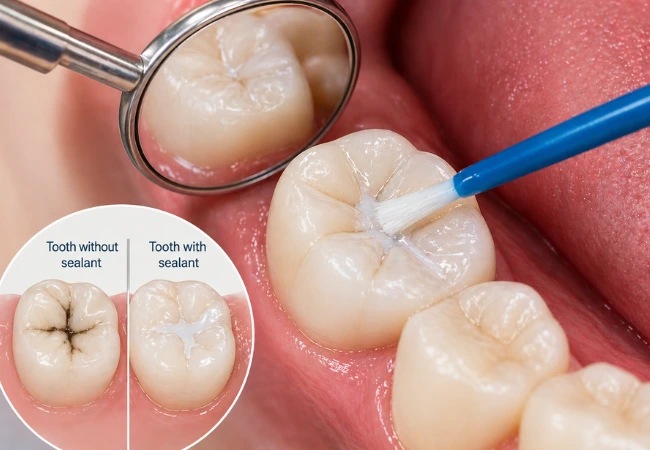
Dental sealants are thin protective coatings placed on the chewing surfaces of the back teeth. They help block food, plaque, and cavity-causing bacteria from settling into the deep grooves of molars and premolars. Think of sealants as a protective shield for teeth that are harder to clean. They do not replace brushing, flossing, fluoride, or dental checkups. But for the right patient, they can make a real difference in preventing cavities.
Dental sealants are especially common for children and teens, but some adults may also benefit from them if their back teeth have deep grooves and no existing decay or fillings in those areas.
What Are Dental Sealants?
Dental sealants are thin coatings that are bonded to the chewing surfaces of teeth, usually the molars and premolars. These teeth have small pits and grooves where food and bacteria can easily get trapped. Even if you brush well, the toothbrush bristles may not fully clean deep grooves on back teeth. Over time, trapped plaque and bacteria can lead to cavities. Moreover, sealants help by covering those grooves and creating a smoother surface. This makes it harder for bacteria to collect and easier for you or your child to keep the teeth clean.
How Do Dental Sealants Work?
Dental sealants work by physically blocking the areas where cavities commonly start. Your back teeth are designed for chewing, so they have ridges, pits, and grooves. The problem is that those grooves can be narrow and deep. When sticky food, sugar, and bacteria sit in those areas, acid can form and weaken the enamel.
A sealant flows into those grooves, hardens, and creates a protective layer over the tooth surface. This barrier helps:
- Prevent food from getting stuck in deep grooves.
- Reduce plaque buildup on chewing surfaces.
- Make back teeth easier to clean.
- Lower the risk of cavities in molars and premolars.
- Protect newly erupted permanent teeth in children.
Sealants are not magic. If you ignore brushing, flossing, diet, and dental visits, cavities can still happen. But sealants are a strong preventive tool when used correctly.
Who Should Get Dental Sealants?
Dental sealants are most often recommended for children and teenagers because their permanent molars are more vulnerable when they first come in.
The first permanent molars usually erupt around age 6. The second permanent molars usually erupt around age 12. These are common times when a dentist may recommend sealants. The Canadian Dental Association supports the appropriate and selective use of sealants for both primary and permanent teeth based on a dentist’s cavity risk assessment and diagnosis. It also notes that sealants are part of a broader prevention plan that includes good oral hygiene, fluoride, nutrition, and regular dental exams.
You or your child may be a good candidate for sealants if:
- The back teeth have deep grooves.
- Your child has newly erupted permanent molars.
- Your child has had cavities before.
- Brushing the back teeth is difficult.
- Food often gets stuck in the molars.
- Your child has a higher risk of tooth decay.
- You are an adult with healthy molars that have deep grooves.
- You want extra cavity protection for hard-to-clean areas.
How Effective Are Dental Sealants?
Dental sealants can be highly effective for cavity prevention, especially in children. The CDC reports that sealants protect against 80% of cavities for 2 years and continue to protect against 50% of cavities for up to 4 years.
That is a strong argument for sealants, but here is the part you should not ignore: sealants need to be checked. They can wear down, chip, or come off over time. During dental exams, your dentist can check whether the sealant is still intact and whether it needs repair or replacement.
How Stadium Dental Helps With Dental Sealants in Vancouver
If you are wondering whether you or your child needs dental sealants in Vancouver, Stadium Dental can help you make a clear decision. We do not recommend preventive treatments just to add more to your visit. We look at your teeth, your child’s cavity risk, the depth of the grooves, brushing habits, diet, and dental history before explaining your options.
At Stadium Dental in Downtown Vancouver, we provide dental care for children and adults, including exams, dental X-rays, cleanings, white fillings, crowns and bridges, dental implants, extractions, Invisalign, cosmetic dentistry, and Botox for TMJ.
If your child’s permanent molars are coming in, or if you are concerned about cavities in hard-to-clean areas, we can check whether sealants make sense. If a filling or another treatment is needed instead, we will explain that clearly too.
FAQs About Dental Sealants
What are dental sealants?
Are dental sealants only for kids?
Do dental sealants hurt?
How long do dental sealants last?
Can you still get cavities with sealants?
Are dental sealants better than fillings?
Does my child need dental sealants?
Does Stadium Dental offer preventive dental care in Vancouver?
Conclusion
Dental sealants are thin protective coatings placed on the chewing surfaces of molars and premolars. They help protect deep grooves from food, plaque, and bacteria that can lead to cavities. They are especially useful for children and teens, but some adults may benefit too. Sealants are quick, painless, and preventive, but they still need to be checked during regular dental visits. If you are asking, “What are dental sealants, and does my child need them?” book a visit with Stadium Dental. Early prevention can help protect your smile and reduce the need for bigger dental treatment later.