
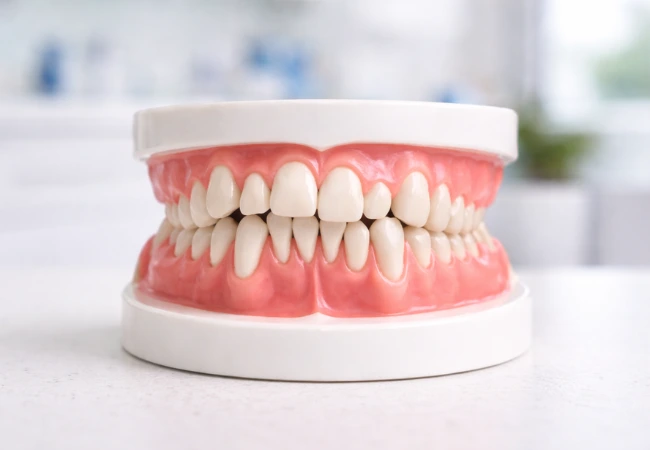
Crowded teeth can happen when your jaw is too small for the size of your teeth, when adult teeth come in with limited space, or when other bite and growth issues affect how the teeth erupt and align. Orthodontic guidance explains that overcrowding happens when the jaw lacks enough space for all the teeth, which causes them to overlap or become crooked. If you want the clearer version, crowded teeth usually come from a mismatch between space available and space needed.
What are crowded teeth?
Crowded teeth happen when there is not enough room in your mouth for all your teeth to fit in their normal positions. That can make teeth overlap, twist, rotate, or come in crooked. General orthodontic guidance explains that crowded or crooked teeth can also make it harder to keep your teeth and gums clean and may increase the chance of damage or wear over time. So crowding is not only about appearance. It can affect oral hygiene, comfort, and long-term dental health, too.
1. Your jaw may be too small for your teeth
One of the most common causes of crowded teeth is simple: your jaw may not have enough space for all your teeth.
Medical guidance on malocclusion states that crowding can happen because of a difference between jaw size and tooth size. In practical terms, that means your teeth may be a normal size, but your jaw does not provide enough room for them to line up properly. This is one of the strongest answers to the question of what causes crowded teeth, because it explains why crowding often runs in families. The structure of your jaws and the size of your teeth are both influenced by heredity.
2. Genetics can play a big role
Crowded teeth are often hereditary. If your parents had crowded teeth, a narrow jaw, or needed braces, there is a good chance your own bite and spacing may follow a similar pattern. Medical guidance says malocclusion is most often hereditary, which means it is passed down through families. This matters because some people blame crowding only on habits. Habits can contribute, but genetics is often part of the picture from the start.
3. Baby teeth may be lost too early or stay too long
Timing matters when children’s teeth are changing. If a baby tooth is lost too early, the surrounding teeth can start drifting into that space. If a baby tooth stays too long, it can block the path of the permanent tooth coming in behind it. Orthodontic referral guidance lists impeded eruption due to crowding, retained baby teeth, and supernumerary teeth as reasons that treatment may be needed. That means spacing problems are not always about the final adult teeth alone. Sometimes the problem starts during the transition from baby teeth to permanent teeth.
4. Extra teeth can create crowding
Some people develop extra teeth, sometimes called supernumerary teeth, and those extra teeth can block the normal eruption path of other teeth. Orthodontic guidance specifically lists extra teeth as one of the problems associated with crowding and eruption issues. Even one extra tooth can reduce available space and push other teeth out of position.
5. Missing teeth can also affect spacing and crowding
This sounds backward, but missing teeth can still contribute to crowding in some cases. When teeth are missing, neighboring teeth may drift, tilt, or shift into spaces over time. That movement can change the bite and create alignment problems elsewhere. Orthodontic guidance also lists congenitally missing teeth as part of more complex bite and spacing problems. So while missing teeth usually make people think of gaps, they can also contribute to an overall bite pattern that leads to crowding in other parts of the mouth.
6. Thumb sucking or pacifier habits can affect alignment
Oral habits during childhood can contribute to how the teeth and jaws develop. Orthodontic guidance for early evaluation specifically lists thumb, finger, or pacifier-sucking that affects teeth or jaw growth as one of the problems that can lend themselves to early treatment. This does not mean every child with a sucking habit will end up with crowded teeth. It does mean prolonged habits can influence bite and jaw development in ways that make crowding more likely.
7. Bite problems can make crowding worse
Crowding does not always happen on its own. Deep bites, crossbites, and other bite issues can worsen overall alignment and make certain crowding patterns more obvious or more difficult to manage. Orthodontic guidance notes that untreated bite problems can lead to or worsen other orthodontic issues, including crowding. So if your teeth are crowded, the real issue may not only be “not enough space.” It may also involve how your upper and lower jaws meet.
8. Teeth can shift as you get older
Crowding is not only a childhood issue. Adults can notice teeth becoming more crowded over time, especially in the lower front teeth. Orthodontic guidance explains that overcrowding affects both children and adults. That means if your teeth looked straighter years ago and seem more crowded now, you are not imagining it. Alignment can change, and adult crowding is common enough that orthodontic treatment is widely used in adults as well.
Why crowded teeth matter
A lot of people treat crowding as only a cosmetic issue. That is too narrow. Crowded or overlapping teeth can be harder to clean effectively, which can increase the risk of plaque buildup, cavities, and gum problems. Orthodontic guidance also notes that crowded teeth may be more likely to become damaged and that correcting crowding can make teeth and gums easier to care for. This is why crowding matters even if you are not especially concerned about appearance.
Can crowded teeth be fixed?
Yes, in many cases they can. Orthodontic treatment is commonly used to straighten crowded teeth, improve the bite, and make oral hygiene easier. General orthodontic guidance says treatment often involves braces or clear aligners, while at Stadium Dental, we provide Invisalign, traditional braces, and palatal expanders, depending on the case. The right solution depends on the cause and severity of the crowding, your age, your bite, and whether the issue is more about tooth position, jaw width, or both.
When to get crowded teeth checked
If the teeth are difficult to clean, visibly overlapping, erupting in abnormal positions, or affecting bite comfort, it makes sense to get them evaluated. Orthodontic guidance recommends early evaluation in children, and one common recommendation is an orthodontic assessment around age 7 to catch developing crowding, extra or missing teeth, and jaw-related issues early. Adults should not assume they missed their chance either. Crowding can still be treated later, and adult orthodontics is common.
What we focus on at Stadium Dental
At Stadium Dental, we look at crowded teeth as more than a cosmetic issue. We assess spacing, bite, jaw development, and long-term oral health before recommending treatment. We provide Invisalign and traditional braces for all ages, and for younger children, we also have training in growth development and early dental appliances that may help prevent future extractions or surgeries.
We also offer other services that often connect with crowding and orthodontic care, including children’s dentistry, exams and X-rays, family dentistry, restorative treatment, and sedation options when needed. That means if crowded teeth are affecting hygiene, bite comfort, or future treatment planning, we can look at the full picture instead of only one part of the problem. Our goal is to help you understand why the crowding is happening and what kind of treatment makes the most sense for your smile long term.
FAQ: What Causes Crowded Teeth?
What causes crowded teeth the most?
The most common cause is not having enough space in the jaw for all the teeth to fit properly. This often comes down to jaw size, tooth size, or both.
Are crowded teeth genetic?
Often, yes. Malocclusion and crowding are frequently hereditary, which means they can run in families.
Can thumb sucking cause crowded teeth?
It can contribute to alignment and jaw-growth problems that may make crowding more likely, especially if the habit continues for a long time.
Can adults develop crowded teeth later?
Yes. Crowding affects both children and adults, and teeth can shift over time.
Do crowded teeth cause other dental problems?
They can. Crowded teeth may be harder to clean and can increase the risk of plaque buildup, cavities, gum disease, and uneven wear.
Can crowded teeth be fixed without braces?
Sometimes mild cases may be addressed with clear aligners or other orthodontic approaches, but the right treatment depends on the cause and severity. Orthodontic treatment commonly uses braces or aligners, and in some cases may also involve expansion.
Conclusion
If you are asking what causes crowded teeth, the strongest answer is that crowding usually happens when there is not enough room for your teeth to fit properly. Genetics, jaw size, retained baby teeth, extra teeth, bite problems, and childhood habits can all play a role. The bigger point is this: crowded teeth are not only about appearance. They can affect how well you clean your teeth, how your bite feels, and how your smile functions over time.