
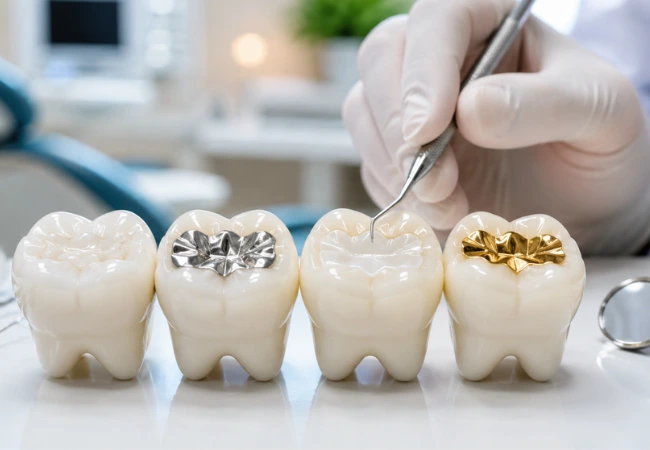
When you need a cavity repaired, the filling material matters. A dental filling is not just there to close a hole in your tooth. It also helps restore chewing function, protect the tooth from further damage, and preserve as much natural tooth structure as possible. But not every filling is the same. The right option depends on where the cavity is, how large it is, how much chewing pressure the tooth handles, your cosmetic goals, your budget, and your dentist’s clinical recommendation. Below, we’ll explain the main types of dental fillings in simple terms so you can understand your options before your appointment.
What is a dental filling?
A dental filling is a restorative treatment used to repair a tooth that has been damaged by decay, a minor fracture, or wear. During the procedure, your dentist removes the damaged or decayed part of the tooth, cleans the area, places the filling material, shapes it, and checks your bite.
The goal is to restore the tooth so it can function comfortably again while helping prevent the cavity from getting worse.
The Main Types of Dental Fillings
1. Composite Resin Fillings
Composite resin fillings are often called white fillings or tooth-colored fillings. They are one of the most popular options because they can be matched closely to the natural shade of your tooth.
Composite fillings are made from a mixture of resin and fine glass-like particles. After the cavity is cleaned, the material is placed in layers and hardened with a special curing light. Your dentist then shapes and polishes the filling so it blends with the surrounding tooth.
Composite resin is commonly used for:
- Small to moderate cavities
- Front teeth where appearance matters
- Visible areas of the smile
- Minor chips or worn edges
- Patients who prefer tooth-colored restorations
The main advantage of composite fillings is appearance. They are discreet and natural-looking. They also bond directly to the tooth, which can help preserve more healthy tooth structure in many cases. However, a composite may not always be the best choice for very large cavities or areas with heavy biting force. It also requires a dry working area during placement, so technique matters.
2. Amalgam Fillings
Amalgam fillings are silver-colored fillings made from a mixture of metals. They have been used in dentistry for many years and are known for their strength and durability.
Amalgam is commonly used for:
- Back teeth
- Molars that handle strong chewing pressure
- Larger cavities in less visible areas
- Patients who need a durable, cost-conscious option
The main strength of amalgam is durability. It can handle heavy chewing forces well, which is why it has traditionally been used on molars. The downside is appearance. Amalgam does not blend with natural teeth, so it is more noticeable when you talk, laugh, or open your mouth wide. Some patients also prefer non-metal or tooth-colored options for cosmetic reasons.
3. Glass Ionomer Fillings
Glass ionomer fillings are tooth-colored fillings made from a glass-based material. They are not usually as strong as composite resin or amalgam, but they have a useful benefit: they can release fluoride, which may help protect the surrounding tooth from further decay.
Glass ionomer fillings may be used for:
- Small cavities near the gumline
- Baby teeth
- Areas that do not handle heavy chewing pressure
- Temporary or transitional restorations
- Patients at higher risk of cavities
This type of filling can be helpful in certain clinical situations, especially when the cavity is in a lower-pressure area. However, glass ionomer is generally weaker and may wear down faster than other filling materials.
4. Porcelain Fillings, Inlays, and Onlays
Porcelain fillings are often used as inlays or onlays. These are indirect restorations, meaning they are usually made outside the mouth and then bonded to the tooth.
An inlay fits within the biting surface of the tooth. While an onlay covers a larger portion of the tooth and may protect one or more cusps, which are the raised points on the chewing surface.
Porcelain restorations are commonly used when:
- The cavity is too large for a standard filling
- The tooth needs more strength than a direct filling can provide
- A natural-looking result is important
- The damage is not severe enough to need a full crown
Porcelain is strong, stain-resistant, and highly aesthetic. It can look very natural when matched properly to your surrounding teeth. The tradeoff is that porcelain inlays and onlays usually cost more than direct fillings. They may also require more planning or more than one visit, depending on the technology used by the dental office.
5. Gold Fillings
Gold fillings are another type of indirect restoration. They are very durable and can last a long time when properly cared for.
Gold may be used for:
- Back teeth
- Patients who prioritize durability
- Inlays or onlays
- Areas where appearance is less of a concern
Gold handles chewing forces well and is gentle against opposing teeth when designed properly. However, it is not tooth-colored, so it is visible. It is also typically one of the more expensive filling options. For many patients today, gold is less common because tooth-colored options like composite and porcelain are more aesthetically appealing.
6. Temporary Fillings
Temporary fillings are not designed to be a permanent solution. They are used when a tooth needs short-term protection before a final restoration is placed.
A temporary filling may be used:
- After emergency dental treatment
- Between root canal appointments
- When a permanent filling or crown cannot be placed yet
- To protect a sensitive tooth until the next visit
Temporary fillings can help reduce discomfort and protect the tooth, but they can wear down or fall out over time. If your dentist places a temporary filling, follow the instructions carefully and return for the final treatment as scheduled.
Direct vs. Indirect Dental Fillings
Dental fillings can also be grouped into two categories: direct and indirect. Direct fillings are placed directly into the tooth during one appointment. Composite resin, amalgam, and glass ionomer are common examples. On the other hand, Indirect fillings are made outside the mouth and then bonded or cemented onto the tooth. Porcelain and gold inlays or onlays are common examples.
The choice depends on how much tooth structure remains. A small cavity may only need a direct filling. A larger cavity may need an inlay, onlay, or crown for better long-term support.
Which Type of Dental Filling Is Best?
There is no single best dental filling for every patient. The best option depends on your tooth, your bite, and your goals. For a visible front tooth, a composite filling is often preferred because it blends with your smile. For a back molar with heavy chewing pressure, your dentist may consider a stronger material depending on the size of the cavity. For a larger damaged area, a porcelain inlay, onlay, or crown may be more appropriate than a basic filling.
Your dentist will usually consider:
- The size of the cavity
- The location of the tooth
- How much of the natural tooth remains
- Your bite and chewing pressure
- Whether the tooth is visible when you smile
- Your risk for future cavities
- Your budget and insurance coverage
- Your preference for tooth-colored materials
A filling that works well for one tooth may not be ideal for another. That is why a proper dental exam matters.
How Long Do Dental Fillings Last?
The lifespan of a dental filling depends on the material, the size of the restoration, your oral hygiene, your diet, your bite, and whether you grind your teeth. In general, smaller fillings tend to last longer than large fillings because more natural tooth structure remains. Good brushing, flossing, regular dental cleanings, and reducing frequent sugar exposure can also help your filling last longer. You should also avoid using your teeth to open packages, biting hard objects, or ignoring a filling that feels high, cracked, loose, or sensitive.
Signs You May Need a Filling Replaced
Even a good filling may eventually need repair or replacement. Call your dentist if you notice:
- Tooth sensitivity that does not improve
- Pain when biting or chewing
- A rough or sharp edge on the filling
- A crack in the filling or tooth
- Food is getting stuck around the filling
- A filling that feels loose
- Dark staining around the edges
- A piece of the filling falls out
These signs do not always mean the tooth is severely damaged, but they should not be ignored. Early repair is usually simpler than waiting until the tooth breaks or the cavity gets deeper.
Dental Fillings at Stadium Dental in Downtown Vancouver
If you think you may need a dental filling, Stadium Dental can help you understand your options clearly. Our dental team provides general dentistry for children and adults, including white fillings, exams, X-rays, dental cleanings, crowns, bridges, and other restorative treatments.
When you visit Stadium Dental, your dentist will examine the tooth, check the size and location of the cavity, and explain which filling material makes the most sense for your situation. The goal is to restore your tooth in a way that feels comfortable, looks natural when possible, and supports your long-term oral health.
Stadium Dental is located in Downtown Vancouver near Stadium-Chinatown SkyTrain Station. New patients are welcome, and the clinic offers direct billing to insurance, free parking options, and emergency or walk-in dental care when available.
FAQs About Types of Dental Fillings
What are the most common types of dental fillings?
The most common types of dental fillings are composite resin, amalgam, glass ionomer, porcelain, gold, and temporary fillings. Composite resin is popular because it is tooth-colored, while amalgam is known for its durability in back teeth.
Which dental filling looks the most natural?
Composite resin and porcelain fillings usually look the most natural because they can be matched to the shade of your tooth. Composite is commonly used for smaller cavities, while porcelain may be used for larger inlays or onlays.
Are white fillings better than silver fillings?
White fillings are better for appearance because they blend with natural teeth. Silver amalgam fillings may be very durable, especially for back teeth, but they are more visible. The better option depends on the tooth location, cavity size, and your dentist’s recommendation.
What type of filling is best for back teeth?
Back teeth handle stronger chewing forces, so durability matters. Depending on the size of the cavity, your dentist may recommend composite resin, amalgam, porcelain inlay or onlay, or another restorative option.
Can a cavity be too large for a filling?
Yes. If too much tooth structure is missing, a standard filling may not provide enough support. In that case, your dentist may recommend an inlay, onlay, or dental crown instead.
How do I know which filling material I need?
You need a dental exam. Your dentist will check the cavity, tooth structure, bite pressure, and appearance concerns before recommending the most suitable filling material.
Conclusion
There are several types of dental fillings, and each one serves a different purpose. The best filling for you depends on the size of the cavity, where the tooth is located, how much chewing pressure it handles, and how natural you want the result to look. That is why a dental exam is important before choosing a treatment.
If you are unsure which dental filling option is right for you, Stadium Dental can assess your tooth, explain your choices clearly, and recommend a treatment that helps restore your smile, comfort, and long-term oral health.