
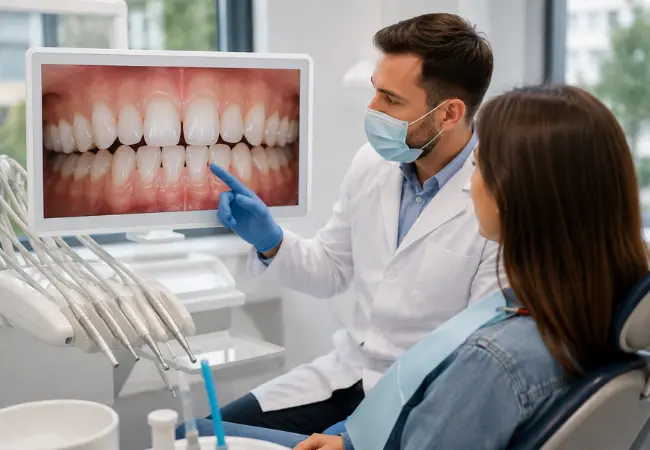
At first glance, it can look like food stuck between teeth or a shadow. But if the space remains visible, you may be seeing what dentists call a black triangle. Black triangles are small gaps that form between teeth when the gum tissue that normally fills the space begins to shrink or disappear. These spaces can affect the appearance of your smile and may also create practical concerns, including food trapping and cleaning difficulties. Understanding the causes of black triangle teeth matters because these spaces often develop gradually and may signal changes in gum health, tooth positioning, or bone support.
What Are Black Triangle Teeth?
Black triangle teeth refer to open triangular spaces between teeth near the gumline. Dentists often call these spaces open gingival embrasures. Normally, a small wedge-shaped section of gum tissue called the interdental papilla fills the area between neighboring teeth. When this tissue no longer fills the space completely, a visible dark triangle can appear.
Black triangles can occur:
- Between the front teeth
- Between the lower teeth
- Between molars
- After orthodontic treatment
- Along areas affected by gum recession
Top 10 Causes of Black Triangle Teeth
Black triangles do not usually appear overnight. In many cases, they develop gradually due to changes in your gums, teeth, or bone structure. Sometimes a single issue is responsible. In other situations, several factors work together. Understanding the specific cause matters because treatment often depends on why the spaces formed in the first place.
1. Gum Recession
Gum recession is one of the most common causes of black triangle teeth. Healthy gums normally fill the space between neighboring teeth. When the gumline begins pulling away from the teeth, tissue volume decreases, and small gaps can appear.
Gum recession can happen because of aggressive brushing habits, aging, smoking, chronic inflammation, or poor oral hygiene. As the gums recede, the triangular space between teeth becomes more visible. Even a mild recession can create noticeable black triangles in front teeth.
You may also notice:
- Longer-looking teeth
- Tooth sensitivity
- Visible roots
- Spaces near the gums
2. Periodontal Disease (Gum Disease)
Gum disease affects more than just the gums themselves. Advanced periodontal disease can damage the tissues and bone supporting the teeth. When inflammation destroys support around teeth, the gum papilla between teeth may shrink. This can create dark open spaces. Early treatment can help reduce progression and preserve tissue support.
Signs of gum disease may include:
- Bleeding gums
- Swollen tissue
- Persistent bad breath
- Loose teeth
- Gum tenderness
3. Bone Loss Around Teeth
Bone beneath the gums supports the teeth and surrounding soft tissues. When bone levels decrease, the gum tissue between teeth may lose support and collapse. Because the gums rely on underlying support, bone changes can significantly affect smile appearance.
Bone loss may occur because of:
- Advanced gum disease
- Tooth loss
- Trauma
- Long-term inflammation
- Aging changes
4. Triangular Tooth Shape
Tooth anatomy can play a surprisingly large role. Some people naturally have teeth that are wider toward the biting edge and narrower near the gums. Dentists often describe these as triangular-shaped teeth. These teeth create smaller contact areas where neighboring teeth touch, leaving larger spaces below the contact point. Patients with triangular teeth often have an increased risk of developing visible black triangles even without severe gum problems.
5. Orthodontic Treatment
Many patients become concerned after noticing black triangles following braces or clear aligner treatment. Orthodontic treatment itself usually does not directly cause black triangles. Instead, tooth movement may reveal spaces that previously existed but were hidden by crowding. Adults sometimes notice this more frequently than younger patients.
Black triangles may become more visible after:
- Traditional braces
- Invisalign treatment
- Crowding correction
- Alignment changes
6. Crowded Teeth
Crowded teeth may increase black triangle risk because overlapping teeth create irregular spacing relationships. When crowded teeth become straighter over time or through treatment, the gums and tooth positions may reveal spaces that were previously concealed.
Crowding can also contribute to:
- Plaque buildup
- Cleaning difficulties
- Increased inflammation risk
7. Aging and Natural Tissue Changes
Aging naturally affects many structures throughout the body, including your mouth. Even people with healthy dental habits can develop small black triangles over time. These changes are often gradual and may first appear in the front teeth.
Over time, subtle changes can occur in:
- Gum thickness
- Bone support
- Tooth positioning
- Tissue fullness
8. Aggressive Brushing Habits
Many people assume brushing harder means cleaning better. Unfortunately, using excessive pressure or a hard-bristled toothbrush may gradually irritate and wear down gum tissue. Using a soft-bristled toothbrush and gentle technique may help reduce risk.
Over time, aggressive brushing may contribute to:
- Gum recession
- Tissue irritation
- Gumline changes
- Tooth sensitivity
9. Poor Oral Hygiene
Plaque buildup allows bacteria to accumulate around teeth and gums. Without regular brushing and flossing, inflammation may increase and eventually affect the supporting structures around teeth. Maintaining healthy habits remains one of the best preventive steps.
Long-term poor oral hygiene can increase the risk for:
- Gum disease
- Bone loss
- Tissue inflammation
- Gum recession
10. Genetics and Thin Gum Tissue
Some patients simply have naturally thinner gum tissue or genetic characteristics that increase risk. This helps explain why two people with similar habits may experience very different gum changes. Even excellent brushing and flossing cannot fully eliminate genetic factors.
Genetics may influence:
- Gum thickness
- Bone structure
- Tooth shape
- Tissue response to inflammation
Why Identifying the Cause Matters
Not all black triangles are treated the same way.
For example:
- Gum disease-related black triangles may require periodontal treatment
- Orthodontic-related black triangles may benefit from reshaping or alignment adjustments
- Tooth-shape issues may improve with cosmetic bonding or veneers
Treating the symptom without understanding the cause often leads to poor long-term results.
Causes of Black Triangle Teeth at Stadium Dental in Downtown Vancouver
At Stadium Dental in Downtown Vancouver, evaluating black triangles involves understanding why the spaces developed rather than simply covering them. Our team examines factors such as gum health, tooth position, recession patterns, bite relationships, and overall oral health before recommending treatment. Depending on the cause, treatment recommendations may involve preventive care, cosmetic solutions, orthodontic evaluation, or periodontal support. The goal is not simply improving appearance. It is identifying and addressing the underlying reason the black triangles developed.
FAQs
What causes black triangles between teeth?
Common causes include gum recession, bone loss, tooth shape, orthodontic treatment, aging, and periodontal disease.
Are black triangles permanent?
Not always. Some cases can be improved through bonding, orthodontics, veneers, or periodontal treatment.
Can Invisalign cause black triangles?
Orthodontic treatment can reveal black triangles that were previously hidden, especially in adults.
Are black triangle teeth unhealthy?
Not always, but they can create cleaning challenges and may indicate underlying gum changes.
Can black triangles get worse?
Yes. If recession or bone loss continues, the spaces may become larger over time.
Can brushing too hard cause black triangles?
Aggressive brushing may contribute to gum recession, which can increase the risk.
Conclusion
The causes of black triangle teeth often involve a combination of gum recession, tooth shape, aging, orthodontic changes, and supporting tissue loss. While some black triangles create cosmetic concerns, others may affect oral hygiene and comfort. Understanding the underlying cause is important because treatment depends on why the spaces are formed.
If you notice dark spaces near your gums that seem to be increasing over time, a dental evaluation here at Stadium Dental can help determine whether gum changes, spacing, or another factor may be involved.