
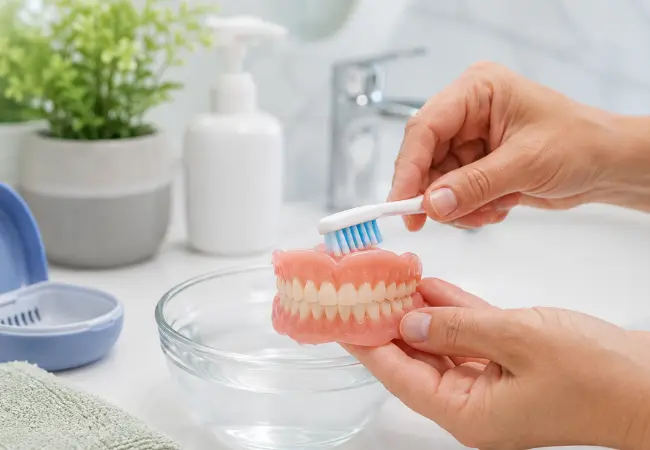
Dentures are an investment in your smile, your confidence, and your ability to eat and speak comfortably. But like natural teeth, they require consistent care to stay in good shape. Without the right routine, dentures can stain, warp, crack, or cause painful gum irritation. The good news? Taking care of your dentures doesn’t have to be complicated. Here are the 10 most important things you can do to keep your dentures clean, well-fitting, and lasting as long as possible.
10 Ways on How to Take Care of Dentures
1. Rinse Your Dentures After Every Meal
One of the simplest things you can do is remove your dentures after eating and rinse them under lukewarm running water. This washes away loose food particles before they get a chance to harden, stain, or irritate your gums.
Pro tip: Place a folded towel in the sink or fill the basin with a little water before rinsing. Dentures can crack if they fall on a hard surface.
2. Brush Your Dentures Daily – But Use the Right Tools
Brushing your dentures at least once a day is essential for removing plaque, food buildup, and surface stains. That is why the tools you use matter a lot.
Use:
- A soft-bristled denture brush (wider than a regular toothbrush)
- A mild denture cleanser or unscented liquid dish soap
Avoid:
- Regular toothpaste – even gentle formulas are too abrasive and will scratch the denture surface over time, creating tiny grooves where bacteria can hide
- Hard-bristled brushes – these cause the same problem
- Whitening toothpaste – the peroxide in whitening products does little for denture teeth and can weaken the material
Brush all surfaces from the inner side, outer side, biting surfaces, and any clasps if you have partial dentures. Use gentle circular motions rather than scrubbing aggressively.
3. Soak Your Dentures Overnight
Most dentures are made from acrylic resin, a material that needs to stay moist to hold its shape. If you let your dentures dry out, they can warp and a warped denture won’t fit your mouth properly anymore.
Every night before bed, place your dentures in one of the following:
- Plain lukewarm water – simple and effective
- A mild denture-soaking solution – commercial tablets (like Polident or Efferdent) dissolved in water can help remove stains and kill bacteria overnight
Important: Always rinse your dentures thoroughly before putting them back in your mouth the next morning. Soaking solutions contain chemicals that are not safe to swallow.
What to avoid when storing:
- Hot or boiling water – this warps the shape
- Regular mouthwash – many contain alcohol that can dry out and damage the acrylic
- Leaving them out in the open air to dry
4. Remove Your Dentures at Night
This goes hand-in-hand with overnight soaking, but it deserves its own point because many people are tempted to keep their dentures in around the clock. Your gum tissue needs to rest. Wearing dentures 24 hours a day puts continuous pressure on the underlying bone and soft tissue, which can lead to:
- Gum irritation and soreness
- Fungal infections (such as denture stomatitis, which causes redness and inflammation under the denture)
- Faster bone loss in the jaw
Giving your gums at least 6-8 hours of rest each night, ideally while you sleep it will help maintain the health of the tissue that supports your dentures.
5. Clean Your Mouth Before Reinserting Dentures
Your dentures can only be as clean as the mouth they go into. Before putting your dentures back in each morning, take a moment to clean your whole mouth.
Using a soft-bristled toothbrush (separate from your denture brush):
- Gently brush your gums
- Brush your tongue
- Brush the roof of your mouth (palate)
- Brush the insides of your cheeks
This removes bacteria, stimulates blood circulation in your gum tissue, and reduces your risk of infections. If you have partial dentures, also carefully brush your remaining natural teeth. If you use denture adhesive, make sure you fully remove any leftover adhesive from your gums each night before cleaning.
6. Handle Your Dentures With Care
Dentures are more fragile than they look. The acrylic material can crack, chip, or break from a single drop onto a hard floor, and repairs can be costly.
Safe handling habits:
- Always hold dentures over a soft surface (a folded towel, a basin of water) when cleaning or removing them.
- Never bend or force the clasps on partial dentures when cleaning; handle them gently.
- Don’t use your dentures to open packaging or bite into extremely hard foods like hard candy or ice.
- If you notice a crack, chip, or loose tooth on your denture, even a small one. See your dentist before it worsens.
7. Avoid Foods and Habits That Can Damage Dentures
Knowing what to avoid is just as important as knowing what to do.
Food to be careful with:
- Hard food (raw carrots, hard candy, ice) – can crack or dislodge dentures
- Sticky food (caramel, gum, peanut butter) – can pull dentures out of alignment
- Tough meats – put uneven pressure on the denture base
- Very hot food and drinks – can warp the fit and cause burns (dentures reduce sensation)
- Seeded food (sesame, poppy seeds) – can get trapped under dentures and irritate gums.
Habits to break:
- Chewing on pens or pencils
- Using your teeth to open bottles or packages
- Clenching or grinding (speak to your dentist if this is a concern)
8. Use Denture Adhesive Correctly (If You Use It)
Denture adhesive can help improve the stability and comfort of your dentures, but it’s not a fix for a poorly fitting denture. If you find yourself needing more and more adhesive just to keep your dentures in place, that’s a sign the fit needs professional attention.
Tips for correct adhesive use:
- Apply a small amount to a clean, dry denture before inserting
- Avoid applying too close to the edges, as it can ooze out
- Remove all adhesive thoroughly from your gums each night
- Never use adhesive to compensate for an ill-fitting denture long-term
If you’re relying heavily on adhesive, book a denture assessment with your dentist.
9. Watch for Warning Signs and Act Early
Part of good denture care is paying attention to how your dentures feel and how your mouth looks and feels daily. Catching a problem early almost always means a simpler, less expensive fix.
See your dentist if you notice:
- Dentures that slip, rock, or feel loose during eating or speaking
- Persistent sore spots, redness, or irritation under the denture
- White patches or unusual spots on your gums, palate, or cheeks
- Persistent bad breath even after thorough cleaning
- A cracked, chipped, or broken denture tooth or base
- Changes in the way your bite feels
- Difficulty chewing foods that used to be manageable
Never attempt to repair broken dentures yourself with super glue or household adhesives. These are toxic and can cause irreparable damage to your dentures.
10. See Your Dentist Regularly Even With Full Dentures
This is the most overlooked part of denture care. Many people assume that once they have dentures, regular dental visits are no longer necessary. This is a common and costly misconception.
Even without natural teeth, your jaw and gum tissue continue to change over time. The bone that once supported your teeth gradually shrinks after extraction, which means the denture that fit perfectly when it was made will eventually need adjusting.
At regular checkups (at least once a year), your dentist will:
- Professionally clean your dentures to remove tartar and deep stains
- Check the fit and make necessary adjustments or recommend relining
- Examine your gums, cheeks, and palate for signs of irritation, infection, or oral cancer
- Monitor changes in your jawbone and tissue that may affect your denture fit
- Advise you on whether it’s time for a reline, rebase, or replacement
Most dentures last between 5 and 10 years with good care, but regular professional maintenance is what gets you to that upper end of the range.
Denture Care in Vancouver? Visit Stadium Dental
If you need help with your dentures or you’re thinking about getting them for the first time, Stadium Dental in Downtown Vancouver is a great place to start. It’s a friendly, award-winning dental clinic that has been taking care of patients across Vancouver for years, and our team genuinely wants to make every visit as easy and stress-free as possible.
When it comes to dentures, Stadium Dental can help at every stage. Whether you’re just starting to explore your options, need your current dentures adjusted because they’ve become loose or uncomfortable, want a professional deep clean, or have a broken denture that needs attention, they’ve got you covered. We even use free 3D digital scanning to get the most accurate fit possible, which means fewer adjustments and a more comfortable result from the start.
If something goes wrong with your dentures unexpectedly, like a crack or a sudden sore, Stadium Dental also accepts walk-in emergency patients and tries to fit them in the same day. Even outside of regular hours, you can call us, and we will be available to help.
Frequently Asked Questions About Denture Care
How often should I clean my dentures?
You should rinse your dentures after every meal and brush them at least once a day using a soft denture brush and a mild cleanser. Soaking them overnight every night is also an essential part of the routine.
Can I sleep with my dentures in?
Dental professionals recommend removing your dentures at night. Your gums need at least 6–8 hours of rest each day to stay healthy. Wearing dentures continuously can lead to gum irritation, fungal infections, and faster bone loss in the jaw.
What happens if I don’t take care of my dentures?
Neglecting denture hygiene leads to plaque and bacteria buildup, which causes bad breath, staining, gum irritation, and oral infections like denture stomatitis. Over time, poorly maintained dentures can also warp, lose their fit, and need to be replaced sooner.
How long do dentures last?
With proper daily care and regular professional checkups, most dentures last between 5 and 10 years. Even within that time, they may need to be relined or adjusted as your jaw and gum tissue naturally change shape after tooth loss.
My dentures feel loose. What should I do?
See your dentist promptly. Loose dentures are a sign that the fit needs professional attention, either through relining or a new set. Adding more adhesive is only a temporary workaround and won’t address the underlying cause.
Can I use bleach to whiten my dentures?
No. Bleach can damage the acrylic material of your dentures and corrode metal clasps on partial dentures. For whiter dentures, use commercial denture-soaking tablets, and see your dentist for professional cleaning of deep stains.
Do I still need to see a dentist if I have full dentures and no natural teeth?
Yes absolutely. Even without natural teeth, your gums, jaw tissue, and soft tissues still need to be checked regularly. Your dentist will monitor for signs of bone loss, gum disease, and oral cancer, and will ensure your dentures continue to fit properly as your mouth changes over time.
How do I know if my dentures need to be replaced?
Signs that your dentures may need replacing include: persistent looseness even after relining, visible cracks or chips in the base or teeth, difficulty chewing or speaking, chronic sore spots, or significant changes in how your face looks (sunken cheeks or lips). Your dentist will advise you at your regular checkups.
Is it normal for dentures to feel uncomfortable at first?
Yes. New dentures often take a few weeks to feel natural. Minor soreness or increased saliva flow is common as your mouth adjusts. If discomfort persists or you develop sores, see your dentist for an adjustment. Don’t just push through the pain.
Can I use regular mouthwash with dentures?
You can rinse your mouth with mouthwash after removing your dentures, but don’t soak your dentures in regular mouthwash. Many mouthwashes contain alcohol, which can dry out and weaken the acrylic denture material over time. Use plain water or a purpose-made denture soaking solution instead.
Conclusion
Taking care of your dentures is not complicated, but it does require consistency. The 10 habits outlined in this guide, from rinsing after meals and brushing with the right tools to soaking overnight and seeing your dentist regularly, are all it takes to keep your dentures clean, comfortable, and as long-lasting as possible. And remember, home care alone isn’t enough. Your gums, jaw tissue, and denture fit all change over time, and only a dental professional can catch those changes early. Whether you need a routine checkup, a professional cleaning, an adjustment, or you’re exploring dentures for the first time, the team at Stadium Dental in Downtown Vancouver is here to help.