
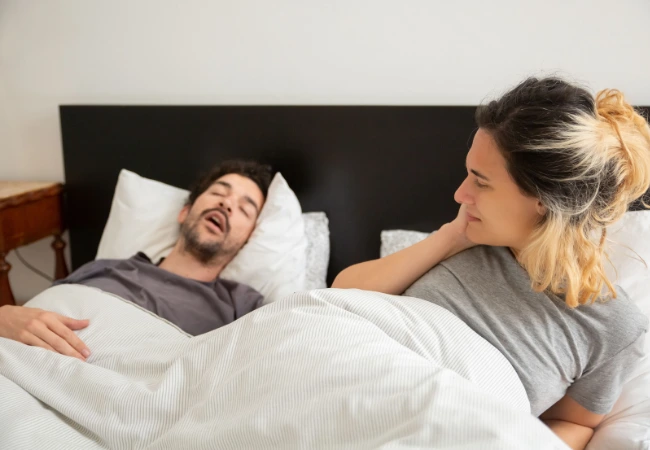
If CPAP hasn’t worked for you, whether the mask feels claustrophobic, the noise keeps your partner up, or you just can’t stick with it night after night, you’re far from alone. A lot of people with sleep apnea eventually stop using CPAP altogether. An oral appliance for sleep apnea is one of the most effective alternatives available, and it’s something your dentist, not just a sleep specialist, can actually help you with.
Here’s what it actually involves, how it compares to CPAP, and what it’s realistically going to cost you.
What Is an Oral Appliance for Sleep Apnea?
An oral appliance is a custom-fitted mouthpiece you wear while you sleep, designed to keep your airway open by repositioning your jaw or tongue. With obstructive sleep apnea (OSA), your airway becomes partially or fully blocked during sleep, causing repeated pauses in breathing that disrupt your rest and reduce your oxygen levels throughout the night. An oral appliance helps prevent that blockage from happening in the first place.
There are two main types:
Mandibular advancement devices (MADs) are the most common option. They fit over your upper and lower teeth and gently hold your lower jaw slightly forward, which also pulls your tongue forward and opens up more space at the back of your throat.
Tongue-stabilizing devices (TSDs) work a bit differently, using gentle suction to hold your tongue in a forward position instead of moving your jaw. These are less common than MADs but can be a good option for people whose teeth aren’t strong enough to support a MAD.
Custom-made appliances, fitted specifically to your mouth by a dentist, consistently perform better than generic “boil and bite” versions you can buy without a prescription, since a proper fit matters for both effectiveness and comfort.
Oral Appliance vs CPAP: Which One Is Actually Better?
This is usually the first question people have, and the honest answer is: it depends on your specific situation.
CPAP (Continuous Positive Airway Pressure):
- Generally the most effective treatment for sleep apnea, especially moderate to severe cases
- Uses a mask and machine to deliver pressurized air that keeps your airway open all night
- Can be genuinely difficult for many people to tolerate consistently, the mask, the noise, and the feeling of it can all be barriers
- Requires more equipment and maintenance
Oral appliance therapy:
- Generally recommended for mild to moderate OSA, or for people who can’t tolerate CPAP
- Small, quiet, and easy to travel with, no machine, no mask, no noise
- Tends to have better long-term compliance, since people are more likely to actually use something this simple and comfortable, night after night
- Slightly less effective than CPAP on average, though many people see a real, meaningful improvement in symptoms
Some people actually use both, wearing an oral appliance while traveling and CPAP at home, or combining the two to reduce how much air pressure is needed from the CPAP machine. The best option for you depends on the severity of your sleep apnea, which is why a proper diagnosis matters before choosing a treatment path.
Can a Dentist Help With Snoring, Not Just Sleep Apnea?
Yes, and this surprises a lot of people. Snoring happens for many of the same reasons sleep apnea does, restricted airflow caused by your tongue, soft palate, or jaw position during sleep. If you snore heavily but haven’t been diagnosed with sleep apnea, it’s still worth mentioning to your dentist, since an oral appliance can often reduce or eliminate snoring even in people who don’t have diagnosed OSA.
That said, loud, persistent snoring, especially paired with gasping, choking sounds, or noticeable pauses in breathing during sleep, can also be a sign of undiagnosed sleep apnea. If that sounds familiar, it’s worth getting a proper sleep evaluation rather than assuming it’s “just snoring.”
How Do You Actually Get an Oral Appliance for Sleep Apnea?
The process typically starts with a diagnosis, not a dental visit. Here’s the general path:
- A sleep study, either at home or at a sleep clinic, to confirm you have OSA and determine its severity
- A referral to a dentist, if an oral appliance is considered a good fit for your specific case
- An impression or digital scan of your teeth, along with a bite assessment, so your custom appliance can be properly designed
- A fitting appointment, where your dentist checks the fit, comfort, and function of your device
- Adjustment period, typically two to four weeks, as you get used to sleeping with the appliance
- A follow-up sleep test, in many cases, to confirm the appliance is actually working effectively for your specific case, with further adjustments made if needed
Mouth Guard for Sleep Apnea: What to Expect Wearing One
If you’re picturing something bulky or uncomfortable, most patients are pleasantly surprised. A properly fitted device sits fairly comfortably against your teeth, though there’s typically an adjustment period during the first couple of weeks.
Common early side effects, usually temporary, include:
- Extra saliva or drooling
- Mild jaw or tooth discomfort
- Dry mouth
- Slight gum irritation
These usually improve as you get used to wearing it. Long-term side effects are uncommon with a well-fitted, professionally monitored appliance, but can occasionally include minor changes in your bite or tooth position over time, which is exactly why regular dental checkups matter while you’re using one, not just the initial fitting.
Oral Appliance for Sleep Apnea Cost
This is one of the most common questions people have, and understandably so, since it directly affects whether this treatment is realistic for you. Cost depends on a few factors:
- Whether the appliance is custom-made or a generic over-the-counter option. Custom appliances cost more upfront but are significantly more effective and comfortable, since generic versions aren’t shaped to your specific mouth.
- The complexity of your case, including how many adjustment visits and follow-up sleep tests are needed
- Your insurance coverage. Oral appliance therapy is sometimes covered, partially or fully, especially when it’s prescribed following a diagnosed sleep study, though coverage varies significantly by plan
- Whether the cost is billed through medical or dental insurance, since oral appliance therapy for a diagnosed medical condition can sometimes be billed differently than routine dental treatment
Because pricing depends so much on your individual case and coverage, the most accurate way to know your cost is a consultation, where your dentist can walk you through what’s involved and help you understand what your specific insurance may cover.
Who Isn’t a Good Candidate for an Oral Appliance?
Oral appliances aren’t the right fit for everyone. They’re generally not recommended for:
- People with central sleep apnea, since it’s caused by a different mechanism (signaling issues in the brain, rather than physical airway blockage) that an oral appliance can’t address
- People with severe OSA, where CPAP or another treatment is typically considered safer and more effective
- Children, unless specifically recommended by their healthcare provider
A proper diagnosis and evaluation are the best way to know whether an oral appliance is actually appropriate for your specific case.
Oral Appliances for Sleep Apnea and Snoring at Stadium Dental in Vancouver
If CPAP hasn’t worked for you, or you’re dealing with heavy snoring that’s affecting your sleep (or someone else’s, Stadium Dental can help you explore whether an oral appliance is the right option.
Here’s what makes getting an oral appliance easier at Stadium Dental:
- Custom-fitted devices, designed specifically for your mouth for better comfort and effectiveness than generic over-the-counter options
- Coordination with your sleep specialist, so your appliance is designed around your actual diagnosis and severity, not guesswork
- Ongoing monitoring, including regular checkups to watch for any changes in your bite or teeth while you’re using your appliance
- Support for snoring specifically, even without a formal OSA diagnosis, if it’s affecting your sleep quality
- A multilingual team, including Mandarin, Cantonese, Punjabi, Russian, and Ukrainian, so you can discuss your symptoms and concerns comfortably in the language you’re most confident in
- A convenient downtown location at 178 Keefer Place, right next to the Stadium-Chinatown SkyTrain station, with free parking available
A better night’s sleep affects nearly everything else in your life, your energy, your focus, your mood, your health. If CPAP hasn’t been sustainable for you, it’s worth finding out whether an oral appliance could be.
Struggling with CPAP or dealing with heavy snoring? Book a consultation online or call us at 604-559-0299.
Frequently Asked Questions About Oral Appliances for Sleep Apnea
How does an oral appliance for sleep apnea work?
An oral appliance repositions your jaw or tongue slightly forward while you sleep, creating more space in your airway and reducing the blockages that cause sleep apnea episodes.
Is an oral appliance as effective as CPAP?
CPAP is generally more effective, especially for moderate to severe sleep apnea, but oral appliances tend to have better long-term compliance since they’re easier to tolerate consistently. Many people see meaningful improvement with an oral appliance, particularly for mild to moderate cases.
Can a dentist help with snoring even without a sleep apnea diagnosis?
Yes, oral appliances can reduce or eliminate snoring even in people without diagnosed OSA. That said, persistent heavy snoring is worth evaluating, since it can sometimes indicate undiagnosed sleep apnea.
How much does an oral appliance for sleep apnea cost?
Cost depends on whether the appliance is custom-made, the complexity of your case, and your insurance coverage. A consultation is the most accurate way to get a clear estimate and understand what your specific plan may cover.
How long does it take to get used to wearing an oral appliance?
Most people adjust within two to four weeks. Starting with shorter wear times and gradually increasing usage each night tends to make the adjustment period easier.
Who shouldn’t use an oral appliance for sleep apnea?
Oral appliances generally aren’t recommended for people with central sleep apnea, severe OSA, or children, unless specifically advised by a healthcare provider. A proper diagnosis is the best way to determine if it’s right for you.
Conclusion
An oral appliance for sleep apnea offers a genuinely practical alternative for people who can’t tolerate CPAP, small, quiet, and far easier to stick with consistently, even if it’s slightly less effective on average for more severe cases. Whether it’s the right fit for you depends on your specific diagnosis, the severity of your sleep apnea, and how well CPAP has (or hasn’t) worked for you so far. If poor sleep or persistent snoring has been affecting your life, it’s worth exploring your options with both a sleep specialist and a dentist who can fit a device specifically for you.