
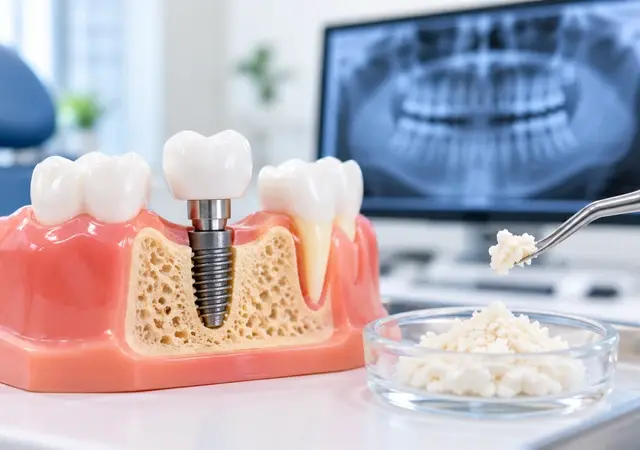
If you are considering a dental implant, you may have heard that you need enough jawbone to support it. But what happens if you have been missing a tooth for months or years and the bone in that area has started to shrink? A bone graft for dental implant treatment may help rebuild the jawbone when there is not enough bone to support an implant securely. However, not everyone needs this additional procedure. Your dentist must assess the condition of your jawbone, gums, and overall oral health before recommending treatment.
At Stadium Dental in Downtown Vancouver, understanding your options starts with a thorough dental assessment and a treatment plan tailored to your needs. Here is what you should know about bone grafting, why bone loss happens, and how to determine whether you may need this procedure before getting a dental implant.
What Is a Bone Graft for Dental Implant Treatment?
A dental bone graft is a procedure that adds grafting material to an area where the jawbone is too thin, too short, or otherwise insufficient. The material acts as a framework that supports your body’s natural bone-forming process. Over time, new bone can grow into the grafted area, increasing the amount of bone available to support an implant or improving the shape of the jawbone around it.
Dental implants are placed into the jawbone, where they gradually integrate with the surrounding bone. If there is insufficient bone to support the implant in the correct position, grafting may be recommended before or during implant placement. Bone grafting can also be used to help preserve the bone around a recently extracted tooth or repair bone defects caused by gum disease, injury, or other dental conditions. It is important to understand that a bone graft does not automatically mean you can receive an implant. Your dentist must still evaluate whether the site has healed adequately and whether implant placement is appropriate for your situation.
Why Does Bone Loss Happen After Tooth Loss?
Your jawbone is living tissue that responds to the forces placed on it. Natural tooth roots transmit pressure to the surrounding bone during chewing, helping maintain the bone in that area. When a tooth is removed or lost, that stimulation changes. The body begins to remodel the bone that previously supported the tooth, and the jawbone in that area may gradually decrease in width and height. This process is known as bone resorption. It can begin soon after tooth loss, although the amount and rate of bone loss vary from person to person.
What can contribute to bone loss?
Several factors can affect the amount of bone you have available for an implant:
- Missing teeth: The jawbone in an empty tooth socket can shrink after extraction, particularly during the early healing period.
- Gum disease: Advanced periodontal disease can damage the bone supporting your natural teeth.
- Dental infections: Certain infections can damage the surrounding bone and affect the available bone for implant placement.
- Trauma or injury: An accident or injury may damage the jawbone or the area around a tooth.
- Long-term tooth loss: A site that has been without a tooth for years may have less bone available than it did immediately after extraction, although the degree of change varies.
Bone loss after tooth loss does not automatically rule out dental implants. Depending on the location and extent of the bone deficiency, your dentist may recommend grafting or another treatment approach. If you are exploring tooth replacement options, read our guide to dental implants at Stadium Dental to learn more about how implants work and who may be a suitable candidate.
Do I Need a Bone Graft Before Getting a Dental Implant?
The answer depends on the amount of bone available, its shape and quality, and where the implant needs to be placed. You may not need a bone graft if your jawbone has sufficient volume to support the implant in a stable, appropriate position. However, if the bone is too thin or too short, grafting may be necessary to create a suitable foundation.
You may need a bone graft if:
- You have been missing a tooth for a long time. The jawbone may have shrunk since the tooth was lost, leaving insufficient bone for the planned implant.
- Your tooth needs to be extracted. If the surrounding bone is damaged or the extraction site has a defect, your dentist may recommend grafting during or after the extraction.
- You have a history of gum disease. Periodontal disease can destroy the bone supporting teeth. If the disease is controlled, grafting may help address certain bone deficiencies before implant treatment.
- Your jawbone is naturally thin or narrow. Some people do not have enough bone in the area where the implant needs to go, even if the tooth was lost recently.
- The upper back jaw has limited bone height. In some cases, the sinus cavity leaves insufficient bone for an implant. A sinus lift, which is a specialized form of bone augmentation, may be recommended.
How does your dentist determine whether you need one?
Your dentist will examine your mouth, review your dental and medical history, and use appropriate imaging to assess the implant site. Dental X-rays or three-dimensional imaging, such as a cone-beam CT scan when indicated, can help evaluate the available bone and nearby anatomical structures.
Your dentist will also consider the position of the planned implant, the health of your gums, and whether any infection or other condition needs treatment first. The important point is that you cannot reliably determine whether you need a bone graft based on how long a tooth has been missing or how the gum area looks. An individual assessment is needed to make that decision.
What Are the Different Types of Dental Bone Grafts?
The type of grafting procedure depends on where bone is missing, how much bone needs to be rebuilt, and the planned implant position.
Socket preservation
Socket preservation is performed at the time of a tooth extraction to help maintain the shape and volume of the empty tooth socket while it heals. After a tooth is removed, bone loss can occur naturally. Placing grafting material in the socket may help reduce changes in the bone and preserve the site for possible future implant placement. Socket preservation does not eliminate all bone loss or guarantee that a future implant will not require additional grafting.
Ridge augmentation
Ridge augmentation helps increase the width or height of the jawbone when the existing bone is not sufficient for the planned implant. This procedure may be recommended when the jawbone has become too narrow or has lost significant volume following tooth loss, infection, or trauma. The graft is allowed to heal before the dentist determines whether there is enough suitable bone for implant placement.
Sinus lift
A sinus lift may be recommended when there is insufficient bone in the upper back jaw to place an implant safely. The procedure creates additional bone height by carefully lifting the sinus membrane and placing grafting material beneath it. Not everyone who needs an implant in the upper back jaw requires a sinus lift. The decision depends on the available bone and the planned implant position.
What materials are used for bone grafting?
Dental bone grafts can use different materials, including:
- Autograft: Bone taken from another area of your own body.
- Allograft: Processed bone obtained from a human donor.
- Xenograft: Bone-derived material obtained from another species, commonly bovine.
- Alloplast: A synthetic bone substitute.
Each material has different characteristics, and no single option is best for every patient. Your dentist or dental specialist will recommend an appropriate material based on your clinical needs and the procedure being performed.
How Long Does a Bone Graft Take to Heal?
Healing time varies considerably depending on the size and complexity of the graft.
You may notice swelling, tenderness, or bruising during the first several days. These symptoms generally improve as the surgical site heals. However, the underlying bone needs longer to mature than the gum tissue needs to recover.
As a general guide:
- Initial recovery: Many patients experience the most noticeable swelling and tenderness during the first few days, with improvement over approximately one to two weeks.
- Bone healing: Smaller grafts may need several months to mature, often around three to six months.
- Larger or more complex grafts: Some cases require six months or longer before the area is ready for implant placement.
These are estimates, not guaranteed timelines. Your dentist will assess the site before proceeding with the next stage of treatment. If your implant and graft can be performed together, the overall treatment sequence may be shorter. If the graft must heal first, the additional procedure can extend the time before you receive your final replacement tooth.
Is a Dental Bone Graft Painful?
A bone graft is performed with local anaesthetic, so you should not feel sharp pain during the procedure. You may feel pressure or movement while the dentist works. After the anaesthetic wears off, tenderness, swelling, and bruising are possible. The level of discomfort depends on the extent of the graft and your individual response to surgery.
Your dental team will provide instructions on managing discomfort and protecting the surgical site. Take medication only as directed and follow the specific aftercare instructions provided for your procedure. Contact your dentist if pain or swelling becomes worse instead of improving, or if you develop fever, pus, persistent bleeding, or other concerning symptoms.
What Should You Do After a Dental Bone Graft?
Following your post-operative instructions helps protect the graft while the area heals.
During the first few days
- Eat soft foods and avoid chewing directly on the surgical site.
- Use a cold pack as directed to help manage swelling.
- Avoid vigorous rinsing, forceful spitting, or touching the graft with your fingers or tongue.
- Avoid smoking and vaping, which can interfere with healing.
- Avoid strenuous physical activity for the period recommended by your dentist.
- Take prescribed or recommended medication according to your dentist’s instructions.
While the graft heals
Continue brushing and cleaning your mouth as directed, taking care around the surgical site. Do not stop normal oral hygiene altogether, but avoid disturbing the graft. Attend follow-up appointments so your dentist can monitor healing and identify any complications early. Contact your dental team if you notice increasing pain, worsening swelling, fever, pus, or persistent bleeding. If you have difficulty breathing or swallowing, seek emergency medical care.
What Are the Risks of Dental Bone Grafting?
Bone grafting is a commonly performed dental procedure, but it is still surgery and carries potential risks.
Possible complications include:
- Infection at the surgical site
- Bleeding, swelling, or prolonged discomfort
- Delayed healing
- Exposure or loss of some grafting material
- Failure to develop enough suitable bone for the planned implant
- Injury to nearby nerves or other structures, depending on the location of the graft
The risk of complications varies with the procedure, the patient’s health, oral hygiene, and other factors. Smoking and poorly controlled medical conditions may increase healing risks. A bone graft also does not guarantee that an implant will be successful. Your dentist will explain the expected benefits, limitations, and risks based on your particular case.
Can You Get Dental Implants Without a Bone Graft?
Yes. Many patients have enough jawbone to receive dental implants without additional grafting.
Even if you have experienced some bone loss after tooth loss, a graft is not automatically required. The amount and location of the remaining bone matter, as does the position in which the implant needs to be placed. In selected cases, your dentist may be able to plan implant placement using the available bone without a separate grafting procedure. Other cases may require bone augmentation or an alternative treatment plan.
The decision should be based on a clinical examination and appropriate imaging, not on a general rule that everyone with a missing tooth needs grafting. If you are comparing treatment options, read our guide to dental implant costs in Canada to understand the factors that can affect the overall cost of implant treatment.
How Much Does a Bone Graft for Dental Implant Treatment Cost?
The cost of a bone graft varies depending on the amount of bone that needs to be rebuilt, the location of the graft, the material used, and the complexity of the procedure. A small graft placed during a tooth extraction may cost less than a larger ridge augmentation or sinus lift. Whether the graft is performed alongside an extraction or implant placement can also affect the total treatment cost.
When comparing estimates, ask whether the quoted fee includes the grafting material, any membrane used, follow-up appointments, and the later implant procedure. These may be billed separately. At Stadium Dental, dental implant treatment starts at $3,800 CAD, but this is not a quoted price for bone grafting. Your overall treatment cost depends on your individual needs and any additional procedures that may be required. For a more accurate estimate, arrange an assessment so your dentist can explain the recommended treatment and associated fees before you proceed.
Bone Grafting and Dental Implants at Stadium Dental in Downtown Vancouver
If you are considering a dental implant but have been told you may not have enough jawbone, you may still have treatment options. Bone grafting can help rebuild deficient areas and may make implant placement possible when the existing bone is insufficient.
At Stadium Dental in Downtown Vancouver, our implant team includes Dr. Marcus Lo and periodontist Dr. Polly Huang. We provide dental implant treatment and related procedures, including bone grafts and sinus lifts, when clinically appropriate. Your treatment plan begins with an assessment of your oral health and available bone. From there, our team can explain whether grafting may be needed, what the process involves, and how it may affect your treatment timeline.
Book a free dental implant consultation at Stadium Dental to discuss your options and learn what may be suitable for your smile.
Visit our dental implant page or contact Stadium Dental to get started.
Frequently Asked Questions
Do I always need a bone graft before a dental implant?
No. A bone graft is only recommended when additional bone is needed to support the planned implant or address a bone defect. Your dentist will assess your jawbone and use appropriate imaging to determine whether grafting is necessary.
How long after losing a tooth should I get a bone graft?
There is no single deadline that applies to everyone. A graft may be placed at the time of extraction, during a later procedure, or as part of implant planning. Because bone can shrink after tooth loss, discussing replacement options early may help preserve treatment options.
Can bone loss after tooth loss be reversed?
Bone grafting can rebuild or increase bone in selected areas, but it does not simply restore every part of the jaw to its original condition. The outcome depends on the extent of bone loss, the type of graft, and individual healing factors.
Can I get a dental implant years after losing a tooth?
Yes, it may still be possible. Some patients retain enough bone for implant placement, while others need grafting or a different approach. An examination and appropriate imaging can help determine what is feasible.
How long must I wait for an implant after a bone graft?
Many grafts need several months to heal before implant placement, while larger or more complex procedures may require longer. In selected cases, the graft and implant can be placed during the same appointment. Your dentist will determine the timing based on the stability of the site and your healing.
Is bone grafting safe?
Bone grafting is a commonly performed procedure, but complications such as infection, delayed healing, or insufficient bone formation can occur. Your dentist will review the risks and explain how your health and the type of graft may affect your treatment.
Does dental insurance cover a bone graft in Canada?
Coverage depends on your specific dental plan, its exclusions, and whether the procedure meets its requirements. Some plans may cover certain surgical procedures, while others may limit or exclude implant-related treatment. Check with your insurer and request a written estimate before treatment.
Conclusion
A bone graft for dental implant treatment may be an important step if bone loss has left your jaw without enough support for an implant. However, not everyone needs grafting, and the right approach depends on your bone volume, oral health, and treatment goals. If you have a missing tooth or are concerned about bone loss after tooth loss, an assessment can help you understand your options before committing to treatment.