
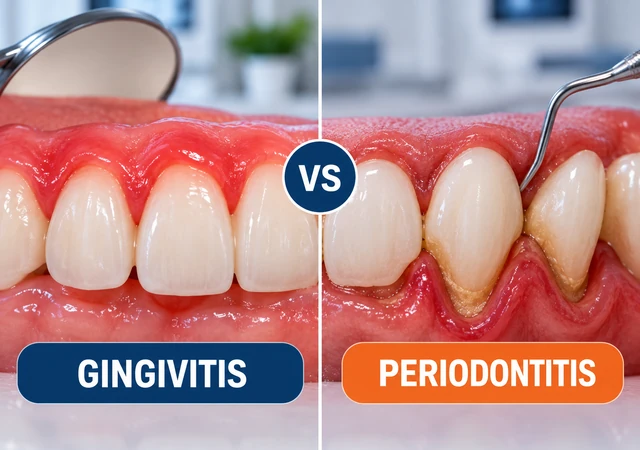
You spit after brushing and notice a little pink in the sink. Or maybe your gums look puffier than usual, or your breath doesn’t feel fresh even after you brush. It’s easy to brush these off as small things. But they’re often the first signs of gum disease. Gum disease comes in two main stages: gingivitis and periodontitis. One is mild and can be completely reversed. The other can damage the bone that holds your teeth in place and, over time, lead to tooth loss.
Understanding gingivitis vs. periodontitis helps you catch gum disease early, while it’s still easy to fix. In this article, you’ll learn the early gum disease signs to watch for, how the two stages differ, whether gingivitis is reversible, and what you can do to protect your smile.
What Is Gum Disease?
Gum disease starts with plaque, a sticky, colourless film of bacteria that forms on your teeth every day. When plaque isn’t removed by brushing and flossing, the bacteria irritate your gums and cause inflammation. Over time, plaque that stays on your teeth hardens into tartar (also called calculus). Tartar sticks firmly to your teeth, often along and under the gumline, and you can’t remove it with a toothbrush. Only a professional cleaning can. If the inflammation isn’t treated, it can move from your gums down to the bone and tissues that support your teeth. That’s how mild gum disease becomes serious gum disease.
What Is Gingivitis?
Gingivitis is the earliest and mildest stage of gum disease. The word simply means “inflammation of the gums.” At this stage, the infection affects only your gum tissue. The bone and the fibres that hold your teeth in place are still healthy, which is why gingivitis can be fully reversed. Gingivitis is very common. Many adults have it at some point, often without realizing it, because it usually doesn’t hurt.
What Is Periodontitis?
Periodontitis is the advanced stage of gum disease. It happens when gingivitis isn’t treated, and the inflammation spreads below the gumline. As periodontitis develops, your gums start to pull away from your teeth, creating spaces called pockets. Bacteria collect in these pockets, where your toothbrush and floss can’t reach. Your body’s response to the infection, along with the bacteria themselves, begins to break down the bone and connective tissue that hold your teeth in place. This damage is permanent. Over time, teeth can become loose, shift, or even fall out. You can learn more about how it progresses in our guide to periodontal disease.
Early Gum Disease Signs to Watch For
Gingivitis often shows up quietly. These early gum disease signs are your cue to take action:
- Gums that bleed when you brush or floss. Healthy gums don’t bleed during normal brushing. Read more in our guide to bleeding gums when brushing.
- Red or dark red gums. Healthy gums are usually light pink (or naturally darker, depending on your skin tone) and look firm.
- Swollen or puffy gums, especially between your teeth.
- Tender gums that feel sore when you touch them.
- Bad breath that doesn’t go away after brushing.
- A bad taste in your mouth.
- Gums that look shiny rather than slightly textured.
A Simple Self-Check You Can Do at Home
Once a week, take a minute to look at your gums in good light:
- Look at the colour. Are any areas redder or darker than the rest?
- Look at the shape. Healthy gums fit snugly around each tooth and come to a point between teeth. Swollen gums look rounded or puffy.
- Press gently on your gums with a clean finger. Do they feel tender, or does any area bleed?
- Notice your floss. Is there blood on it after you floss?
If you notice any of these signs for more than a week or two, book a dental checkup.
A Hidden Warning for Smokers
If you smoke or vape, your gums may not bleed even when you have gum disease. Nicotine reduces blood flow to your gums, which can hide one of the most common warning signs. This means smokers can have serious gum disease without noticing anything wrong. Regular dental checkups are especially important if you smoke.
Gingivitis vs Periodontitis: The Key Differences
Here’s how the two stages compare in plain language.
Where the damage is. Gingivitis affects only your gums. Periodontitis affects your gums and the bone and tissues that support your teeth.
Whether it can be reversed. Gingivitis can be completely reversed. Periodontitis can’t be reversed because lost bone doesn’t grow back on its own, but it can be treated and controlled.
Pain. Gingivitis is usually painless. Periodontitis may still be painless in its early stages, but later it can cause sore gums, pain when chewing, and sensitive teeth.
Bleeding and swelling. Both stages can cause bleeding and swollen gums.
Gum pockets. With gingivitis, the space between your gum and tooth stays shallow. With periodontitis, deeper pockets form as the gums pull away from your teeth.
Receding gums. Gingivitis doesn’t usually cause your gums to shrink back. Periodontitis often does, making your teeth look longer. Learn more about gum recession.
Loose or shifting teeth. Your teeth stay firm with gingivitis. With periodontitis, they can become loose, spread apart, or change position, and your bite may feel different.
Treatment. Gingivitis usually clears up with a professional cleaning and better brushing and flossing at home. Periodontitis needs deeper treatment, such as a deep cleaning below the gumline, and ongoing care to keep it under control.
Is Gingivitis Reversible?
Yes, gingivitis is reversible. This is the most important thing to know about early gum disease. Because gingivitis hasn’t damaged the bone or the fibres that hold your teeth in place, your gums can heal completely once the plaque and tartar are removed. With a professional cleaning and good daily care, many people see their gums improve within about two weeks, with less bleeding, less swelling, and a healthier colour.
To reverse gingivitis:
- Get a professional cleaning to remove plaque and tartar, including below the gumline, where your brush can’t reach. Our dental cleaning service is the place to start.
- Brush twice a day for two full minutes with fluoride toothpaste. Angle your brush toward your gumline, and use gentle circular motions.
- Floss every day. Gently curve the floss around each tooth and slide it slightly under the gumline. If you have trouble flossing, interdental brushes or a water flosser can help.
- Use an antibacterial mouthwash if your dentist recommends one.
- Don’t stop if your gums bleed at first. Bleeding often means the area needs more cleaning, not less. It should improve within a week or two of good care.
- Quit smoking or vaping, if you can.
If your gums keep bleeding after two weeks of good care, see your dentist. It may be a sign of deeper gum disease.
Can Periodontitis Be Reversed?
Periodontitis can’t be fully reversed because the bone and tissue it destroys don’t grow back on their own. But that doesn’t mean nothing can be done. With the right treatment, periodontitis can be stopped and controlled. Your gums can become healthier, bleeding and swelling can go away, and you can keep your teeth for many years. In some cases, procedures such as gum grafts or bone grafts can help repair some of the damage. The key is to treat it as early as possible and to keep up with ongoing care afterward.
How Gingivitis Turns Into Periodontitis
Gum disease usually progresses slowly, often over months or years. Here’s what typically happens when it isn’t treated:
- First, plaque builds up along your gumline and irritates your gums. Your gums become red, swollen, and bleed easily. This is gingivitis.
- Next, plaque hardens into tartar. The tartar gives bacteria a rough surface to cling to and makes it harder to keep the area clean.
- Then, inflammation spreads below the gumline. Your gums start to pull away from your teeth, creating pockets that trap more bacteria.
- Over time, bone and tissue break down. The pockets get deeper, your gums may recede, and your teeth lose some of their support. This is periodontitis.
- Finally, teeth can loosen. In advanced periodontitis, so much support is lost that teeth may shift, loosen, or need to be removed.
Not everyone with gingivitis develops periodontitis. But without treatment, the risk goes up.
How Your Dentist Tells the Two Apart
You can’t always tell what stage of gum disease you have just by looking. Your dentist can tell gingivitis vs periodontitis apart with a few simple checks:
- Measuring your gum pockets. Using a small, thin measuring tool, your dentist gently checks the space between each tooth and your gum. Healthy pockets are usually shallow, around 1 to 3 millimetres. Deeper pockets can be a sign of periodontitis.
- Checking for bleeding when the pockets are measured.
- Looking for gum recession and tartar buildup.
- Testing whether any teeth are loose.
- Taking X-rays to see whether there’s any bone loss around your teeth.
These checks help your dentist decide whether you need a regular cleaning, a deep cleaning, or more advanced care.
Who Is More Likely to Get Gum Disease?
Anyone can develop gum disease, but your risk is higher if you:
- Smoke or vape. This is one of the biggest risk factors, and it also makes treatment less effective.
- Have diabetes. Diabetes and gum disease affect each other. High blood sugar can make gum disease worse, and gum disease can make blood sugar harder to control. Learn more in our guide to diabetes and gum disease.
- Are pregnant. Hormone changes can make your gums more sensitive and prone to bleeding. See our tips for dental care during pregnancy.
- Have a dry mouth. Saliva helps wash away bacteria. Some medications reduce saliva and increase your risk. Learn about dry mouth causes and treatment.
- Have crowded or crooked teeth that are harder to clean.
- Have a family history of gum disease.
- Are under a lot of stress, which can weaken your body’s ability to fight infection.
- Skip regular dental cleanings.
Why Gum Health Matters for Your Whole Body
Your gums don’t just protect your teeth. Research has linked gum disease, especially periodontitis, with other health problems, including diabetes, heart disease, and complications during pregnancy. Experts are still studying exactly how they’re connected, but ongoing inflammation in your mouth appears to play a role. Keeping your gums healthy is a simple way to support your overall health, too.
Treatment Options for Each Stage
Treating Gingivitis
Gingivitis treatment is usually simple:
- A professional cleaning to remove plaque and tartar
- Better daily brushing and flossing at home
- Sometimes an antibacterial mouthwash
- Regular checkups to make sure your gums stay healthy
Treating Periodontitis
Periodontitis needs more care:
- Scaling and root planing (deep cleaning). Your dentist cleans below the gumline to remove tartar and bacteria from the pockets, then smooths the tooth roots so your gums can heal and fit more tightly around your teeth. The area is usually numbed for comfort.
- Antibiotics in some cases, applied directly to the gum pockets or taken by mouth.
- Periodontal maintenance cleanings, usually every 3 to 4 months, to keep bacteria under control.
- Gum surgery for advanced cases, to clean deep pockets or reduce their depth.
- Gum grafts to cover exposed roots caused by recession. Learn more about our gum graft treatment.
How to Prevent Gum Disease
The good news is that most gum disease can be prevented with simple daily habits:
- Brush twice a day with fluoride toothpaste, paying attention to your gumline.
- Floss once a day to clean between your teeth.
- Replace your toothbrush every three to four months, or sooner if the bristles are frayed.
- Don’t smoke or vape.
- Eat a balanced diet with plenty of fruits and vegetables, and limit sugary snacks and drinks.
- Drink water throughout the day to keep your mouth moist.
- Get regular dental checkups and cleanings, usually every six months, or more often if your dentist recommends it.
Healthier Gums Start at Stadium Dental
Gum disease is easiest to treat when it’s caught early, often before you notice anything is wrong. At Stadium Dental, we focus on finding gum problems early and helping you keep your gums healthy for life. During your visit, we’ll gently measure your gum pockets, check for bleeding and recession, and take X-rays if needed to look for bone loss. Then we’ll explain what we found in clear, simple terms, including whether you’re dealing with gingivitis vs. periodontitis, and what that means for your teeth.
If you have gingivitis, we’ll remove the plaque and tartar that’s irritating your gums and show you simple brushing and flossing techniques that make a real difference at home. If you have signs of periodontitis, we’ll walk you through a treatment plan to clean below the gumline, stop the disease from getting worse, and protect your teeth over the long term. We’ll also set up a cleaning schedule that fits your needs, so we can keep a close eye on your gums and catch any changes early.
If you have diabetes, are pregnant, or smoke, we’ll take extra care to protect your gums, since these can raise your risk.
For your gum health, we offer dental cleanings, exams and X-rays, and gum grafts to treat gum recession. Noticing bleeding or swollen gums? Book your appointment online, call us at 604-559-0299, or contact our team.
Frequently Asked Questions About Gum Disease
What is the main difference between gingivitis and periodontitis?
Gingivitis is early gum disease that affects only your gums, and it can be completely reversed. Periodontitis is advanced gum disease that damages the bone and tissues supporting your teeth. It can’t be fully reversed, but it can be treated and controlled.
Is gingivitis reversible?
Yes. Because gingivitis hasn’t damaged the bone or supporting tissues yet, your gums can heal completely with a professional cleaning and good daily brushing and flossing. Many people see improvement within about two weeks.
What are the early signs of gum disease?
Early gum disease signs include gums that bleed when you brush or floss, red or swollen gums, tender gums, and bad breath that doesn’t go away. Gingivitis is often painless, so these signs are easy to miss.
How long does it take for gingivitis to turn into periodontitis?
It varies from person to person. For some, it takes months; for others, it takes years. Smoking, diabetes, and skipping dental cleanings can speed it up. The best way to stay safe is to treat gingivitis as soon as you notice it.
Can periodontitis be cured?
Periodontitis can’t be fully reversed because lost bone doesn’t grow back on its own. But with deep cleaning and ongoing care, it can be stopped and kept under control, so you can keep your natural teeth.
Is it normal for my gums to bleed when I floss?
No. Healthy gums don’t usually bleed. Bleeding is often an early sign of gingivitis. Keep flossing gently every day; bleeding usually improves within a week or two. If it doesn’t, see your dentist.
Can gum disease cause tooth loss?
Yes. Advanced periodontitis is one of the leading causes of tooth loss in adults. Treating gum disease early helps protect your teeth.
How often should I get my teeth cleaned if I have gum disease?
If you have gingivitis, a regular cleaning every six months is often enough once your gums are healthy again. If you’ve had periodontitis, your dentist may recommend cleanings every 3 to 4 months to keep it under control.
The Bottom Line
When it comes to gingivitis vs periodontitis, the biggest difference is whether the damage can be undone. Gingivitis affects only your gums, and you can reverse it with a professional cleaning and good daily care. Periodontitis damages the bone that supports your teeth. It can’t be reversed, but it can be controlled with the right treatment.
The sooner you act on early gum disease signs like bleeding or swollen gums, the easier it is to keep your smile healthy. Schedule your visit with Stadium Dental, and let our Downtown Vancouver team help you protect your gums for life.