
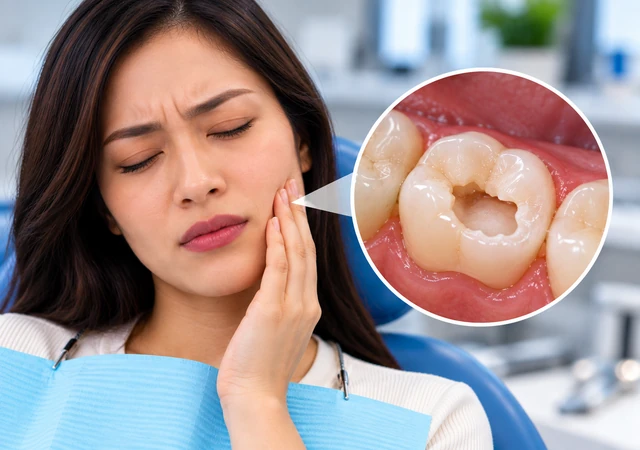
You bite into something and feel a small, hard piece in your mouth. Then your tongue finds a hole in your tooth that wasn’t there before. Your filling has fallen out. It can feel alarming, but a lost filling is usually not a serious emergency, and it’s very fixable. What matters most is protecting your tooth until you can see your dentist. This article walks you through exactly what to do if your filling fell out, how to use a temporary filling fix safely, how to ease any pain, and what your dentist will do to repair your tooth.
How to Tell If Your Filling Fell Out
Sometimes it’s obvious, and sometimes it’s not. You may have lost a filling if you notice:
- A small, hard piece in your mouth while eating
- A hole, gap, or rough spot in your tooth when you touch it with your tongue
- A sharp edge that catches your tongue or cheek
- New sensitivity to hot, cold, sweet foods, or even air
- Food getting stuck in a tooth where it didn’t before
- Pain when you bite down on that tooth.
Look closely at the piece that came out. If it looks like part of your tooth rather than filling material (tooth is whitish-yellow and may have a natural texture), you may have chipped or broken a tooth. Save it and tell your dentist.
What to Do If Your Filling Fell Out: Step by Step
Step 1: Take It Out of Your Mouth
Remove the filling or any pieces from your mouth so you don’t swallow them or bite down on them. Unlike a crown, a filling usually can’t be put back in. Still, it’s a good idea to keep it in a small bag or container to show your dentist, especially if you’re not sure whether it’s filling or tooth.
Step 2: Rinse With Warm Salt Water
Mix half a teaspoon of salt into a cup of warm water. Swish gently and spit. This helps clean out food and bacteria from the open hole and soothes your gums.
Step 3: Call Your Dentist
Call your dental office, explain what happened, and let them know if you have pain, sensitivity, or a broken tooth. They’ll tell you how soon you need to come in. Most of the time, you’ll want to be seen within a few days, and sooner if you’re in pain.
Step 4: Keep the Area Clean
Brush gently around the tooth, and carefully rinse after meals so food doesn’t get trapped in the hole. Bacteria and food in an open cavity can lead to more decay.
Step 5: Protect the Tooth
The open hole leaves the inner layers of your tooth exposed. To protect it until your appointment:
- Chew on the other side of your mouth.
- Avoid hard foods like nuts, ice, and hard candy, which can crack the weakened tooth.
- Avoid sticky foods like caramel and chewy candy, which can pull on the tooth.
- Avoid sugary foods and drinks, which feed the bacteria that cause decay.
- Avoid very hot or very cold food and drinks if your tooth is sensitive.
- Cover any sharp edges with dental wax from the pharmacy so they don’t cut your tongue or cheek.
Step 6: Use a Temporary Filling Fix if Needed
If you can’t see your dentist right away, a temporary filling can protect your tooth for a short time. Here’s how.
Temporary Filling Fix: How to Do It Safely
Most pharmacies carry temporary dental filling kits. These contain a soft material that you press into the hole. It hardens slightly and seals the tooth, which can reduce sensitivity and keep food out.
To use one:
- Clean the area. Brush gently and rinse with warm salt water.
- Dry the tooth. Gently pat the hole dry with clean gauze or a cotton swab. The material sticks better to a dry surface.
- Prepare a small amount. Roll a small ball of the material, about the size of the hole, as the package directs.
- Press it into the hole. Use a clean finger or the tool provided to push it in firmly.
- Bite down gently. Close your teeth together softly to shape it, so it doesn’t feel too high when you bite.
- Remove the extra. Wipe away any material that’s sticking out or touching your gums.
- Follow the package instructions on how long to wait before eating or drinking.
Keep in mind:
A temporary filling is meant to last only a few days, not weeks or months. It doesn’t treat decay or restore your tooth’s strength.
Don’t use a temporary fix if your tooth is badly broken, or if you have swelling or severe pain. Call your dentist instead.
If the temporary material falls out, you can replace it, but book your dental appointment as soon as possible.
What NOT to Do
- Don’t try to put the old filling back in. It won’t stay, and it may trap bacteria inside the tooth.
- Don’t use super glue or any household glue. It’s toxic to your mouth and can damage your tooth and gums.
- Don’t ignore it, even if it doesn’t hurt. A tooth without a filling can decay quickly and break.
- Don’t chew on that side until your tooth is repaired.
- Don’t poke at the hole with toothpicks, pins, or your fingernail.
How to Ease Pain From a Lost Filling
Not everyone feels pain after losing a filling. If you do, these tips can help until your appointment:
- Take an over-the-counter pain reliever as directed on the package.
- Rinse with warm salt water a few times a day.
- Use a toothpaste for sensitive teeth, which can calm sensitivity over time. Learn more in our article Why Are My Teeth Sensitive?
- Try clove oil. Dab a small amount on a cotton ball and hold it near the sore tooth for a short time. Clove oil has natural numbing properties, but use only a little, since too much can irritate your gums.
- Use a cold compress on the outside of your cheek if the area aches.
Don’t put aspirin directly on your gum or tooth. It can burn the soft tissue.
If your pain is severe, throbbing, or keeps you up at night, the decay may have reached the nerve inside your tooth. Read our guide to the signs you need a root canal and call your dentist the same day.
What If You Swallowed Your Filling?
It’s common to swallow a filling without noticing, especially while eating. If you feel fine, there’s usually nothing to worry about. A small filling will pass through your digestive system on its own. This includes older silver (amalgam) fillings, since a small piece passes through the body without being absorbed in a harmful way.
However, if you start coughing, wheezing, or having trouble breathing, the filling may have gone into your airway. Go to the emergency room right away.
How Soon Do You Need to See a Dentist?
Most lost fillings aren’t emergencies, but they shouldn’t wait long either.
Book an appointment within a few days if you have little or no pain and the tooth is otherwise whole.
Call your dentist the same day if you have severe pain or sensitivity, if part of your tooth broke off, or if a sharp edge is cutting your mouth.
Get urgent care if you have swelling in your face or gums, a bump on your gum, or a fever. These can be signs of an infection. Our guide to tooth abscess symptoms explains what to look for. You can also learn more about urgent situations in our guide to emergency dental care in Vancouver.
Why Do Fillings Fall Out?
Fillings are strong, but they don’t last forever. Common reasons a filling falls out include:
- New decay around or under the filling. Bacteria can sneak in at the edges and weaken the tooth that holds the filling in place. If you keep getting cavities, our article on why you get cavities explains why.
- Age and wear. Over many years of chewing, fillings can wear down, crack, or loosen.
- Grinding or clenching. Constant pressure can crack fillings and the tooth around them.
- Biting something hard, like ice, hard candy, popcorn kernels, or a bone.
- Sticky foods that pull on the filling.
- A large filling in a weak tooth. When a filling replaces a big part of a tooth, the thin walls around it can break.
- An injury to your mouth or jaw.
What Your Dentist Will Do
At your appointment, your dentist will examine the tooth and may take an X-ray to check for decay or cracks. Depending on what they find, they may recommend:
A new filling. If the tooth is still strong and the damage is small to medium, your dentist will clean out any decay and place a new filling. This is the most common fix.
An inlay, onlay, or crown. If the hole is large, or the tooth walls around it are thin or cracked, another filling may not hold. A crown or onlay can protect the tooth from breaking. Our guide to crown vs filling explains how dentists decide.
A root canal. If decay has reached the nerve inside the tooth, a root canal may be needed to remove the infection and save the tooth, followed by a crown.
An extraction. In rare cases, if the tooth is too badly broken or decayed to save, it may need to be removed and replaced.
The sooner you get your tooth checked, the more likely it is that a simple new filling will be all you need.
What If It Was a Temporary Filling From Your Dentist?
Sometimes your dentist places a temporary filling on purpose, for example between root canal appointments or while a crown is being made. These are designed to come out easily later, so they can sometimes fall out early.
If this happens, call your dentist and let them know. Avoid chewing on that side, keep the area clean, and use a pharmacy temporary filling kit only if your dentist says it’s okay until they can see you.
How to Keep Your Fillings From Falling Out
- Brush twice a day with fluoride toothpaste, and floss daily, especially around your fillings. Learn how fluoride helps prevent cavities.
- Limit sugary snacks and drinks, especially between meals.
- Don’t chew ice, hard candy, or pens.
- Don’t use your teeth as tools to open packages.
- Wear a night guard if you grind or clench. Here’s how to clean a night guard properly.
- See your dentist regularly. Your dentist can spot worn or leaking fillings early and replace them before they fall out.
Get Your Tooth Repaired Quickly at Stadium Dental
When your filling falls out, the most important thing is getting your tooth sealed and protected again. At Stadium Dental, we make that simple and stress-free.
As soon as you call, we’ll ask what happened, whether you’re in pain, and whether your tooth looks broken. That helps us decide how quickly you should come in. If you’re in pain, we do our best to see you the same day, and walk-in appointments are welcome.
When you arrive, we’ll check the tooth closely and take an X-ray if needed to see whether there’s decay underneath or a crack you can’t see. Most of the time, we can place a new tooth-coloured filling in a single visit, so you walk out with your tooth sealed and comfortable again. If the hole is too large for a filling to hold safely, we’ll show you why and explain your options clearly, so you can decide with confidence.
We’ll also look for the reason your filling came out, whether that’s new decay, grinding, or simply an old filling that wore out, and talk with you about how to protect your other fillings from the same problem.
Along with replacing lost fillings with dental fillings, we offer dental crowns and root canal treatment if your tooth needs more protection.
Lost a filling? Book your appointment online, call us at 604-559-0299, or contact our team.
Frequently Asked Questions About a Lost Filling
Is a lost filling an emergency?
Usually not. If you have little or no pain, you can typically wait a few days to see your dentist. Call the same day if you have strong pain, swelling, or a broken tooth. If you have trouble breathing after losing a filling, go to the emergency room.
How long can I wait to replace a lost filling?
Try to see your dentist within a few days. Without a filling, bacteria can get into the tooth and cause more decay, and the weakened tooth can crack. Waiting longer may turn a simple filling into a crown or root canal.
Can I put my old filling back in?
No. Fillings are bonded or shaped into your tooth when they’re placed, so they can’t simply be pushed back in. Your dentist will clean the area and place a new filling.
How long does a temporary filling last?
A pharmacy temporary filling usually lasts a few days. It’s only meant to protect your tooth until you can see your dentist, not to replace a real filling.
Why does my tooth hurt after my filling fell out?
The filling protected the inner layers of your tooth. Without it, the exposed area can be sensitive to temperature, sweets, air, and pressure. If the pain is severe or throbbing, the nerve may be affected, so call your dentist right away.
What happens if I swallowed my filling?
If you feel fine, it will usually pass on its own without causing harm. If you cough, wheeze, or have trouble breathing, go to the emergency room right away.
Will I need a crown after losing a filling?
Not always. If your tooth is still strong, a new filling is usually enough. If the hole is large or the tooth is cracked, your dentist may recommend a crown or onlay to protect it from breaking.
Does insurance cover replacing a lost filling?
Most dental plans cover part of the cost of a filling. The Canadian Dental Care Plan also covers fillings for eligible patients. Our team can help you check your coverage before treatment.
The Bottom Line
If your filling fell out, don’t panic. Remove any pieces from your mouth, rinse with warm salt water, call your dentist, and protect the tooth by chewing on the other side. A temporary filling fix from the pharmacy can help for a few days, but it’s not a replacement for proper care.
The sooner you get your tooth checked, the simpler the repair is likely to be. Schedule your visit with Stadium Dental, and let our Downtown Vancouver team get your tooth sealed, protected, and comfortable again.