
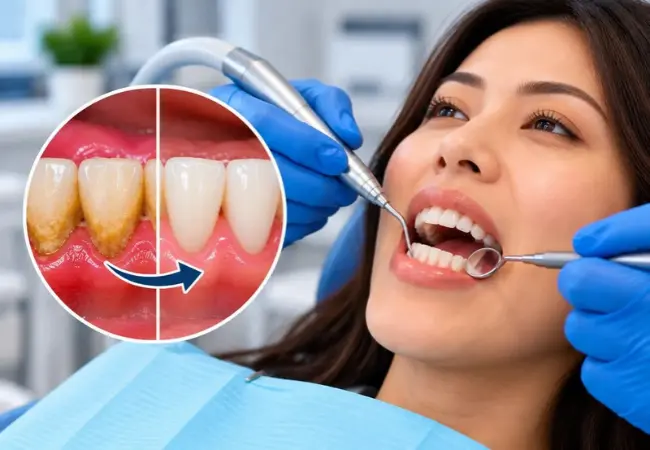
You go in for your usual checkup and cleaning, and your dentist says something you weren’t expecting: “You need a deep cleaning.” Suddenly you have questions. What’s the difference from a normal cleaning? Will it hurt? Do you really need it? You’re not alone. Many people hear these words for the first time and aren’t sure what to think. The good news is that a deep cleaning is a common, safe treatment, and it can stop gum disease before it causes serious damage. In this guide, you’ll learn everything you need to know about deep cleaning teeth. We’ll explain what it is, the difference between deep cleaning vs. regular cleaning, how to know whether a deep cleaning is necessary for you, what happens during the appointment, and how to take care of your gums afterward.
What Is a Deep Cleaning?
A deep cleaning is a treatment for gum disease. Its proper name is scaling and root planing. It cleans below your gumline, where your toothbrush, floss, and even a regular cleaning can’t reach.
It has two parts:
- Scaling removes plaque and hardened tartar from your teeth, both above the gumline and deep down in the spaces between your teeth and gums.
- Root planing smooths the surfaces of your tooth roots. Rough spots on the roots give bacteria a place to stick and hide. Smoothing them makes it harder for bacteria to come back and helps your gums heal and fit snugly around your teeth again.
Think of it this way: a regular cleaning cleans the parts of your teeth you can see. A deep cleaning also cleans the parts you can’t.
Why Would You Need a Deep Cleaning?
Every day, a sticky film of bacteria called plaque forms on your teeth. If plaque isn’t brushed and flossed away, it hardens into tartar. Tartar can build up along and under your gumline, where it irritates your gums and causes inflammation.
Over time, this inflammation can cause your gums to pull away from your teeth. This creates small spaces called pockets. Bacteria and tartar collect inside these pockets, where you can’t clean them yourself. As the pockets get deeper, the infection can damage the bone that holds your teeth in place.
A deep cleaning removes the bacteria and tartar from inside these pockets so your gums can heal.
If you’re not sure what stage of gum disease you might have, our guide to gingivitis vs. periodontitis explains the difference in simple terms.
Deep Cleaning vs Regular Cleaning: What’s the Difference?
Both are professional cleanings, but they have different jobs.
A regular cleaning is for prevention. It’s meant for healthy gums or gums with very mild inflammation. Your dental team removes plaque and tartar mainly from the parts of your teeth above the gumline and just slightly below it. Then they polish your teeth. It’s usually done in one short visit every six months, and it rarely needs numbing.
A deep cleaning is for treatment. It’s meant for gums that already have gum disease, with deeper pockets and tartar under the gumline. Your dental team cleans much further down, all the way to the roots, and smooths the root surfaces. It usually takes longer, often one to two visits, and the area is usually numbed to keep you comfortable.
The goal is different, too. A regular cleaning helps keep healthy gums healthy. A deep cleaning helps stop gum disease from getting worse and gives your gums a chance to heal.
What comes after is different. After a regular cleaning, you simply return in six months. After a deep cleaning, you’ll usually have a follow-up visit to check your healing. You may also need more frequent maintenance cleanings, often every three to four months, to keep the infection from coming back.
Is Deep Cleaning Necessary?
This is one of the most common questions people ask, and it’s a fair one. A deep cleaning is usually necessary when:
- Your gum pockets are deeper than normal. Healthy pockets are usually about 1 to 3 millimetres deep. When pockets measure 4 millimetres or more, especially with bleeding, a regular cleaning can’t reach the bacteria inside them.
- You have tartar under your gumline that your dentist can feel or see on X-rays.
- Your gums bleed easily during your exam.
- Your X-rays show signs of bone loss around your teeth.
- You have other signs of gum disease, such as receding gums, persistent bad breath, or teeth that feel loose.
How Your Dentist Decides
During your checkup, your dentist or hygienist uses a thin measuring tool to gently check the depth of the pocket around each tooth. You may hear them calling out numbers like “2, 3, 2” or “5, 6, 4.” Lower numbers are healthy. Higher numbers mean the pocket is deeper, and a deep cleaning may be needed.
Your dentist will also look at your X-rays, check for bleeding, and look for tartar and gum recession before making a recommendation.
How to Know a Recommendation Is Right for You
It’s normal to want to be sure before agreeing to treatment. A good dental team will be happy to explain their reasons. You can ask:
- “What were my pocket measurements?”
- “Can you show me the tartar or bone loss on my X-rays?”
- “Which areas of my mouth need it?”
- “What will happen if I don’t get it done?”
Clear answers to these questions should help you feel confident about your decision.
What Happens If You Skip It?
A regular cleaning can’t remove the bacteria and tartar hiding deep in your gum pockets. If they stay there, the infection usually keeps going, even if you brush well at home. Over time, this can lead to:
- Deeper pockets and more bone loss
- Receding gums and sensitive teeth. Learn more about gum recession.
- Loose or shifting teeth
- Tooth loss
- Needing more complex treatments, such as gum surgery
Gum disease has also been linked to other health problems, such as diabetes. Our guide to diabetes and gum disease explains this connection.
Signs You Might Need a Deep Cleaning
Only your dentist can confirm whether you need a deep cleaning. But these signs suggest it’s time to get your gums checked:
- Gums that bleed when you brush or floss. See our guide to bleeding gums when brushing.
- Red, swollen, or tender gums
- Bad breath or a bad taste that won’t go away
- Gums that are pulling back from your teeth, making them look longer
- Teeth that feel loose or have shifted
- New gaps between your teeth
- Pain when chewing
- Tartar buildup you can see near your gumline
Remember, gum disease is often painless in the early stages. Regular checkups help catch it before you notice symptoms.
What Happens During a Deep Cleaning?
Here’s what deep cleaning teeth usually involves, step by step.
Before Your Appointment
Your dentist will review your health history. Tell them if you have a heart condition, a joint replacement, diabetes, or a weakened immune system, or if you take blood thinners. In some cases, special precautions may be needed.
Step 1: Numbing the Area
To keep you comfortable, your dentist will usually numb the area being treated with local anesthetic. This means you’ll feel pressure and some scraping, but not pain.
Step 2: Scaling
Using special instruments, often a combination of an ultrasonic scaler (a tool that uses gentle vibrations and water) and small hand tools, your dental team removes plaque and tartar from your teeth and from deep inside the gum pockets.
Step 3: Root Planing
Next, they smooth the surfaces of your tooth roots. This removes any rough spots and leftover bacteria, which helps your gums heal and reattach more closely to your teeth.
Step 4: Extra Treatment, If Needed
In some cases, your dentist may place a small amount of antibacterial medicine directly into deeper pockets, or recommend a special mouthwash to help control bacteria while you heal.
How Long Does It Take?
A deep cleaning is often split into two visits, treating one side of your mouth each time, or it may be done in a single longer appointment. Each visit usually takes about one to two hours, depending on how much tartar there is and how many areas need treatment.
Your dentist may only need to treat certain areas of your mouth rather than all of your teeth.
Does a Deep Cleaning Hurt?
Because the area is numbed, most people find the treatment itself very manageable. You may feel pressure, vibration, and the sensation of scraping, but not sharp pain.
If you feel anxious about dental visits, let your dentist know. Options such as sedation can help you feel more relaxed. Learn more in our guide to sedation dentistry in Vancouver.
Recovery: What to Expect After a Deep Cleaning
It’s normal to have some mild discomfort for a few days while your gums heal. Here’s what you might notice.
For the first few hours, your mouth will feel numb. Wait until the numbness wears off before eating, so you don’t accidentally bite your cheek or tongue.
For the first one to three days, your gums may feel sore and tender, and they may bleed slightly when you brush. This is normal and usually improves quickly.
For up to one to two weeks, your teeth may feel more sensitive to hot and cold. This happens because the root surfaces are cleaner and more exposed. A toothpaste for sensitive teeth can help. Read more in our article, Why Are My Teeth Sensitive?
Over the next few weeks, your gums should look pinker, feel firmer, and bleed less. As the swelling goes down, they may also tighten around your teeth, and your teeth might look slightly longer.
Aftercare Tips
- Take over-the-counter pain relief as directed if your gums are sore.
- Rinse with warm salt water a few times a day to soothe your gums.
- Eat soft foods for a day or two, like eggs, yogurt, soup, pasta, and mashed potatoes.
- Avoid very hot, very cold, spicy, or crunchy foods while your gums are tender.
- Keep brushing and flossing gently. It’s important to keep the area clean, even if your gums bleed a little at first.
- Avoid smoking, which slows healing.
- Use any mouthwash or medicine your dentist prescribes.
Call your dentist if you have severe pain, swelling that gets worse, a fever, or bleeding that doesn’t stop.
How a Deep Cleaning Helps You
The benefits of deep cleaning teeth go beyond just a cleaner feeling. A deep cleaning can:
- Stop gum disease from getting worse
- Reduce bleeding and swelling in your gums
- Help gum pockets shrink as your gums heal and tighten around your teeth
- Protect the bone that holds your teeth in place
- Freshen your breath by removing the bacteria that cause odour
- Help you keep your natural teeth for longer
After Your Deep Cleaning: Keeping Your Gums Healthy
A deep cleaning gets your gums back on track, but keeping them healthy is a long-term job.
Follow-Up Visit
Your dentist will usually see you again a few weeks after your deep cleaning to measure your gum pockets and check how well your gums have healed.
Periodontal Maintenance Cleanings
If you’ve had gum disease, you’ll often need cleanings more often than every six months, usually every three to four months. These are called periodontal maintenance cleanings. Bacteria can come back to the pockets quickly, so these visits help keep the infection under control.
Daily Care at Home
- Brush twice a day for two minutes, angling your brush toward your gumline.
- Floss or use interdental brushes once a day to clean between your teeth.
- Use a mouthwash if your dentist recommends one.
- Don’t smoke or vape.
- Eat a balanced diet and limit sugary snacks and drinks.
If your gums don’t fully heal after a deep cleaning, your dentist may recommend further treatment. You can learn more about how gum disease progresses in our guide to periodontal disease.
How Much Does a Deep Cleaning Cost?
The cost of a deep cleaning depends on:
- How many areas of your mouth need treatment
- How much tartar needs to be removed
- How deep your gum pockets are
- Whether you need extra treatments, such as antibacterial medicine
Your dentist should give you an estimate before treatment begins.
Many dental insurance plans cover part of the cost of scaling and root planing, since it’s a treatment for gum disease. The Canadian Dental Care Plan also includes coverage for scaling for eligible patients, though some treatment may need approval first. Ask your dental team to check your coverage before your appointment.
Gentle, Thorough Gum Care at Stadium Dental
Hearing that you need a deep cleaning can feel worrying, but you don’t have to face it alone. At Stadium Dental, we explain everything clearly, so you understand exactly why your gums need care and what to expect at every step.
Before we recommend deep cleaning your teeth, we’ll gently measure your gum pockets, check for bleeding and tartar, and look at your X-rays for signs of bone loss. Then we’ll show you what we found and explain whether you need a regular cleaning or a deep cleaning, and why. You’re always welcome to ask questions, and we’ll answer them honestly.
During your treatment, your comfort comes first. We numb the area to keep you comfortable, work gently and carefully, and check in with you along the way. If you feel nervous about dental visits, let us know, and we’ll talk about ways to help you relax.
After your deep cleaning, we’ll give you simple aftercare instructions, check how your gums are healing at a follow-up visit, and set up a cleaning schedule that fits your needs. We’ll also show you easy brushing and flossing techniques to help keep your gums healthy at home.
For your gum health, we offer dental cleanings, exams, and X-rays, conscious oral sedation, and gum grafts for gum recession.
Concerned about your gums? Book your appointment online, call us at 604-559-0299, or contact our team.
Frequently Asked Questions About Deep Cleaning
What is the difference between a deep cleaning and a regular cleaning?
A regular cleaning removes plaque and tartar mainly above the gumline, and it’s meant to keep healthy gums healthy. A deep cleaning, also called scaling and root planing, cleans far below the gumline and smooths the tooth roots to treat gum disease.
Is deep cleaning necessary?
It’s usually necessary when you have gum pockets of 4 millimetres or more, tartar below your gumline, bleeding gums, or bone loss on your X-rays. In these cases, a regular cleaning can’t reach the bacteria causing the problem.
Does a deep cleaning hurt?
The area is usually numbed, so most people only feel pressure and scraping during treatment. Afterward, your gums may feel sore and your teeth may be sensitive for a few days to a couple of weeks.
How long does a deep cleaning take?
A deep cleaning is often done over two visits of about one to two hours each, with one side of your mouth treated at each visit. Sometimes it can be done in a single longer appointment.
Can a deep cleaning make my teeth loose?
A deep cleaning doesn’t cause loose teeth. If your teeth feel slightly loose afterward, it’s usually because gum disease had already weakened their support, and the swelling that was hiding it has gone down. As your gums heal, they often tighten around your teeth again.
How long does it take to recover from a deep cleaning?
Most people feel back to normal within a few days. Sensitivity to hot and cold can last up to one to two weeks. Your gums continue to heal and tighten over the following weeks.
What can I eat after a deep cleaning?
Wait until the numbness wears off, then stick to soft foods like eggs, pasta, soup, and yogurt for a day or two. Avoid very hot, cold, spicy, or crunchy foods while your gums are tender.
How often do I need a deep cleaning?
Most people only need a deep cleaning once, followed by regular maintenance cleanings every three to four months. If gum disease comes back in certain areas, those spots may need to be treated again.
The Bottom Line
Deep cleaning teeth is a safe, effective way to treat gum disease and stop it from damaging your gums and the bone that holds your teeth in place. Unlike a regular cleaning, scaling and root planing reaches below your gumline to remove the bacteria and tartar hiding there, giving your gums a chance to heal.
If your gums bleed, feel swollen, or your dentist has mentioned deep pockets, don’t wait. Schedule your visit with Stadium Dental, and let our Downtown Vancouver team help you get your gums healthy again.